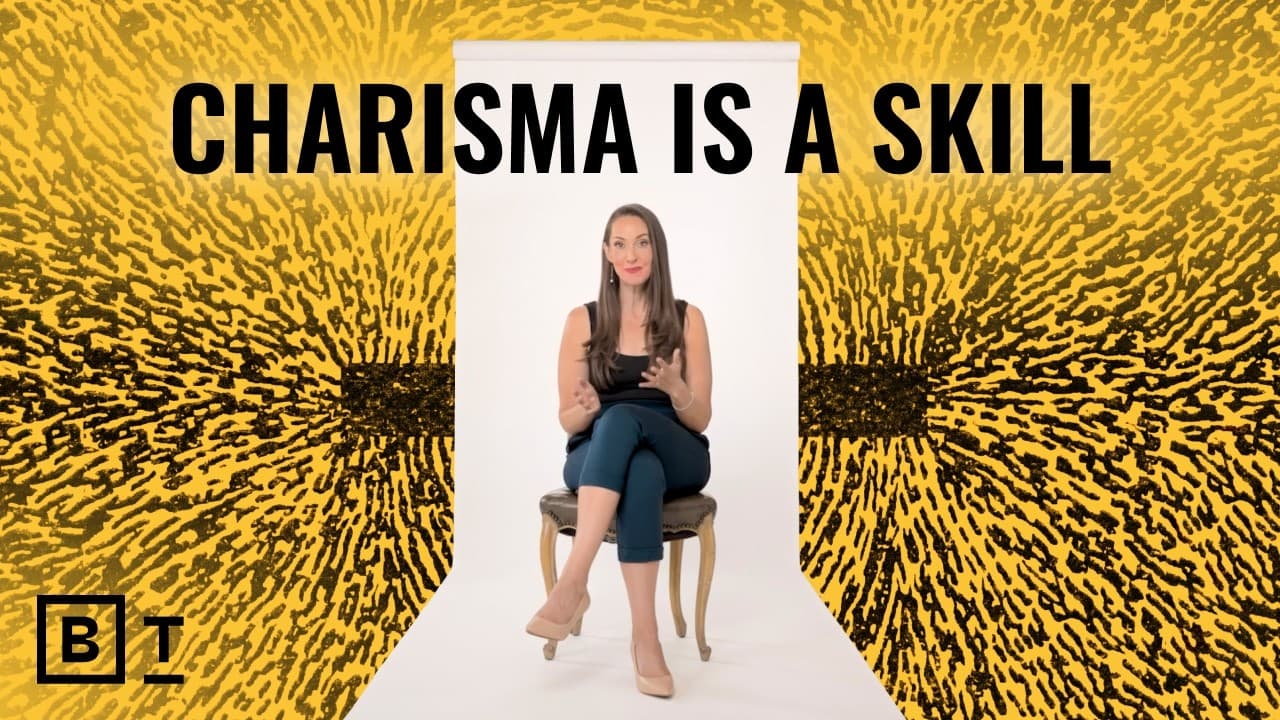

Introduction to Vanessa Van Edwards and First Impressions
- Vanessa Van Edwards is a behavioral researcher and best-selling author who teaches people how to be charismatic through her books, Captivate and Cues, and her online courses, and she also teaches communication at Harvard University 10s.
- A first impression is crucial for every interaction as it sets the foundation for a good interaction, and if done correctly, it can make the entire interaction easier, but if done poorly, it can make the connection harder 2m6s.
- The first impression is formed in the first few seconds of meeting someone, and it is based on two essential elements: presence and trust, with presence being further divided into warmth and competence 2m6s.
- Warmth refers to trust, likability, and openness, while competence refers to effectiveness, capability, and productivity, and people with a strong presence are able to quickly convey these two elements 2m6s.
- The perception of warmth and competence is more important than the actual warmth and competence, as people will not believe in someone's presence if they do not clearly signal it 4m30s.
The Four Channels of Cues and Their Significance
- The goal is to align one's inner intention with outer expression, rather than faking confidence, and this can be achieved by using cues, which are subtle but powerful social signals 5m40s.
- There are four channels of cues: words, non-verbal, voice or vocal tonality, and ornaments, such as clothing, jewelry, and background, which can all signal warmth and competence 6m20s.
- Cues can be divided into two buckets: positive cues, which stimulate connection and engagement, and negative cues, which signal disinterest, discomfort, or anxiety 8m0s.
The Q Cycle and Social Signal Processing
- When people create difficult or friction-filled interactions, they often decode cues in social settings, such as reading the room to determine if others like them or not, and this process is part of a cycle that involves decoding, internalizing, and encoding social signals 10s.
- A study found that when participants were sent a cue of social rejection, their field of vision increased, and their pupils dilated, allowing them to see more of the environment, which is an example of the Q cycle in action, where they decoded a negative cue, internalized it, and began to encode back nervousness and anxiety 1m20s.
Encoding the Right Cues for Positive First Impressions
- Showing up and encoding the right cues, such as warmth and competence, is critical to making a good first impression, as it helps others internalize that they can rely and trust the person, and this is the basis of all great social connections, especially at work 2m30s.
- It is essential to spot the correct negative cues to disengage or disarm them, and to be aware that non-verbal communication plays a significant role in social interactions, although the exact percentage of non-verbal communication is difficult to pinpoint, contrary to the often-cited Albert Mehrabian study 3m40s.
- The goal in every interaction is to make cues purposeful, sending signals that put people at ease and make them feel comfortable opening up to connect, and being intentional with cues can also increase confidence 5m10s.
Emotional Contagion and Labeling Cues
- Research by Dr. Matthew Lieberman at UCLA found that emotions are contagious, and when people see someone showing anger or fear, they can catch that emotion, but labeling or saying the emotion can disengage the amygdala, which is the part of the brain that processes fear 6m50s.
- Learning how to label cues is empowering as it stops the hijacking process, and the first cue to learn is called a punctuator, which is a habitual cue someone uses, such as a surprise micro-expression, and understanding one's own punctuator can be done by watching a video of oneself and identifying the non-verbal cue used out of habit 10s.
The Role of Touch and Oxytocin in Building Trust
- When meeting someone for the first time, people typically reach out for a handshake, cheek kiss, or other forms of touch, which produces oxytocin, a chemical that generates feelings of connection, rapport, and trust, and the amount of touch increases the amount of oxytocin produced 2m6s.
- In a first impression, it is recommended to pick a form of touch that is comfortable and suitable for the culture, such as a handshake with one to three pumps, and to be aware that the amount of touch affects the amount of oxytocin produced 4m30s.
Voice and Body Language in First Impressions
- The tonality of one's voice is also important in a first impression, and holding one's breath can make the voice sound anxious and low in competence, whereas practicing a "happy hello" by saying hello on the out-breath can make one sound more relaxed and competent 6m15s.
- Signaling competence can be done by using a "palm flash," which involves showing the palm of one's hand, indicating openness and a lack of hidden intentions, and this can be done when walking on stage, hopping on video, or walking into a room 9m20s.
- The "palm flash" is a powerful cue because it makes others feel like one is not hiding anything, and it can be used in various situations, such as when greeting someone or inviting them to sit down, and it is a subtle but effective way to build trust and rapport 11m40s.
Non-Verbal Cues for Trust and Connection
- To establish trust, it is essential to have visible hands, especially in the first few seconds of interaction, as hiding hands can lead to distraction and questions about intentions 10s.
- Making eye contact is crucial, and in Western cultures, it is recommended to maintain eye contact about 60 to 70% of the time, producing oxytocin and creating a sense of connection 1m42s.
- Fronting, or angling one's torso, toes, and head towards the person being spoken to, is a nonverbal sign of respect and helps to create a sense of connection 3m30s.
- Blocking, or crossing one's arms, can kill momentum, charisma, and warmth, and research shows that it can even make one's own thinking more closed-minded, so it is recommended to avoid blocking and keep the torso open 5m10s.
Vulnerability and Authenticity in Social Interactions
- When feeling nervous, it is helpful to focus on putting others at ease, and showing vulnerability can be an aspect of warmth, making it okay to express feelings of nervousness or anxiety 7m30s.
- The goal is not to make a perfect first impression or be perfectly charismatic, but to show that one is real and human, and being vulnerable can be an effective way to establish a connection 9m10s.
Practicing and Refining Social Cues
- To improve social interactions, it's recommended to start with one cue at a time, such as a happy hello, and practice it on the phone before moving to video and in-person interactions, allowing for the addition of gaze and touch cues 10s.
- Practicing social cues, like a palm flash, gaze, and handshake, in low-pressure settings with friends and family can help build confidence and make the cues feel more natural, and it's essential to get feedback from others to refine these skills 42s.
- The goal is to make these cues feel like habits, so they don't require conscious thought, and it's crucial to choose cues that feel empowering and authentic, rather than forcing something that doesn't feel natural 2m6s.
The Art of Observation and Contextual Awareness
- Observation is a powerful social skill that involves actively reading the room and decoding emotional signals, and it can be developed by focusing on three key areas: context, culture, and clusters, which help to understand the nuances of social interactions 2m6s.
- Understanding context is vital in observation, as it allows for considering the setting, emotional state, and previous experiences of the person being interacted with, helping to avoid misinterpreting cues and provide more effective support 4m30s.
- Considering culture is also essential in observation, as social cues like eye contact and touch can vary across cultures, and being aware of these differences can help navigate interactions more effectively and avoid unintended offense 6m40s.
- When interacting with others, it's essential to observe and mirror the culture and greeting styles of the room or broader culture to build connections and establish trust 10s.
- Observing clusters of cues, rather than relying on a single cue, is crucial in accurately interpreting someone's behavior and intentions, as a single cue like a nose touch can have multiple explanations 1m20s.
- Looking for clusters of three to five cues helps to identify patterns of behavior and emotions, allowing individuals to assess whether someone is showing overall positive or negative cues, such as warmth, openness, or competence 2m30s.
Cultural and Contextual Nuances in Observation
- The goal of observation is not to create "gotcha" moments, but rather to understand the underlying emotions and intentions behind someone's behavior and to determine the next step in the interaction 3m10s.
- A useful exercise to improve observation skills is to watch a video on mute and try to identify cues, such as facial expressions and gestures, and then watch it again with sound to see if the meaning of those cues changes 4m20s.
- When people like and trust each other, they often subtly mirror each other's non-verbal cues, including vocal tone, which is a natural human instinct that can help build connections 5m40s.
- Mirroring is not inauthentic or forced, but rather a natural human response to wanting to get on the same page as someone else, and can even extend to syncing up breathing and heart rates in close relationships 6m30s.
- Observing whether someone is mirroring or matching your energy and non-verbal cues can be a sign of a strong connection, and can help to build trust and rapport 7m10s.
Identifying and Responding to Interest and Discomfort Cues
- An eyebrow raise is a universal cue that signals interest and can be an important indicator of engagement, particularly in business settings where it can indicate that someone is intrigued by an idea or proposal 8m20s.
- In social or romantic settings, if someone raises their eyebrows, it can be a sign that they are interested or curious, and this cue can indicate that the conversation is on the right track 10s.
- To identify a negative first impression or discomfort, it is essential to observe specific cues, including shame, which can be expressed through physical behaviors such as touching the side of the forehead, crossing arms, or covering the face, as these actions are a way of blocking out something unpleasant 42s.
- When someone exhibits a shame cue, such as touching their forehead, it is crucial to pause the conversation, build rapport, and ask if everything is okay to understand what is causing the discomfort and create a safe space for them to share their feelings 1m30s.
- Another negative cue to watch out for is sudden distancing, which can manifest as leaning back, looking back, head tilting back, or physically taking a step back, as this behavior indicates a desire to get away from something unpleasant or uncomfortable 2m6s.
Recognizing and Responding to Negative Cues
- The question inflection, where a statement sounds like a question due to the tone going up at the end, can be a sign of uncertainty or deception, and it is essential to pay attention to this cue, especially if it is not a habitual way of speaking for the person 3m30s.
- Recognizing these cues can give individuals permission to take quick action, trust their instincts, and be prepared to respond to potential issues, such as discomfort or deception, and it is crucial to understand and respond to these cues to build trust and rapport in social interactions 5m0s.
Trusting Instincts and Practicing Observation
- Doubting the red flags and alarm bells that ring in one's head can be overcome by stopping and taking control to find out what is actually going on, and the goal is to listen to instincts to know exactly what to do when these cues happen 10s.
- Observation takes practice, and it is possible to hone these skills by activating the fusiform face area of the brain, which is used to identify facial expressions, and the more it is practiced, the better it becomes 42s.
Active Listening and Engagement Techniques
- Learning how to become an active listener is a need to have, not just a nice to have, and it involves listening to understand, not just listening to reply, and it requires sending clear signals of listening to show that one is present and wants to deeply understand the other person 2m6s.
- Active listening gives one more intention and purpose, which engages them more in the conversation, and it increases one's own presence, and a trick to achieve this is to pretend that one is about to introduce the other person on stage, which makes one listen to remember and ask questions 2m6s.
- Creating a listening presence involves listening loudly, and one of the favorite listening cues is leaning, which is a non-verbal way of showing interest and engagement, and it can be used to decode or encode interest 2m6s.
- Head behavior is also important for listening, and the slow triple nod is a technique that can be used to show affirmation and encourage the other person to speak more, with research finding that it can make the other person speak 67% longer 2m6s.
- It is essential to be mindful of cultural differences when using non-verbal cues like nodding, as it can have different meanings in different cultures, such as in India, Bulgaria, and Pakistan 2m6s.
- Over nodding, also known as bobbleheading, can be perceived as too high in warmth and can take away from one's competence, so it is recommended to use a slow triple nod only to emphasize agreement or curiosity 10s.
- The speed of a nod can also convey different messages, with a slow triple nod showing engagement and a fast triple nod showing impatience, so it is essential to be mindful of the speed of one's nod 10s.
Head and Facial Cues in Listening and Communication
- An alternative to nodding is the head tilt, which is a universal sign of wanting to hear something better and can be used to show active listening, even on video calls or when delivering bad news 1m30s.
- The head tilt can soften the blow of bad news and show that one is open to feedback, but it is essential to avoid the chin jut, which can be a sign of aggression or anger 2m6s.
- Wearing glasses can also lead to unintentional non-verbal cues, such as peering over the glasses, which can come across as judgmental, so it is recommended to take off the glasses or look straight through with a gaze 2m40s.
- Self-soothing gestures, also known as pacification gestures, can be a barrier to listening, as they can make one appear nervous and distract the other person, and can even be contagious 3m30s.
Managing Self-Soothing Gestures and Their Impacts
- If one notices someone else using self-soothing gestures, it is recommended to try to soothe them and build rapport, and if one notices themselves using these gestures, they can try displacement tactics, such as pinching their thumb and forefinger together, to replace the anxious energy 4m40s.
- Self-soothing gestures, such as holding a coffee mug or pen, can be used to displace anxiety, but context is important as these gestures can be misinterpreted, for example, in romantic settings, some self-soothing gestures can be seen as flirtation 10s.
- In romantic settings, certain self-soothing gestures like tucking hair behind the ear or playing with jewelry can be a sign of flirtation, known as pining self-touch, and it is essential to look for context and clusters to accurately interpret these gestures 42s.
Facial Expressions and Resting Faces
- The face shows a lot of emotion, and having a "resting bothered face" or RBF, which is a facial expression that looks tired, sad, or angry even when not feeling that way, can affect how others perceive listening, as people may assume a negative emotion is being listened with 2m6s.
- Research on universal facial expressions has found that certain reactions are associated with specific emotions, such as widening the face when surprised, hardening the lower lids when angry, and widening the eyes when afraid, and being aware of one's resting face can help counteract negative perceptions 2m6s.
- To be more aware of one's resting face, it is recommended to observe oneself on video calls, relax the face, and notice any accidental activations of facial muscles, and using verbal warmth cues, such as expressing happiness or enthusiasm, can counteract a resting face that may give a negative impression 2m6s.
Minimizing Comfort Gestures and Enhancing Charisma
- Breaking comfort gesture habits, such as fidgeting or pacing, can be challenging, but using anchors in the environment, like leaning on a desk or podium, and setting oneself up for success by wearing suitable clothing and jewelry, can help reduce these habits and increase charisma 4m30s.
- Making conscious choices about clothing, jewelry, and hairstyles can also help minimize comfort gestures, such as avoiding outfits with pockets or wearing hairstyles that do not require frequent adjustments, to reduce distractions and improve overall presence 5m40s.
- To set yourself up for success in social interactions, it's essential to be mindful of what you're wearing and how you're accessorizing to avoid comfort gestures, and to focus on active listening by watching non-verbal cues and responding with yours 10s.
Active Listening and Building Future Connections
- Active listening involves not only paying attention to non-verbal cues but also having a mindset that is focused on building a connection with the other person, and listening to remember important details to bring up in future conversations 42s.
- When engaging with someone, it's crucial to think about what you can bring up in future conversations that will "light them up" and show that you're genuinely interested in getting to know them, which can be achieved by listening to remember and taking note of their positive clusters 1m15s.
- Capitalization is a technique where you take what someone else is saying and build upon it, making it bigger or better, which shows that you're not only listening but also want to contribute to the conversation and add value 2m6s.
Capitalization and Conversational Alignment
- A warning sign that listening is going off track is when the other person is not asking you questions back, which may indicate that you're misaligned, and it's essential to take more time to listen and attune to what they're trying to say 3m30s.
- If someone never asks you a question back despite your active listening, it may be a sign of a conversational narcissist, someone who loves to hear themselves talk and doesn't care about others' opinions 4m40s.
Confidence and Power in Communication
- To show up with power and engagement in social interactions, it's vital to have confidence in your message and know how to engage others, which can be achieved by showcasing your authentic smarts and talent with power, so people listen 6m15s.
- To deliver your message with confidence and power, it's essential to first ensure that you're prepared and have genuine, authentic confidence in what you're saying, and then use specific cues to deliver your message effectively 8m0s.
- Delivering ideas, boundaries, or perspectives with confidence and power is crucial, as people are more likely to listen to and trust those who exhibit these qualities, whether it's in a professional setting, such as an interview or negotiation, or a personal setting, like sharing news with a client or setting rules with children 10s.
- Confidence is contagious, and people are drawn to those who exude it, making them more likely to trust and rely on them, which is why using power cues, such as non-verbal, vocal, and tonal signals, can be effective in conveying confidence and authority 1m20s.
Power Cues and Body Language for Confidence
- One key power cue is volume, as powerful people are in control of their volume, using higher volumes to convey excitement and lower volumes to share more private or personal information, and being purposeful with volume can help to engage and persuade others 2m6s.
- Researchers from the University of British Columbia found that winning athletes across cultures exhibit similar postures, characterized by taking up space, tilting their head towards the sky, and having space between their arms and torso, which signals confidence and a desire to be noticed 4m10s.
- To exhibit confident body language, it's essential to maximize the distance between the ear and shoulder, as well as the distance between the torso and arm, using gestures to claim space and convey confidence, which can also increase comprehension and fluency, as found by researcher Susan Goldin-Meadow 5m40s.
- Using expansive gestures can create a power loop, helping both the speaker and the listener to better understand and engage with the message, and being mindful of body language, including posture and volume, can help to project confidence and authority in various situations 7m20s.
Effective Communication Through Verbal and Non-Verbal Cues
- Powerful and competent individuals can communicate effectively by speaking on two tracks, using both verbal and non-verbal cues, such as explanatory gestures, to convey their message, and it is essential to use gestures as emphasis rather than interpretive dance 10s.
- To improve communication, it is crucial to pause and avoid speeding up when nervous, as confident people are comfortable with pausing mid-sentence to take a breath, and this helps the listener digest important points more easily 42s.
- Replacing filler words with breathing pauses can help individuals speak with more vocal power and energy, and this involves taking a short breath instead of holding it, which can make them appear nervous 2m6s.
- Being assertive is not enough, and it is essential to be engaging by adding vocal dynamism and charisma to one's speech, which involves varying the tone, pace, and volume to keep the listener interested and engaged 2m6s.
Engagement and Vocal Delivery
- Engagement is about creating meaningful two-way interactions, and as a speaker, it is essential to make the information easy to listen to, adopting a gift-giving approach that prioritizes the listener's experience and makes the content easy to adopt and remember 2m6s.
- Confidence is critical in communication, and a lack of confidence can manifest as vocal shakiness or vocal fry, which is caused by a lack of air moving through the airways, and taking deep breaths can help deliver speech in a steady and constant way 2m6s.
- To improve vocal confidence, it is essential to speak without rehearsing out emotion, as emotions add flavor and spice to speeches, and sharing stories that authentically bring out emotion can help listeners remember the speaker and their idea 10s.
Using Role Models and Ornaments for Confidence
- Channeling a charismatic role model can help individuals tap into their own power and confidence, especially when they are nervous, by thinking about how their role model would share an idea and cheer them on 2m6s.
- Being purposeful with ornaments, such as props, profile pictures, or background items, can send signals about the speaker's personality, competence, or approachability, and it is crucial to choose ornaments that send the desired signal 2m6s.
- To effectively incorporate new power cues or engagement cues, it is recommended to pick one cue at a time and work on it until it feels natural, rather than trying to activate all cues at once, which can result in appearing like a "body language Frankenstein" 2m6s.
The Impact of Communication Skills on Life
- Investing in learning the art of communication can have a significant impact on various areas of life, as being an incredible communicator can make people listen, take the speaker seriously, and recognize their potential, starting with making a great first impression and being a good listener 2m6s.
- Making a great first impression involves showing up as warm and competent, being an incredible listener, observing other people's cues, reading the room correctly, and showing listening by making people feel heard, which can ultimately make the speaker more memorable and impactful 2m6s.
- To establish a strong connection with others, it is essential to show that we are knowledgeable, powerful, competent, and capable, which can be achieved by being engaging and willing to invest in our message, making us easy to listen to 10s.
- By demonstrating these qualities, we become a pleasure to be with, enabling us to form better connections and build community and connection with people who matter to us, whether they are new in our life, colleagues, friends, or loved ones 10s.
- Mastering the ability to truly connect and communicate with others is a vital life skill, as it allows us to create meaningful relationships and gives back to us in numerous ways, ultimately making life worth living 10s.