

Introduction to Minerals and Their Role in Life
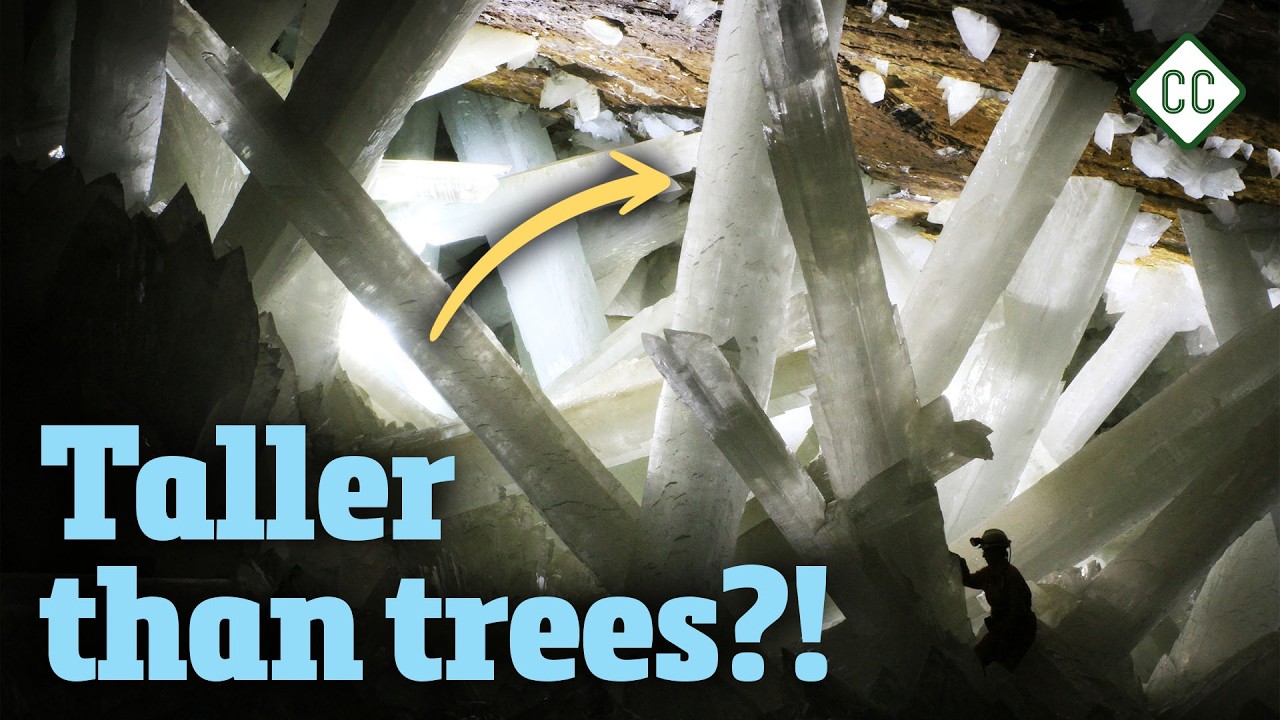
- Minerals are inorganic materials with a solid crystalline structure and a specific chemical composition formed by geological processes, and they play a crucial role in making life possible, with over 6,000 known minerals, some of which are extremely rare and found in strange or inaccessible corners of the earth 10s.
- A mineral is defined as a solid, crystalline material with a specific chemical composition, and it is not made from carbon molecules associated with living things, with examples of minerals including salt, neollay, and ice, while things like opal, pearl, mineral oil, rock candy, and glass do not meet the definition of a mineral 2m6s.
Minerals vs. Rocks and Their Formation
- Rocks are solids made of one or more minerals smooshed together, like granite, which is a mix of mostly quartz and feldspar, and they can be formed through various geological processes, including the cooling and crystallization of magma or lava 4m6s.
- Minerals can form in several ways, including when magma or lava cools down and crystallizes, when rock is heated and compressed, when living things build minerals in their bones and shells, and when water evaporates or cools down, creating solid crystals, such as salt and calcium carbonate 6m6s.
Unique Properties and Behaviors of Minerals
- Some minerals have special properties that can help reveal their identity, such as alexandrite, which shines emerald green in the sun but ruby red under incandescent light, while others, like sulfur, can smell like a burning match when heated up or take on a rotten egg stank from reactions with moisture 10m6s.
- Minologists, or geologists who specialize in minerals, identify minerals by their chemical composition and physical properties, but sometimes this takes quite a bit of investigation, as some minerals are tricksters and can be tough to identify, like appetite, which means "to deceive" in Greek 12m6s.
Physical Properties Used to Identify Minerals
- Geologists examine various physical properties to determine a mineral's identity, including luster, which is how light interacts with the surface, and some minerals have a shiny and metallic appearance, while others reflect very little light, like kaolinite, which has a glass-like luster 10s.
- The color of a mineral can sometimes be a huge indicator of its identity, like malachite is always shades of green, and azurite is usually deep blue, but most of the time, color alone is not enough to identify a mineral, as quartz and fluorite can have the same shade of purple 42s.
- The streak, or the color of the powder left behind when a mineral is scratched against a ceramic plate, is another property used to identify minerals, and some minerals, like hematite, create a rusty brown powder, while others, like pyrite, leave behind a greenish black streak 1m6s.
- Minerals vary in their hardness, which is measured using the Mohs hardness scale, ranging from 1 to 10, with talc being a 1 and diamond being a 10, and fluorite is estimated to be around a 4 on the Mohs scale 2m6s.
- Cleavage, or how minerals break in smooth, flat planes along weak atomic bonds, is another property used to identify minerals, and some minerals, like muscovite, break into thin sheets or flakes, while others, like quartz and olivine, do not break in a clean fashion 2m42s.
- Density is a property that is hard to measure precisely, so geologists often rely on specific gravity, which is the ratio of the mineral's mass to an equal volume of water, and this can be estimated by picking up the mineral and feeling its weight 3m6s.
- The crystal habit, or the appearance of a crystal or cluster of crystals, can also be used to identify minerals, and some minerals have unique shapes, like cubes, blobs, or sheets, and calcedony has a botryoidal crystal habit, which makes it look like a bunch of grapes 3m42s.
Minerals and Their Connection to Life on Earth
- Minerals are all around us and play a crucial role in life, and their diversity exploded with the emergence of life on Earth, which released oxygen into the atmosphere and triggered chemical reactions that created thousands of new minerals 5m0s.
- The formation of minerals is linked to the formation of life, and it is estimated that there are 10 times more minerals on Earth than anywhere else in the solar system, and life might be one of the reasons why minerals are everywhere 6m0s.
- Minerals can be too tiny to see with the naked eye, and some are rare and dazzling, while others are commonly encountered in everyday life 0s.
- Some minerals have been a part of human history for thousands of years, and others have existed for even longer, preceding the emergence of life itself 0s.
- There are still many minerals waiting to be discovered, lurking in the depths and corners of the earth 0s.
Conclusion and Future Topics
- The topic of where rocks come from will be explored in the next episode, with a hint that it involves the combination of two or more minerals 0s.
- The episode of Crash Course Geology was filmed at a studio in Indianapolis, Indiana, with the help of a team of people, and viewers can support the show by joining the community on Patreon to keep it free for everyone 0s.