

Litigation and the Origins of MySpace
- Twenty families are currently litigating against social media companies in the Los Angeles Superior Court, alleging that the platforms' designs—including infinite scroll, dopamine-inducing features like the "like" button, and algorithms that promote harmful content—were intentionally created to foster addiction in children, leading to the deaths of their children 0s.
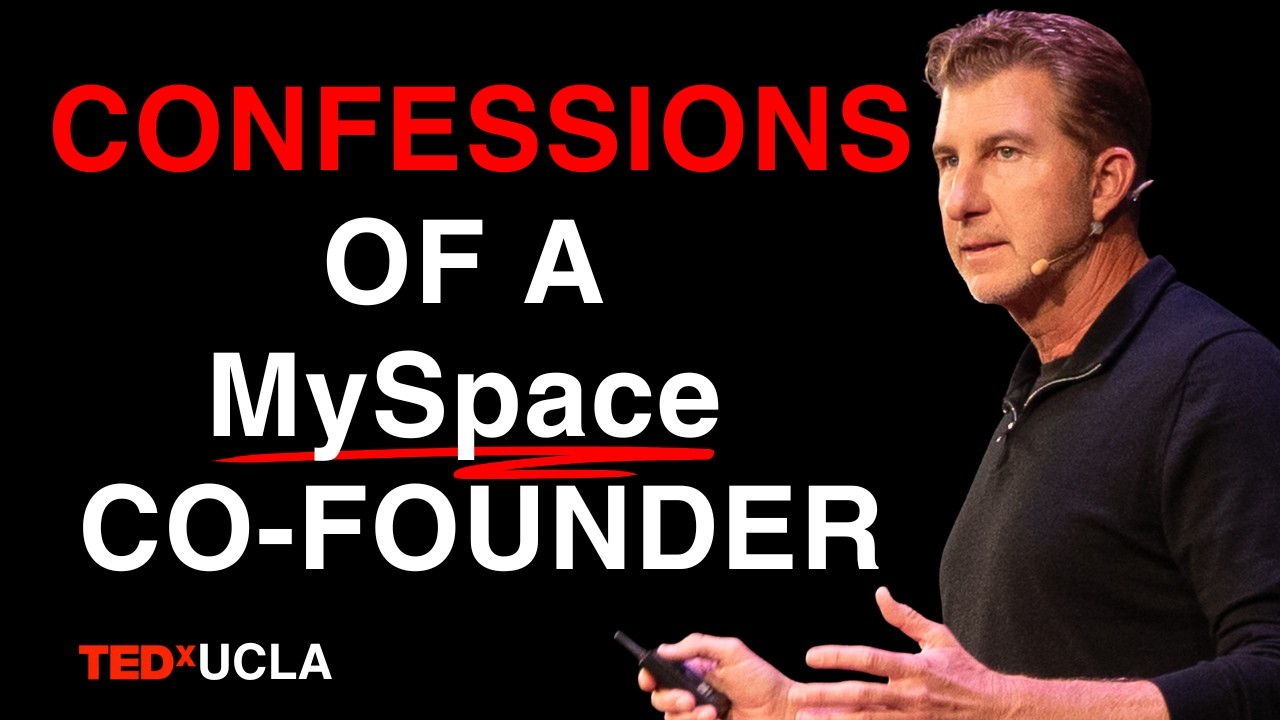
- Brett Brewer, a co-founder of MySpace, notes that the lack of oversight during the late 1990s dot-com era allowed early internet entrepreneurs to pursue business ideas without adult supervision or ethical constraints 1m15s.
- MySpace launched in July 2003, distinguishing itself from the existing social network Friendster by allowing users to adopt any persona they desired and by automatically making Tom Anderson the default friend for every user, which effectively eliminated the "six degrees of separation" 2m6s.
- The platform experienced immediate success, with users returning to the site multiple times daily to check for comments on their photos or reactions to their posts 2m45s.
- The creators of MySpace identified this user behavior as "engagement" and viewed it as a measure of success, though they did not evaluate the potential negative impacts of fostering such habits 3m5s.
- Financial pressure to meet payroll requirements drove the company to prioritize continuous growth and user retention 3m20s.
MySpace Growth and Corporate Acquisition
- MySpace became a significant platform for musicians, such as Colbie Caillat, Calvin Harris, and Skrillex, by enabling direct connections between artists and their audiences 3m35s.
- By the summer of 2005, MySpace had become the most trafficked website globally, prompting major media conglomerates like Viacom and NewsCorp to take notice as they lost their younger demographics to the platform 3m55s.
- A business deal involving Viacom was interrupted by Rupert Murdoch and NewsCorp, who successfully negotiated to acquire the company by offering a higher price and requesting a rapid announcement before the following Monday 0s.
Teen Mental Health Crisis and Platform Design
- Between 2012 and 2023, a period coinciding with the widespread adoption of smartphones and social media, depression and anxiety rates among American teenagers more than doubled 35s.
- Current statistics indicate that one in three high school girls and one in seven high school boys have seriously considered suicide 45s.
- Among children aged 10 to 14, emergency room visits have increased fivefold since 2009, and suicide rates have tripled 55s.
- The U.S. Surgeon General has declared teen mental health a national crisis and suggested that social media platforms should carry warning labels similar to those on cigarettes 1m2s.
- Social media platforms are designed to encourage addiction, utilizing features like infinite scrolling on Instagram, targeted clips on TikTok, and constant notifications on Snapchat 1m15s.
- Comparison-based features on social media are particularly harmful to teenage girls, as they contrast their own lives with the curated "highlight reels" of others 1m35s.
- Internal research conducted by Meta indicated that Instagram negatively impacted the body image of teenage girls, yet the company continued to develop the product 1m45s.
Legal Accountability and International Regulation
- Section 230, a law passed in 1996, has historically shielded social media platforms from accountability for the content hosted on their sites 2m15s.
- While social media companies claim they cannot verify if a user is under the age of 13 or 16, they possess advanced data-tracking capabilities that suggest this is a choice rather than a technological limitation 2m35s.
- Australia recently enacted legislation requiring platforms to verify that users are at least 16 years old, placing the burden of enforcement on the companies rather than parents 3m5s.
- Following the implementation of the Australian law, Meta removed 510,000 accounts within two and a half weeks, demonstrating that platforms can enforce age restrictions when faced with consequences 3m15s.
- Spain, France, Denmark, and 26 other countries have introduced similar legislation, though the United States has not yet followed suit 3m25s.
- The lack of similar legislation in the United States is attributed to the influence of lobbyists, campaign contributions, and the fact that major tech companies are headquartered there 3m35s.
- Social media regulation should be treated as a public health issue, similar to seatbelt mandates or cigarette warning labels, rather than a freedom of speech concern 3m55s.
Future Challenges and Proposed Regulatory Solutions
- Artificial intelligence is expected to be integrated into every screen and interaction experienced by children throughout their daily lives. 0s
- Current difficulties in regulating Instagram feeds suggest that existing oversight mechanisms are insufficient to manage the future impact of artificial intelligence. 4s
- A proposed solution involves implementing real age limits with actual enforcement, moving beyond simple checkboxes to utilize robust firewalls. 11s
- The responsibility for enforcing age restrictions should be placed directly on the social media platforms, a model that has already demonstrated effectiveness in Australia. 18s
- Platforms should be restricted from building addictive features for children, specifically citing the endless scroll, the "for you" page, and like counters as unnecessary product elements. 25s
- Section 230, which is 30 years old, requires updates to ensure real legal accountability for companies that knowingly distribute products causing harm to children. 37s
- Social media companies are not above the law, though they have historically operated as if they were. 48s
- A school principal who previously shut down a business in a fifth-grade classroom is presented as a model for the type of leadership needed in Congress, courtrooms, boardrooms, and homes. 53s
- While the past cannot be changed, social media companies possess the capability to fix and alter their products to prevent harm. 1m5s
- Companies are incentivized to maintain the status quo due to significant financial interests, but the protection of children is presented as a more valuable priority. 1m11s