YouTube video summary

What Makes People Successful?

Ali Abdaal
1 min summary

Key points

  • Unfair advantages are framed as part of the success equation alongside fair play, with success depending on both replicable effort and factors that are not easily copied.
  • Fair play means the hard work and effort that anyone could theoretically do, while unfair advantages include luck, circumstance, and privilege.
  • The MILES framework breaks unfair advantages into Money, Intelligence and Insight, Location and Luck, Education and Expertise, and Status.
  • Money can provide access to resources and networks, while intelligence and insight can function as inherent advantages.
  • Education and expertise can supply knowledge, signaling, and connections, but expertise is becoming more valued than formal qualifications.
  • Understanding your unfair advantages can help you focus on strengths and choose the path of least resistance, and even apparent disadvantages can create creativity or drive.

The Success Equation 45s

  • Life is fundamentally unfair, and success is a combination of fair play and unfair advantages.
  • Fair play refers to replicable effort and hard work that anyone could theoretically do.
  • Unfair advantages include factors such as luck, circumstance, and privilege that are unique and not easily replicated.

The MILES Framework 2m30s

  • MILES stands for Money, Intelligence and Insight, Location and Luck, Education and Expertise, Status.
  • Money gives access to unique resources and networks.
  • Intelligence and insight can be inherent advantages.
  • Location can unlock opportunities, while luck can often be influenced by ones' actions.
  • Education and expertise provide knowledge, network, and signaling; however, expertise is increasingly valued over formal qualifications.
  • Status can be external, like recognition or social standing, or internal, like confidence.
  • The MILES framework helps identify personal unfair advantages, applicable beyond entrepreneurship.

What's the value of understanding Unfair Advantages? 7m45s

  • Understanding unfair advantages helps individuals focus on their strengths and find the path of least resistance to success.

What if people don't think they have any Unfair Advantages? 8m20s

  • Everyone has unfair advantages, though they may look like disadvantages at first.
  • Lack of resources can foster creativity, and lower socioeconomic status might ignite a stronger drive to succeed.
  • Location disadvantages can lower living costs and create unique conditions for growth.
Free · no signup

Do this for your own videos and podcasts

You just got the key points without sitting through the whole thing. Paste a YouTube, Spotify, or Apple Podcasts link and get the same summary in under 30 seconds.

  • YouTube Videos
  • Spotify Podcasts
  • Apple Podcasts
Trusted by 700,000+ researchers, students, and professionals
FAQ

Questions this
video answers.

Unfair advantages are the factors that help create success but are not equally available to everyone. In this video, they include things like luck, circumstance, privilege, money, intelligence, location, education, expertise, and status. They are contrasted with fair play, which is the effort and hard work anyone could theoretically do.

Browse all from Ali Abdaal →

Ready to get started?

Save, summarize and chat with your content.

GET STARTED
IT'S FREE

No credit card required · 30 Day Refund on Premium · 24 Hour Support

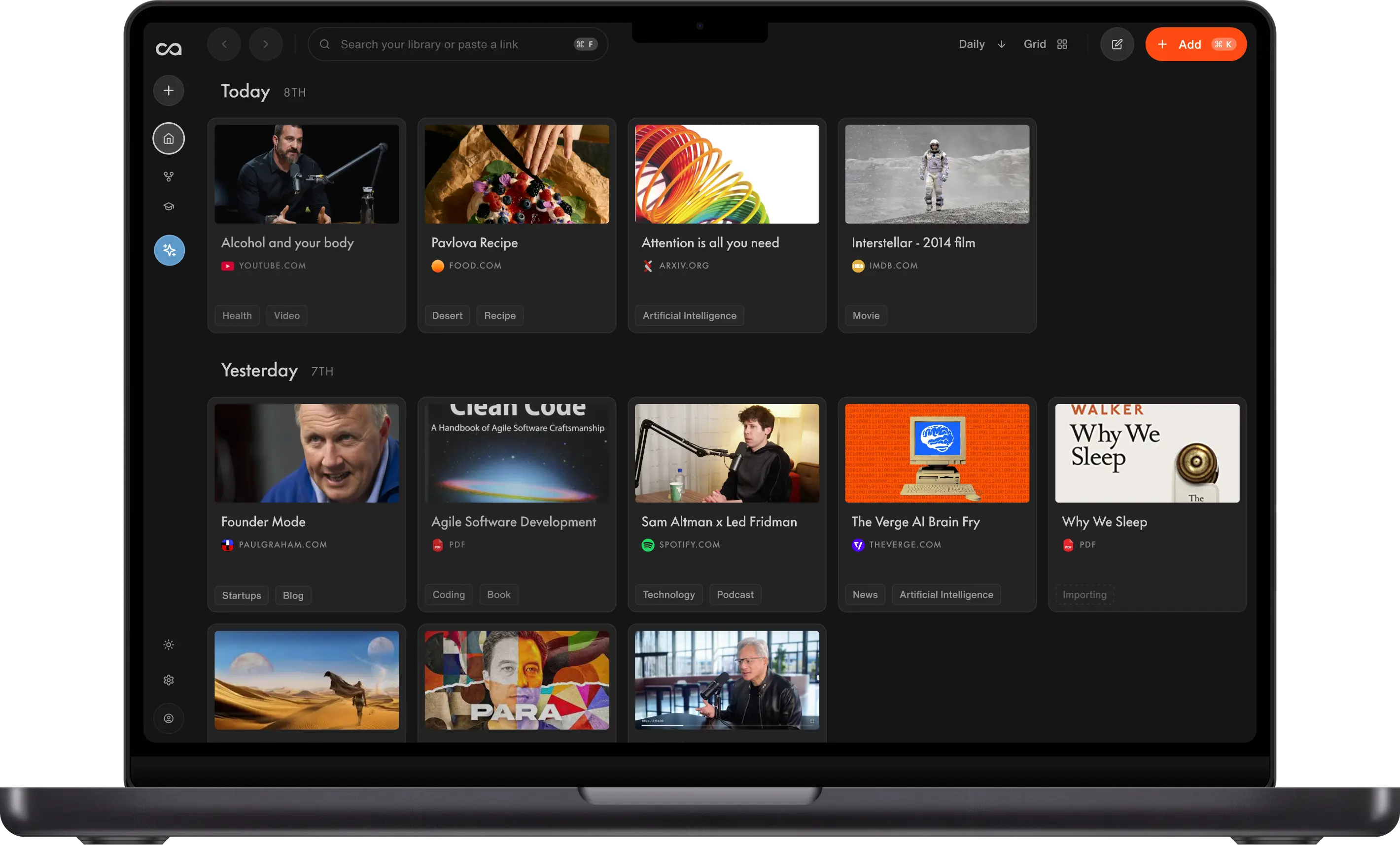
Recall web app on laptop, personal AI knowledge base for summarizing and chatting with your content