

Traditional AI (Discriminative AI)
- Traditional AI involves techniques like deep learning and neural networks.
- Deep learning neural networks perform classification (assigning labels to data) and regression (estimating numerical values).
- Neurons, the basic units of neural networks, process electrical signals and generate output signals.
- The complexity of life and the brain arises from the non-linear nature of neurons and their massive interconnectedness.
- Training neural networks enables them to perform classification and regression tasks, resulting in pattern recognition and prediction capabilities.
- Traditional AI has applications in medicine, such as drug discovery and development.
Generative AI
- Generative AI, like the Transformer architecture, uses attention mechanisms to filter important information and generate new text.
- The scalability of generative AI models like GPT has exceeded expectations, with increased computational power leading to significantly improved performance.
- Unlike traditional AI models, generative AI models do not necessarily perform better with increased scale.
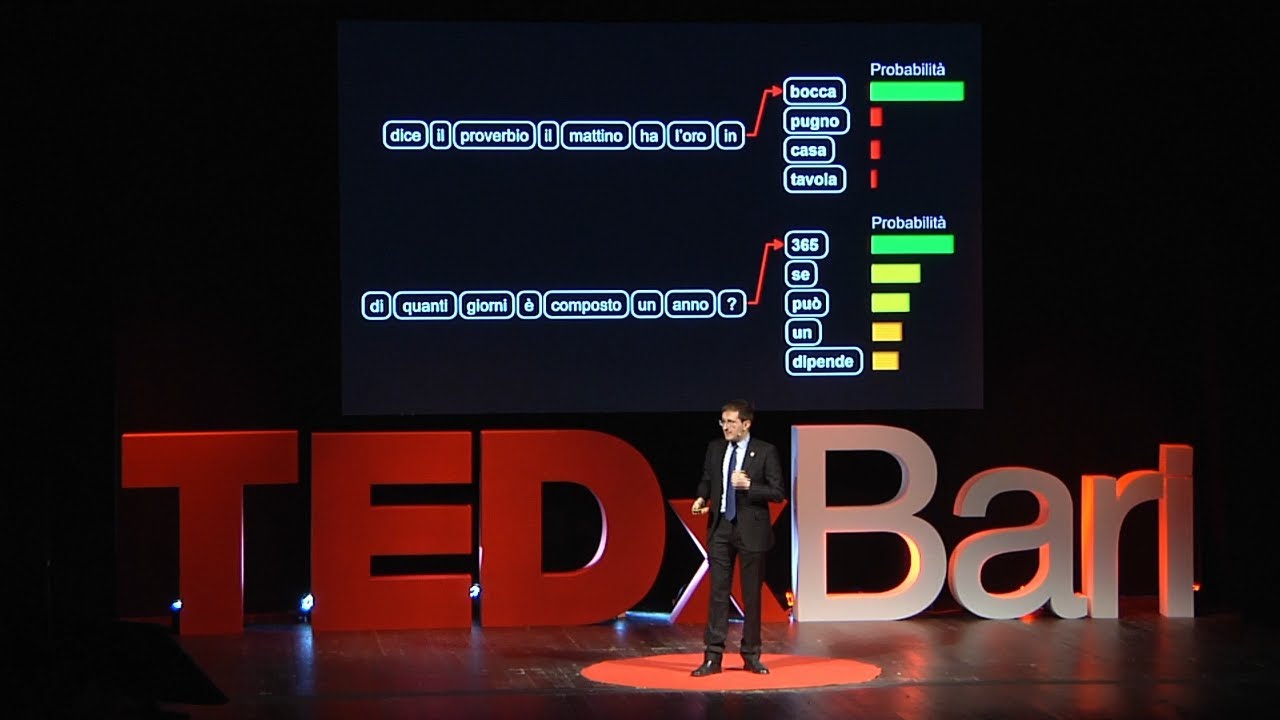
- GPT (Generative Pre-trained Transformer) generates human-like text by predicting the next word in a sequence based on preceding words.
- GPT introduces a probabilistic element, making its outputs more varied and human-like, mimicking the non-deterministic nature of the human brain.
- GPT has applications in medicine, such as analyzing medical literature, creating standardized clinical datasets, and assisting doctors in decision-making.
Societal Impact of AI
- AI is already integrated into healthcare, with patients interacting with AI-powered systems for triage and other tasks.
- AI has a significant societal impact and is an integral part of our lives, presenting both challenges and opportunities.
- AI techniques can significantly increase productivity, and tools like CoPilot enhance programmers' work.
- The widespread adoption of AI has societal implications, potentially leading to rapid job displacement similar to the Industrial Revolution but on a shorter timescale.
- While some jobs will become obsolete, AI can democratize access to certain professions by reducing the need for extensive memorization and technical knowledge.
- The focus of human work will shift towards decision-making and evaluation, while routine tasks can be automated.
- There is a risk of social inequality if access to AI tools is limited, so governments must ensure universal access.
- AI is an integral part of the world and can be used by others to gain a competitive advantage.