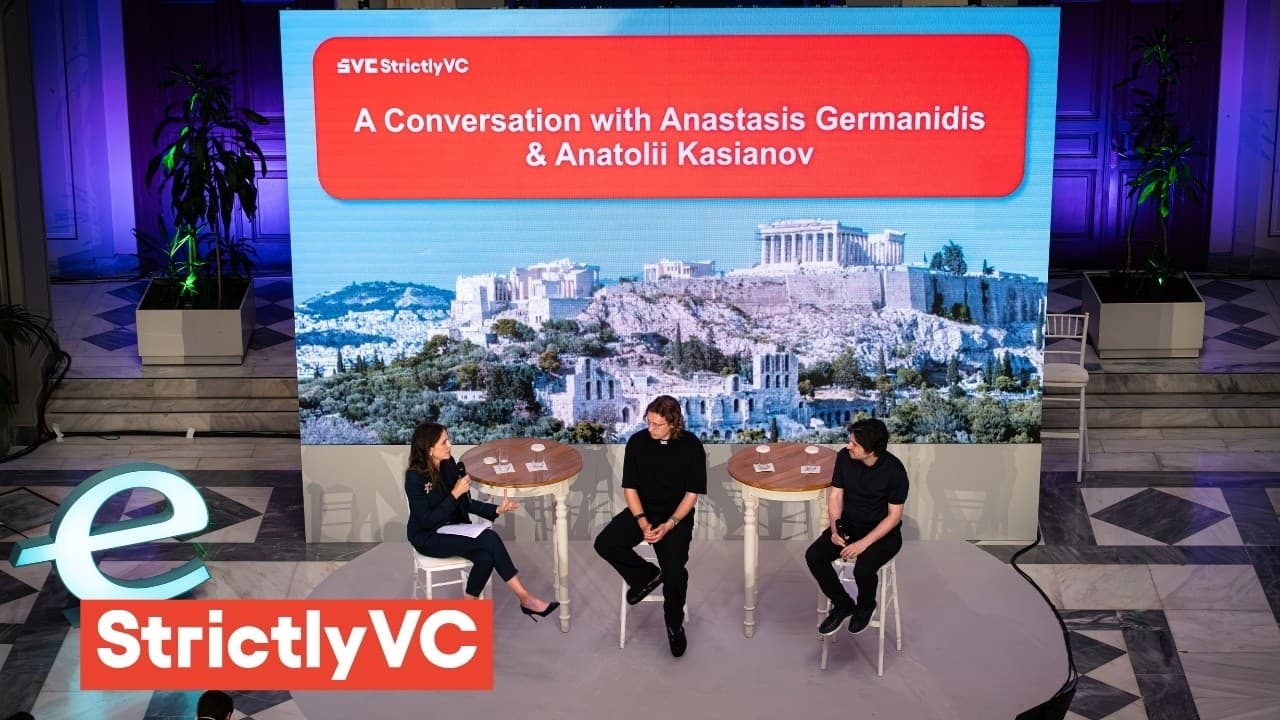

Introduction to Runway and Holywater Tech
- Anastasis and Anatoly are the co-founders and co-CEOs of Runway and Holywater Tech, respectively, two AI video companies that are trying to upend the entertainment industry, with Runway being a video generation AI company founded in New York in 2018 and valued at over $5 billion, while Holywater Tech is an AI-first entertainment company founded in Kyiv in 2020 and has raised $22 million from investors 10s.
- Runway focuses on applied research, video generation, and world models, and has been around for 7 years, during which the quality and performance of video generation models have dramatically improved, allowing the company to deploy these models to products used by filmmakers, marketing teams, gaming companies, and robotics companies 2m6s.
- Holywater Tech uses Runway to create AI movies and has discovered that AI lowers barriers to entry for content creation, allowing anyone to be a filmmaker, author, or comic creator, and has built a platform that sells and distributes hundreds of different types of content, including books, AI movies, and live-action movies, with over 100 million users 4m30s.
- Both companies have evolved significantly since their founding, with Runway focusing more on world models and robotics, and Holywater Tech expanding from book publishing to working with studios in Hollywood on micro dramas, and both companies are building on top of foundational models to create new types of content 6m20s.
Early Insights and Founding Vision
- The co-founders of both companies had an early insight into the potential of AI-generated video, with Anastasis leaning into video generation in 2018, well before the widespread adoption of AI technology, and Anatoly building a platform that allows users to create and consume content in a variety of formats 8m40s.
- The applications of generative models were not obvious in 2018, but it was clear that they would dramatically change creative tools, allowing for the generation of images, videos, and content, and accelerating the iteration and testing of ideas, with the company starting in an art school, which is an unusual origin for an AI company 10s.
- The original vision of the company was to build creative tools assuming the presence of AI superpowers and magical models that can generate something from very little input, with the goal of figuring out what it means to build creative tools with these capabilities 1m42s.
Anatoly's Background and Holywater Tech's Evolution
- Anatoly started his business in Ukraine, where there is no venture capital, and learned to be profitable by building and distributing consumer apps, which allowed him to scale and eventually exit, selling the apps and finding a content ecosystem with potential, where he saw the evolution of AI models like GPT 2 2m6s.
- The company Holy Water pivoted multiple times, with each pivot being extremely important for its growth, allowing it to grow 2x year over year since its start, and demonstrating a culture of pivoting at the right moment to take advantage of evolving technology and markets 3m30s.
Company Philosophy and Mission
- The mission of the companies is not fixed, but rather in flux, with a philosophy of inventing the future and developing technology to figure out what it means to build tools that democratize human creativity, making planning difficult in AI companies 5m20s.
- The companies have a long-term vision but focus on short-term execution, figuring out the next stepping stone to succeed and grow the technology and company 10s.
Entering the AI Field and Early Challenges
- The field of AI is moving quickly, and the companies had to enter it early, around 2018, when nobody was building tools around generative models, which required them to be incremental in developing their products and finding applications at every stage of capability 42s.
- Persistence is key to achieving goals, and believing in the potential of AI in content creation has driven the companies to experiment and evolve their ideas, such as creating AI movies, even when the quality was not yet there 2m6s.
Research and Development Approaches
- The companies prioritize R&D by intentionally keeping their teams small to avoid pursuing too many ideas at once and to have conviction over their approach, using a mix of intuition, experimentation, and prototyping to determine which ideas to pursue 2m6s.
- Runway's approach to R&D involves prototyping and demo culture, where they build and test their ideas to see if they work, rather than relying on long specs and PRDs, and they use live coding to figure out the 80% version of a product 2m6s.
- Holy Water's approach to R&D involves building small, lean teams with the best entrepreneurs and giving them equity or motivation tied to the product, allowing them to pivot and launch multiple consumer apps, many of which have become successful 2m6s.
- A relatively small team of developers, product engineers, and product managers with vision can build a product in two to three weeks, launch it, and try to find unit economics and product market fit, which is the structure used by Holy Water to launch many new products and make them succeed 10s.
Current Challenges and Expansion
- The biggest challenges currently faced are related to expanding the company from video generation to simulation and world modeling, and evolving models to build commercial structures to sell to companies working in robotics or building infrastructure for physical AI 2m6s.
- The go-to-market motions are completely different when talking to Hollywood studios versus robotics companies, requiring a different sales team and approach, with a focus on building small target teams for each vertical and iterating quickly with partners 4m6s.
Commonalities and Differences in Industry Engagement
- Despite the differences, there are common aspects between working with Hollywood studios and robotics companies, such as forward deployed motions and embedding creatives and researchers to work on specific projects and tasks 6m6s.
- The company currently has around 160 employees, with a structure that allows for quick iteration and evolution to address the challenges of expanding into new industries and verticals 8m6s.
Team and Organizational Structure
- The main challenge for one of the companies is to transition its team of over 200 people to become an AI-first team, where they can work efficiently with AI agents and focus on outcomes rather than input, allowing them to outcompete big studios like Netflix 10s.
- Another challenge is the risk of deep fakes and safety concerns associated with AI-generated video, which requires the development of policies and moderation strategies to mitigate harmful uses of the models, with one company having a trust and safety team to focus on these aspects 42s.
Safety and Moderation Strategies
- To address safety concerns, one company has built a reputation for being overly conservative in its moderation, and they conduct red teaming and preparatory work to understand and mitigate potential risks before releasing new models 2m6s.
- Another company takes a different approach, relying on foundation models and their policies, and having in-house moderation and quality control to ensure consistency with quality and policy 2m6s.
Resource Allocation and Model Development
- Building a company that relies on AI models requires significant resources, including compute power, and the need for ongoing funding to feed the growth of the company and improve the performance of the models, with the company believing in scaling laws and the importance of scaling data and compute to improve model performance 4m30s.
- The development of efficient training models is crucial, and techniques such as focusing on data and working efficiently with it can make a significant difference, as seen in the example of the Gen 4.5 model, which topped leaderboards despite being disadvantaged in terms of compute, 10s.
- The cost of human labor is a significant factor, with content production costs being higher than compute costs, and the ability to scale content once it is confident to break even is important, making compute costs less of a concern, 2m6s.
Competitive Advantages and Team Culture
- When competing against large companies like Google, the sustainable advantage lies in the team and the culture of the company, rather than the models or data, as these can become outdated, and the ability of the research team to continuously innovate is key, 2m6s.
- The team and culture of a company are essential for attracting and retaining top researchers, who are motivated by factors such as collaboration, focus, and vision, and companies like Runway, which have been focused on the same goals for years, can offer a compelling argument for researchers who want to make an impact in the field, 4m30s.
- Ultimately, the success of advanced technologies like AI video generation comes down to human relationships and culture, which play a critical role in driving innovation and progress, 6m20s.
Cultural and Strategic Evolution
- The luxury of being early in the field of generative models allowed companies to evolve their culture and figure out their identity, which is helpful but difficult to do when starting today and competing at the pace of the field, while also building a company with important values 10s.
- Companies like Holy Water compete against large entities like Hollywood, which have thousands of employees and a lot of process bureaucracy, but they can outcompete them by being 10-20 times more efficient with smaller teams and less process, using AI tools to build and grow fast in the entertainment industry 2m6s.
Leadership and Role Evolution
- The co-founders of Runway and Holy Water are also co-CEOs, which is not traditional, and they have also been CTOs, with Runway's co-CEOs reflecting on how they work together and how their roles have changed over time, with one of them becoming more involved in the commercial aspect of the company 4m6s.
- The change in roles for Runway's co-CEOs happened a few months ago, as the company expanded towards world models and new industries, and it became clear that they needed to capture opportunities across different parts of the business, with one of the co-CEOs becoming more involved in the commercial aspect 6m6s.
- Holy Water's co-founders also split responsibilities, with one focusing on fundraising, investor relationships, and admin functions, and the other focusing on the product side, operational side, and managing the growth of their business, which has multiple separate companies inside, including a books publishing platform, AI movies, and comics 8m6s.
Geographic and Strategic Presence
- Runway is headquartered in New York, while Holy Water has its headquarters in Cyprus, with additional offices in Portugal, Poland, and Ukraine, highlighting the global presence of these AI video companies 10s.
- The importance of ties to the US is significant, particularly for Runway, as the company's founder believes it could not have started anywhere else due to New York's unique intersection of industries and technologies, allowing for the creation of something with little initial evidence of past accomplishments 2m6s.
- The US venture capital climate is distinct from Europe's, with a greater willingness to take long-term risks and make bigger bets, although it is possible to start a company from anywhere and expand to the US later, according to the founder of Runway 2m6s.
- Having a presence in Los Angeles is crucial for Holy Water, as it is necessary for producing movies and competing in the entertainment industry, with 60% of the company's revenue coming from US users, emphasizing the need for understanding American culture and having a local team 2m6s.
Founder Advice and Lessons Learned
- The founders of Runway and Holy Water, having started their first companies, advise that it is essential to pursue ideas that one deeply cares about and sees internal excitement for, rather than just chasing ideas that seem likely to succeed or have a good narrative, in order to make progress and avoid mistakes 10m0s.
- The importance of having a clear and explainable story is highlighted, as opposed to using new and complex generative models that can be difficult to understand, and this is something that excites people internally and eventually becomes synchronized with the external world 10s.
- Building a strong team by hiring the right people is crucial, as it allows a company to achieve anything and pivot when necessary, and this is a key learning experience that can help overcome failures and issues 42s.
- Networking and building relationships with smart people, including investors, is vital, as it provides an opportunity to learn from others' mistakes and evolve faster, rather than just learning from one's own mistakes 2m6s.