

Coming up 0s
- Her charisma is so powerful that even members of the Armed Forces have backed her. 5s
- Members in the military were leaking documents to the opposition, showing that they won the presidency. 18s
- Hundreds of soldiers are imprisoned, humiliated, and tortured because they support Maria Corina and not the regime. 22s
Intro 30s
- The speaker recently traveled to Mexico, Brazil, and Chile. 46s
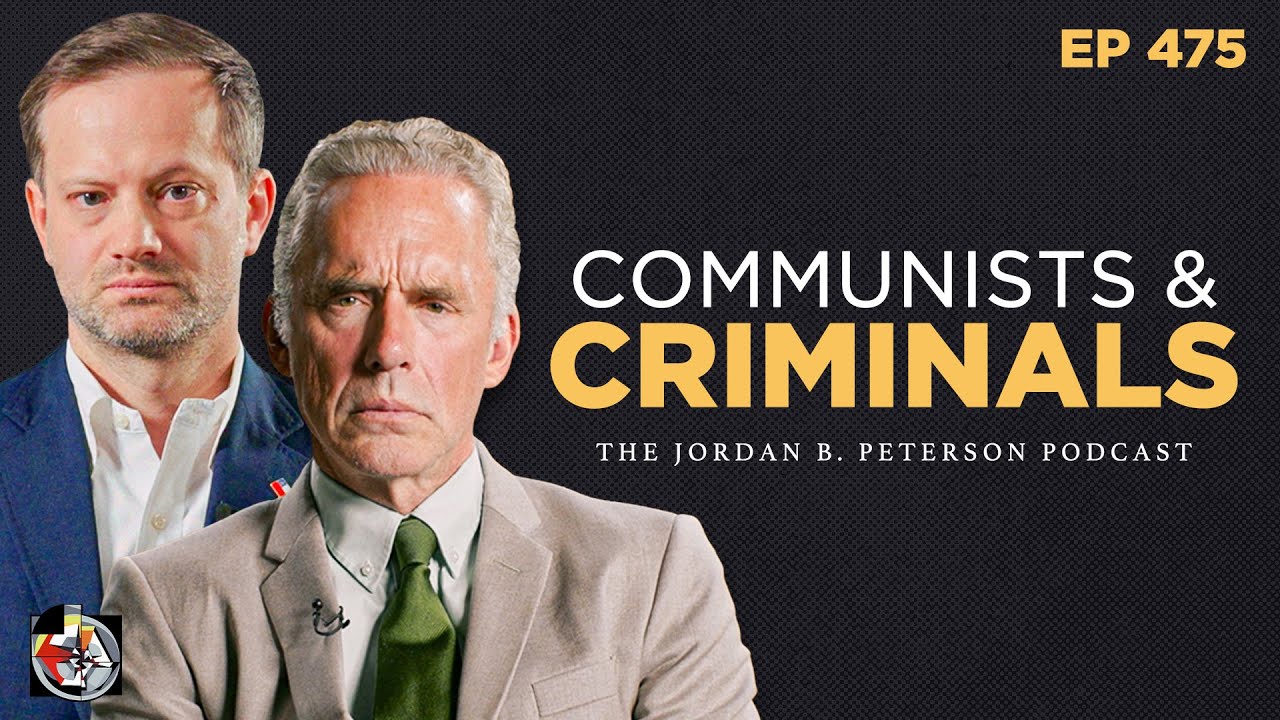
- The speaker interviewed Axel Kaiser Baren Von Hoen Haagen, a Chilean German lawyer and expert in economics and philosophy. 1m10s
- The discussion centered around the political and ideological climate in South America, particularly focusing on Venezuela's recent election and the implications of potential instability in the region. 1m54s
Venezuela: you can’t vote out socialism 4m3s
- The speaker began their career in Venezuela in 2005 studying the rise of socialism in the country. 4m27s
- The current political climate in Venezuela is dire, characterized as a tyrannical dictatorship responsible for human rights violations. 5m15s
- The Maduro regime in Venezuela is considered a security threat to the United States due to its involvement in drug trafficking, ties to Iran and Russia, and potential for terrorist infiltration across the US-Mexico border. 6m12s
A message from the opposition leader, María Corina Machado 7m14s
- The international media has a double standard when covering left-wing dictatorships versus right-wing dictatorships. 7m34s
- The international media needs to support the Venezuelan transition to democracy. 8m7s
- If Maduro is not removed from power, it will become a problem for the United States. 8m29s
Socialism versus communism 8m40s
- A distinction is made between social democracy, as practiced in some Western countries, and the revolutionary socialism found in Latin America. 10m49s
- Social democracies, while left-leaning, often operate within free market principles and prioritize social safety nets, as seen in Scandinavian countries and Canada. 9m54s
- Communist systems, in contrast to social democracies, advocate for a centrally planned economy and the abolition of private property, as exemplified by the Soviet Union. 14m23s
The links between Fidel Castro, Hugo Chavez, and Nicolás Maduro 18m13s
- Venezuela had the highest per capita income in Latin America and a high degree of economic freedom in 1970. 18m15s
- Hugo Chavez, who had attempted a coup in 1992, was elected president of Venezuela in 1988. 19m50s
- Fidel Castro saw Chavez as a potential puppet and helped him consolidate power in Venezuela. 20m30s
How Venezuela stole a trillion dollars from it’s people 26m52s
- A significant portion of Venezuela's wealth was used to finance revolutionary groups and political parties across Latin America as part of a vision to spread the revolution. 29m12s
- The Venezuelan government, under Chavez, established a parallel army called the Bolivarian Circles (Círculos Bolivarianos) to mitigate potential threats from within the army. 31m58s
- Despite early indications of Chavez's authoritarianism and human rights violations, prominent figures in the West, including intellectuals and media outlets, expressed support for his regime. 33m38s
The cartels are taking over, 21st-century socialism 36m15s
- The speaker argues that cartels are increasingly influencing politics in Latin America, rendering revolutions unnecessary. 38m0s
- The speaker contends that cartels, initially offered refuge by Hugo Chavez's regime, have gained significant territorial control in Venezuela and Mexico, with the latter having 30% of its territory under cartel control. 39m56s
- The speaker expresses concern that cartels, with connections to Hezbollah, are expanding their operations, citing Chile as an example of a country now facing cartel-related issues, and highlights the potential threat posed by cartel access to uranium in Bolivia and Venezuela. 41m35s
Why Canada and the U.S. should care about South America 43m16s
- The United States used to be more involved in Latin America, particularly during the Cold War, to prevent the spread of communism. 44m37s
- Following the events of September 11th, the United States shifted its foreign policy focus away from Latin America. 45m39s
- Increased instability in Latin America, driven by factors like drug cartels and political unrest, could lead to a surge in migration to the United States, potentially impacting demographics and politics. 46m8s
Supply chains are destabilizing, China is buying out South America 48m53s
- China is acquiring various assets in Latin America, including ports in Peru and mines in Chile. 48m56s
- The United States, historically concerned about Latin America due to its significance for national security, seems to be neglecting the region. 49m44s
- The West, after the collapse of the Soviet Union, mistakenly assumed a complete and permanent victory over the ideology it represented. 49m51s
America’s great mistake after the fall of the Soviet Union 50m7s
- After the fall of the Soviet Union, it became more difficult to point to a current example of the dangers of anti-free market ideology. 50m49s
- Distributing a trillion dollars to radical leftist utopian criminal dictatorships in South America is a bad idea if stability is the goal. 51m21s
- Ignoring the geopolitical occurrences in South America, especially with the involvement of China, Russia, and Iran, is not a smart move. 54m26s
Venezuela right now: no food, no medicine, no vote 56m14s
- Venezuela's GDP has fallen by 70%, oil production has decreased by 80%, and 80% of the population lives in poverty. 56m24s
- The typical reality for a Venezuelan citizen includes food shortages, lack of medicine and functioning hospitals, electricity problems, and limited access to basic necessities. 57m4s
- There is no rule of law in Venezuela, with the regime controlling the judiciary, legislative branch, and police, leading to disappearances and a lack of safety for those opposing the government. 57m36s
Structure of the opposition, Machado is in hiding 1h1m12s
- Maria Corina Machado has been a prominent opposition leader in Venezuela for over a decade, advocating for democratic change and challenging the Maduro regime. 1h1m28s
- Machado is currently in hiding to avoid potential arrest or harm from the government, who have issued orders for her detention. 1h4m38s
- Despite the risks, Machado remains active on social media and has appeared at public rallies, making it difficult for the government to act against her without international repercussions. 1h4m52s
Why Machado has been so successful despite political prosecution 1h7m7s
- Maria Corina Machado is considered by some to be the most courageous woman in politics today due to her unwavering opposition to the Maduro regime in Venezuela. 1h8m26s
- Machado is a proponent of free markets, liberal democracy, and the rule of law, which has led to her being labeled as "far-right" by some media outlets. 1h9m41s
- Unlike some other opposition leaders, Machado has consistently opposed socialism and the regimes of both Chavez and Maduro, advocating for peaceful protest and democratic change in Venezuela. 1h11m11s
Your country can rapidly change for the worse — protect it 1h12m56s
- Germany transitioned from a highly regarded nation to one characterized by barbarism within a few decades. 1h13m9s
- The speaker believes that the UK is currently experiencing a concerning decline in freedom and a rise in totalitarian tendencies. 1h13m43s
- The speaker, having lived in Latin America and Germany, previously found comfort in the belief that democratic issues were less prevalent in other regions. 1h13m52s
We have replaced the founding idea of the U.S. with the “noble savage” myth 1h14m7s
- The United States' founding myth of moral equality, exemplified by the declaration that "all men are created equal," has been replaced by the "noble savage" myth. 1h14m50s
- The "noble savage" myth, originating in Latin America, posits that indigenous populations were inherently good and were corrupted by the arrival of Europeans. 1h15m3s
- This myth fuels revolutions and justifies the pursuit of a return to a pre-capitalist, pre-exploitation society. 1h15m20s
This conflict is much deeper than the purely political, the ethos of care 1h16m38s
- Humans may be predisposed to favor equality of outcome, particularly within small groups like families. 1h17m59s
- While traits like agreeableness are associated with caregiving, conscientiousness, a "cold virtue," is a better predictor of success in large, complex societies. 1h18m49s
- The speaker suggests that the human tendency towards an "ethos of care" can make socialist ideologies appealing, despite their historical failures. 1h21m16s
When the maternal instinct manifests politically 1h24m34s
- People with low verbal intelligence are drawn to simple narratives that divide people into victims and victimizers. 1h24m34s
- Women between 18 and 34 are a target demographic for political manipulation on social media platforms like TikTok. 1h25m16s
- The maternal instinct can manifest politically when it is not fulfilled within the traditional family structure, leading individuals to seek out opportunities to care for others in the political sphere. 1h26m0s
Javier Milei’s Argentina 1h27m53s
- Javier Milei is a libertarian politician in Argentina who has been elected president. 1h28m32s
- Milei has implemented radical free-market policies, including reducing inflation and achieving a fiscal surplus. 1h31m34s
- Milei's policies have been influenced by classical liberal ideas and a desire to move away from Argentina's history of corporatism and rent-seeking. 1h34m6s