

The Fatwa and Early Years of Hiding
- Salman Rushdie has lived under the threat of assassination for nearly half of his life, beginning in 1989 when Iran's leader, Ayatollah Khomeini, declared his novel The Satanic Verses blasphemous and issued a fatwa calling for his death 0s.
- Following the fatwa, Rushdie spent 10 years in hiding under 24-hour police protection, during which he faced approximately half a dozen serious assassination attempts by state-sponsored professionals 0s.
- In 1998, following diplomatic negotiations, the Iranian state ceased its efforts to assassinate Rushdie, allowing him to move to the United States and live openly for the next two decades 2m35s.
Controversy Surrounding The Satanic Verses
- Two days before an August 2022 literary event in Chautauqua, New York, Rushdie experienced a premonition in a dream where he was attacked by a man with a spear in an amphitheater 35s.
- Despite his hesitation caused by the dream, Rushdie traveled to Chautauqua to speak about the importance of protecting writers whose lives are under threat 1m5s.
- Rushdie noted that while he had lived without close protection for many years in America, the Chautauqua venue lacked the standard security measures often present at his speaking engagements 1m25s.
The Impact of The Satanic Verses
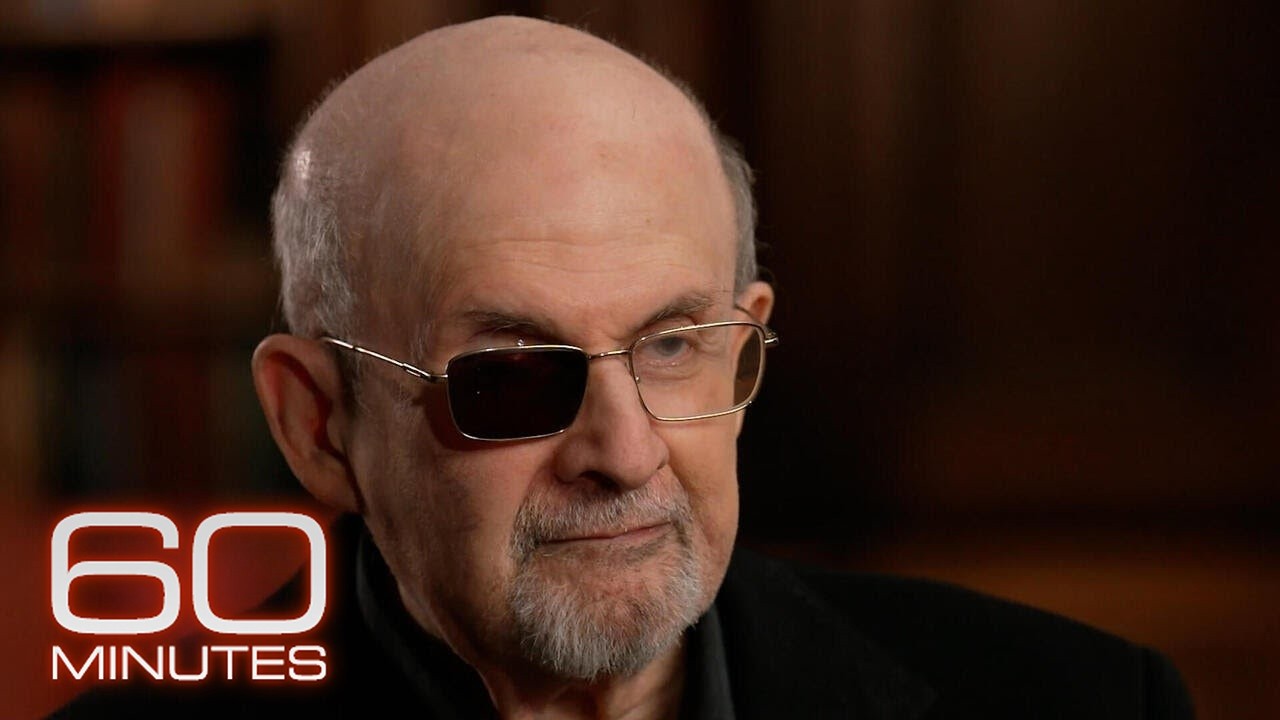
- During the event, Rushdie was attacked by a man with a knife, resulting in the loss of his right eye and life-threatening injuries 0s.
- Rushdie has processed the experience of the attack by writing a book titled Knife 0s.
- Regarding the initial controversy surrounding The Satanic Verses, which depicted the prophet Muhammad, Rushdie stated he did not anticipate the resulting violence and believed that conservative religious critics would simply choose not to read the book 2m0s.
- Rushdie observed that many of those who attacked the book had not read it, and he rejected the notion that he spent five years writing a 600-page novel specifically to insult people 2m15s.
- The publication of The Satanic Verses led to worldwide protests, the burning of the book, and the deaths of 12 people in clashes with police, as well as the murder of the book's Japanese translator 1m50s.
The Chautauqua Attack
- Salman Rushdie accepted an invitation to speak in Chautauqua in August 2022 0s.
- While seated on stage, Rushdie observed a man dressed in black, wearing a face mask, running toward him 5s.
- Rushdie had previously imagined an assassin approaching him in this manner, leading him to feel as though the event was a manifestation from the distant past 15s.
- The attacker struck Rushdie with significant force, which Rushdie initially perceived as a punch rather than a knife attack 35s.
- Rushdie did not realize a knife was involved until he observed blood 42s.
Physical Injuries and Immediate Aftermath
- The attack resulted in 15 wounds, including a large slash across the neck, a puncture wound, and an injury to the eye, as well as wounds to the hand, chest, abdomen, and thigh 50s.
- Rushdie does not recall the specific moment of being stabbed in the eye, only the sensation of falling and subsequent confusion regarding the state of his eye 1m5s.
- The assault lasted for 27 seconds, during which the attacker both stabbed and slashed at Rushdie 1m15s.
- The attack ended when members of the audience intervened and pulled the assailant off of Rushdie 1m30s.
- Rushdie does not know the names of the strangers who restrained the attacker and attempted to stop his bleeding 1m35s.
Reflections on Mortality and the Attacker
- While observing his own blood spreading, Rushdie concluded that he was likely dying, noting that the experience felt matter-of-fact rather than terrifying 1m45s.
- Rushdie reports that he experienced no supernatural visions or revelations during the incident, maintaining his belief that death is simply an end 1m55s.
- Rushdie intentionally excludes the attacker's name from his book and conversations to avoid granting the individual further significance 2m15s.
Hospitalization and Recovery
- Following the attack, paramedics transported Rushdie to a hospital in Erie, Pennsylvania, where he underwent eight hours of surgery 2m35s.
- Post-surgery, Rushdie was placed on a ventilator and appeared cold and discolored, with his face held together by staples 2m45s.
- Medical staff and his wife, Eliza, used a system of toe-wiggling to communicate with Rushdie while he was unable to speak, confirming he could hear them and was aware of his surroundings 3m5s.
- Salman Rushdie was discharged from the hospital after 18 days, followed by three weeks of rehabilitation 10s.
Medical Perspectives and Attacker Profile
- A surgeon who treated Rushdie noted that while he was initially unlucky to be attacked, he was lucky that his attacker did not know how to kill a person with a knife 15s.
- Although Rushdie does not believe in the supernatural, he describes his survival as a miracle because it was an event that was not supposed to happen and for which he has no explanation 30s.
- The attacker is a 24-year-old man from New Jersey who is believed to be a lone wolf; he has pleaded not guilty to attempted murder and is awaiting trial 50s.
- The attacker stated in an interview that he had only read a few pages of The Satanic Verses and viewed some YouTube clips, claiming he disliked Rushdie for attacking Islam 1m0s.
- Rushdie noted that the attacker’s lack of knowledge about his victim would be considered "under-motivated" if written as a character in a novel 1m15s.
Writing Knife and Moving Forward
- Rushdie initially did not want to write his 22nd book, Knife, because he did not want to be defined by the attack, much like he struggled with being defined by the death threat following the publication of The Satanic Verses 1m35s.
- He eventually decided to write the book to address the "elephant in the room," viewing language as a tool to take charge of the situation and fight back 1m55s.
- Nearly two years after the attack, Rushdie is living in New York and continues to adjust to navigating the world with one eye 2m25s.
- Rushdie does not feel like a different person, but he acknowledges that the attack left a "shadow" and increased his awareness of the presence of death 2m40s.
- Regarding the long-term impact of the fatwa and the subsequent attack, Rushdie expressed hope that the recent events are merely the "last twitch" of that story, though he remains uncertain 3m0s.