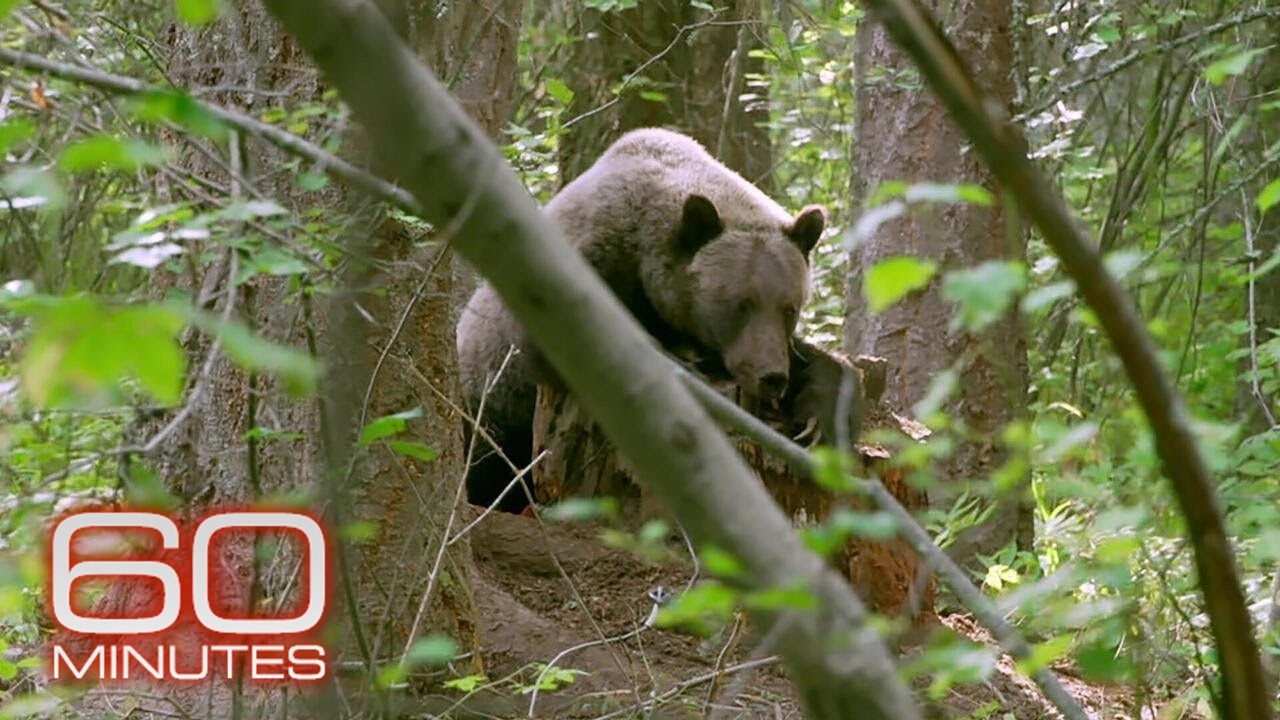


Historical Decline and Recovery of Grizzly Bears
- When Lewis and Clark first encountered grizzly bears, there were approximately a hundred thousand of them in the American West, but they were systematically exterminated by settlers, ranchers, and farmers over the next 150 years, leaving just a few hundred in the lower 48 states by the 1960s 10s.
- Grizzly bears were among the first animals to be protected under the Endangered Species Act in 1975, and since then, their population in the state of Montana has made a remarkable comeback, with their numbers more than tripling and their range more than doubling 2m6s.
Tracking and Monitoring Grizzly Bear Populations
- In the Swan Mountains of northwestern Montana, state bear specialist Eric Weinel and his colleague Milan Vinks are working to attach radio collars to grizzlies and track their population recovery, using snares baited with beaver meat and veterinary sedatives to sedate the bears 4m42s.
- The grizzly bears can weigh as much as a thousand pounds and stand 9 ft tall on their hind legs, with the bear encountered by Weinel and Vinks estimated to weigh around 300 lb, which is considered mid-size for a grizzly 6m15s.
Grizzly Bear Conservation Efforts in Montana
- According to Hilary Cooley, the wildlife biologist in charge of grizzly bear recovery for the US Fish and Wildlife Service, the recovery effort has focused on millions of acres around Glacier and Yellowstone National Parks, where a few hundred grizzlies were protected from eradication 8m30s.
- However, the growing human population in Montana, which has increased by 250,000 since grizzlies were protected in 1975, has led to conflicts between humans and bears, with bears often wandering into areas with houses and subdivisions built near the wilderness 10m45s.
Human-Bear Conflicts and Coexistence Challenges
- Bryce Andrews, a rancher and field director for the nonprofit People and Carnivores, works to minimize human-bear conflict and has seen instances of grizzlies raiding trash cans, chicken coops, and backyard bird feeders, highlighting the need for coexistence between humans and bears 12m50s.
- Grizzly bears are true omnivores and are hungry from the moment they emerge from hibernation, eating anything with caloric value, which can lead to trouble with humans 10s.
- The greatest trouble comes when grizzlies go after livestock or crops that ranchers and farmers count on for their livelihoods, with some producers losing 20-30 cows a year to grizzly bears 42s.
- Greg Schock, a farmer in Montana's Mission Valley, has experienced significant losses due to grizzlies, with bears knocking down between 20 and 25% of his corn crop every year 2m6s.
Legal and Conservation Status of Grizzly Bears
- With nearly 2,000 grizzlies in the area, the federal government would like to remove some populations from the endangered species list, but court challenges from environmental groups and Native Americans have prevented this so far 2m6s.
- To coexist with grizzlies, organizations like Bryce Andrews' install high-voltage electric fences around fields, but grizzlies are smart enough to test and sometimes get around them 4m30s.
Managing Problematic Grizzly Bear Behavior
- If a grizzly develops a taste for garbage and gets accustomed to being near people, it can prove fatal, and bears that get into such trouble are often trapped and relocated, but may need to be euthanized if they continue to pose a threat to human safety 6m40s.
- Federal official Hillary Cooley may need to authorize the killing of grizzlies that pose a threat to human safety, which is a necessary but difficult decision, with nearly 50 grizzlies being euthanized last year 8m50s.
Scientific Monitoring and Research of Grizzly Bears
- Grizzly bears are tracked and monitored using radio collars, with females being the primary focus as they drive the system, and data is collected through blood samples, hair analysis, and physical measurements 12m10s.
- A person claims that it is possible to put a hand in a grizzly bear's mouth, and a grizzly bear is shown starting to wake up less than an hour after being darted, with the people around it being told to leave the area 10s.
Human Encounters and Safety in Grizzly Bear Country
- As people venture deeper into bear country for activities like hiking, biking, camping, or hunting, there are several unsafe encounters with grizzly bears every year, and Anders Broste shares his experience of being attacked by a grizzly bear while hunting for deer and elk in the wilderness north of his Montana home 42s.
- Broste's encounter with the grizzly bear occurred on November 11th, 2018, when he stumbled upon a bear dozing in the snow, and the bear bit his arm and leg, thrashed him around, and then dropped him and ran off, with Broste's hunting partner reaching him within a minute or two and calling 911 2m6s.
- Broste was hospitalized for 6 days, had three surgeries, and suffered a broken arm, thumb, and dislocated hand, as well as a foot that was held to his ankle with soft tissue, and he was eventually choppered out of the area 2m6s.
- The grizzly bear that attacked Broste was identified through DNA samples as a bear that had been trapped and released by state bear managers 4 years earlier, and Broste is okay with the fact that the bear is still out there, acknowledging that he was intruding on the bear's territory 2m6s.
Recovery and Reflection After a Grizzly Bear Attack
- Broste, who is the co-founder of a company that makes mountain bikes, has recovered from his injuries after many months of tough rehab and plans to go hunting again with his friend Dan, and he believes that grizzly bears are a part of the ecosystem and play a role in making Montana wild 2m6s.