

Saltwater Crocodile Biology and Population Recovery
- Saltwater crocodiles, often referred to as "salties," are apex predators found in northern Australia that can grow over 20 feet long, weigh more than a ton, and possess a bite force capable of crushing a human skull 0s.
- Due to legal protections, the saltwater crocodile population has surged from a few thousand in the 1970s to over 150,000, leading to increased interactions and friction with humans 0s.
- In Darwin, residents generally avoid swimming in the ocean because the city is surrounded by crocodile habitat and the animals are known to be territorial 32s.
Management of Problem Crocodiles
- Government ranger Tom Nichols and his team are responsible for removing "problem crocodiles" that enter residential areas or get too close to human populations 1m5s.
- Rangers typically capture these crocodiles using cages baited with wild boar meat, though removing the animals from the traps requires specialized techniques 1m15s.
- Even crocodiles that are not fully grown, such as a six-footer, are capable of killing a human by dragging them underwater and performing a "death roll," a spinning maneuver used to drown prey 1m25s.
- Tom Nichols lost half of his left hand over 20 years ago during an encounter with a crocodile that performed a death roll 1m45s.
Conservation and Coexistence Efforts
- Saltwater crocodiles are considered the largest reptiles on the planet and are described by some scientists as the most aggressive crocodile species 2m15s.
- Australian officials banned nearly all crocodile hunting in the 1970s when the species was nearing extinction, resulting in a significant population recovery 2m35s.
- Trevor Sullivan, a self-described conservationist, keeps 10 saltwater crocodiles in his backyard, including a 120-year-old crocodile named Chuck, to demonstrate that humans and crocodiles can coexist 3m5s.
- Sullivan claims that crocodiles can be trained, taught to respond to their names, and integrated into a routine, viewing them as family rather than just pets 3m45s.
Human Fatalities and Public Safety
- Rangers are currently searching for a crocodile that has been identified as a killer 0s.
- Approximately 50 human deaths caused by crocodiles have been reported in Australia since the implementation of a hunting ban 50 years ago 5s.
- Public education campaigns regarding the importance of maintaining distance from crocodiles are credited with helping to keep fatality numbers low 12s.
- Many fatal encounters with saltwater crocodiles, often referred to as "salties," have occurred because individuals misjudged the safety of swimming or fishing locations 18s.
Political Debate Over Crocodile Hunting
- Bob Katter, a member of the Australian Parliament, advocates for the repeal of the ban on crocodile hunting 35s.
- Katter’s electorate, located approximately 1,000 miles southeast of Darwin, includes farmland where cattle are occasionally preyed upon by crocodiles 45s.
- While Katter recalls swimming in local rivers during his youth, he states that it is currently too dangerous for children to do so 52s.
- Katter has expressed that he considers the current law protecting crocodiles over human life to be "evil" and has suggested he is tempted to shoot a crocodile himself 1m5s.
- Proponents of repealing the hunting ban argue that it would improve safety in waterways and generate profit through big game hunting 1m15s.
- Opponents of the hunting ban argue that crocodiles are more valuable alive than dead, noting that the tourism industry in Darwin relies heavily on the presence of the animals 1m20s.
- Tourism operators near Darwin offer experiences that allow people to have close encounters with crocodiles 1m28s.
Indigenous Perspectives and Cultural History
- Humans and crocodiles have coexisted in Australia for approximately 50,000 years 1m45s.
- Kakadu National Park, which is larger than the state of Connecticut, is home to a few hundred people and an estimated 10,000 crocodiles 1m48s.
- Indigenous Australians, such as river guide Gleeson Namabulwa, are legally permitted to hunt crocodiles for food using traditional methods like spears 1m55s.
- Indigenous perspectives on crocodiles vary; some support commercial hunting, while others view the animals as spiritual totems that should be protected 2m10s.
- Trevor Sullivan, an indigenous Australian, views the ability to coexist with saltwater crocodiles as a privilege 2m20s.
Nile Crocodile Research in the Okavango Delta
- Africa's Nile crocodile is considered the most dangerous and deadly species, capable of reaching 20 feet in length, weighing as much as a car, and possessing a bite force comparable to a Tyrannosaurus Rex 2m45s.
- Crocodiles are prehistoric animals that have existed since the time of the dinosaurs, though scientific study of them remains difficult due to the dangers of observing them on land and the historical belief that underwater observation was impossible 2m55s.
- Wildlife filmmakers Brad Bestelink and Andy Crawford have spent six years filming Nile crocodiles in the Okavango Delta of Botswana by entering the animals' underwater environments 0s.
- The Okavango Delta is characterized by extensive waterways and islands, serving as a habitat for thousands of Nile crocodiles 15s.
- Underwater visibility in the delta is often limited to a few feet, making it difficult to detect crocodiles until they are in close proximity 35s.
- The filmmakers began their project after a crocodile swam between them and settled on the ground nearby without attacking, an experience that initially caused them panic 42s.
- Through their observations, Bestelink and Crawford have developed a perspective that Nile crocodiles are beautiful, dappled in gold and black, and more timid than their reputation as man-eaters suggests 1m15s.
- Nile crocodiles are widely feared as stealthy predators that kill hundreds of people annually in Africa, and while the species is protected in Botswana, the filmmakers believe further behavioral research is necessary to improve human safety 1m45s.
Genetic Sampling and Underwater Observation
- Australian zoologist Dr. Adam Britton, who has studied crocodiles for nearly 20 years, was invited to join the project to help build a genetic database of the delta's crocodile population 2m6s.
- Dr. Britton characterizes crocodiles as highly intelligent, finely honed, and perfectly adapted creatures 2m25s.
- Traditional methods of studying crocodiles involve physically capturing them, which requires pinning the animals and covering their eyes to keep them calm without the use of sedation 2m45s.
- The genetic sampling project aims to track the movement and origins of crocodiles throughout the delta, as current scientific knowledge regarding these patterns is limited 3m25s.
- Up-close observation reveals that crocodiles possess a variety of colors and a surprising softness to their skin, particularly on their feet, which contrasts with their drab appearance when covered in mud 3m45s.
- Crocodile claws measure approximately one to one and a half inches in length, while the pads of their feet are notably soft 0s.
- Capturing crocodiles is a stressful process for both the animals and the researchers, and returning them to the water requires careful handling, including applying pressure to the top of the skull 4s.
- Dr. Adam Britton has gained new insights into the underwater behavior of crocodiles by diving with Brad and Andy, noting that the experience allows him to perceive the same environmental changes, such as water currents and temperature shifts, that the animals experience 18s.
- Dr. Britton collects DNA samples by cutting small pieces from the tails of crocodiles, a process the animals appear to tolerate without distress 38s.
Diving Safety and Crocodile Behavior
- Diving with Nile crocodiles is restricted to winter months when the water is cold and the animals are sluggish, as they are significantly more active and prone to predatory attacks during the summer 42s.
- Researchers emphasize the importance of descending below the water's surface as quickly as possible, as they believe crocodiles are less likely to recognize humans as prey once they are submerged 1m12s.
- While researchers believe divers are safe, they acknowledge that they do not know for certain how crocodiles perceive humans and are still working to understand the animals' perception 1m22s.
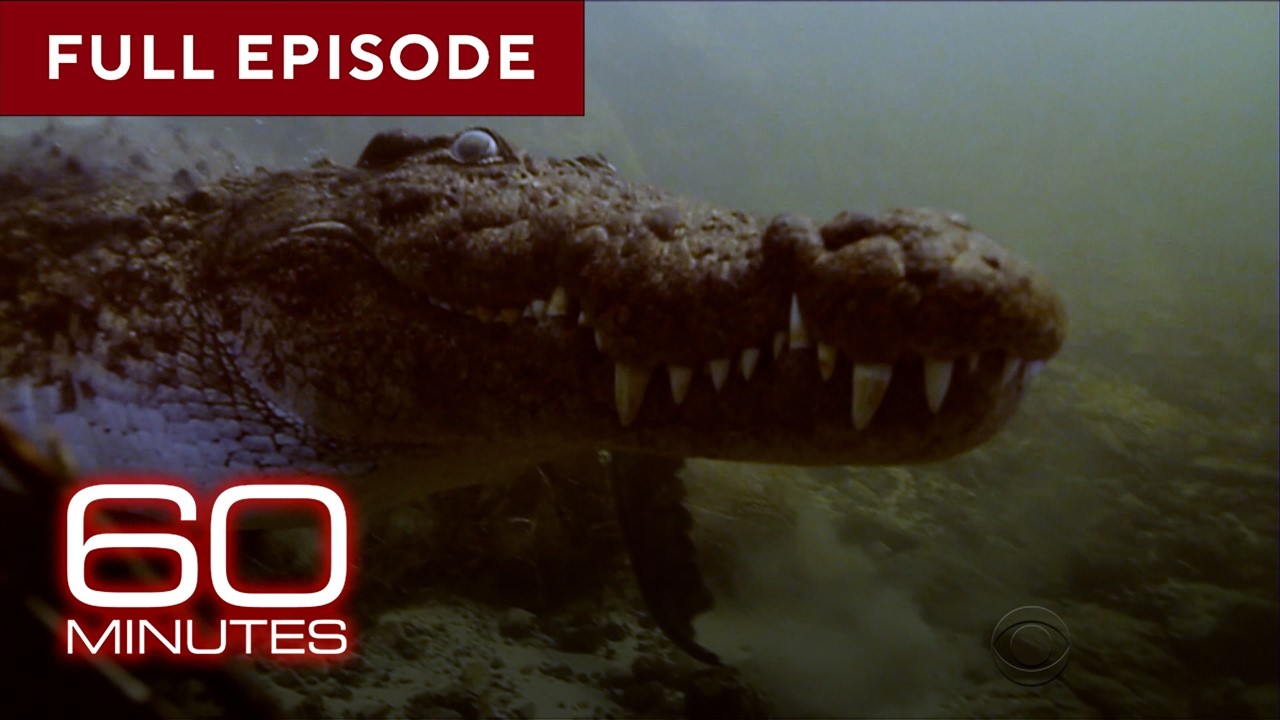
- A recorded encounter featured a 12-foot-long, 1,400-pound crocodile that did not appear to sense a nearby diver, instead striking the diver's light, which the researchers suggest the animal may have mistaken for debris 1m38s.
- During a diving expedition to an area with underwater caves, the team consisted of Brad, cameraman Richard Yawn, Andy as a safety diver, and the narrator 2m6s.
- Divers use a specific hand signal to communicate the presence of a crocodile and carry poles to provide a psychological barrier and a means to anchor themselves against the current to avoid drifting toward the animals 2m14s.
- Surface motion from boats tends to attract crocodiles, making it critical for divers to enter the water and reach the bottom quickly to avoid potential attacks 2m44s.
Underwater Cave Expeditions
- Divers prepare for an underwater expedition by conducting final equipment checks before descending into a river. 0s
- The river bottom is approximately 15 feet deep and features an underwater environment containing papyrus, submerged trees, lilies, and overhanging ledges. 15s
- Observers enter a nearby cave system to locate a crocodile after noticing ripples on the water's surface. 28s
- Inside the cave, visibility is limited to the light provided by camera equipment, making navigation difficult. 38s
- A crocodile is spotted on the cave floor, characterized by a visible row of white teeth. 44s
- The encounter with the crocodile is described as both beautiful and intimidating, highlighting the animal's perceived strength and the potential for a sudden attack. 52s
- A second crocodile, measuring approximately 9 feet in length with a tail comprising half of its body, is discovered on a ledge deeper within the cave. 1m12s
- Crocodiles possess the physiological ability to slow their heart rate and close a heart valve to restrict blood flow to certain organs, allowing them to remain submerged for hours. 1m18s
- A crocodile retreats after a period of stillness, eventually swimming away with a flick of its tail. 1m36s
Close-Up Encounters and Evolutionary Significance
- A third crocodile is encountered facing the divers head-on, and a camera mounted on a stick is used to capture close-up footage. 1m45s
- A crocodile's front vision is limited, which provides a degree of safety for observers; however, if a crocodile rises on its feet, it indicates the animal feels threatened and may be preparing to strike. 1m58s
- During a pursuit, a crocodile stirs up significant sand and sediment, obscuring the divers' vision. 2m13s
- The divers follow a crocodile closely enough to potentially touch its tail, though they refrain from doing so to avoid provoking a reaction. 2m18s
- The crocodile moves too quickly for the divers to maintain pursuit, leading them to surface and return to their boat. 2m35s
- Nile crocodiles are noted as being more deadly in terms of annual human fatalities compared to great white sharks. 2m55s
- Despite being historically hunted and viewed as dangerous, crocodiles are described as perfectly evolved ancient creatures. 3m3s
- The current rate of animal extinction is compared to the period when dinosaurs disappeared, noting that many species vanish annually. 3m15s
Threats to Turtles and Tortoises
- Turtles and tortoises have existed for over 200 million years, but they currently face significant threats from human activity and the illegal animal trade 0s.
- Eric Goode, a successful New York City entrepreneur known for his work in the hospitality industry, dedicates his time and resources to the conservation of endangered turtles and tortoises 15s.
- Goode’s interest in reptiles began at age six when he acquired a Hermann's tortoise, which eventually led to a lifelong commitment to studying and protecting various species 35s.
- Approximately half of the more than 300 known species of turtles and tortoises are currently facing extinction due to habitat loss and high demand in Asian markets for food, medicine, pets, and collector's items 1m15s.
- The illegal trade of turtles and tortoises is estimated to be worth hundreds of millions of dollars in China alone, largely because the potential for profit is high while the risk of prosecution and incarceration remains low 1m30s.
Conservation Challenges in Madagascar
- Goode invests approximately one million dollars of his own money annually to combat the illegal wildlife trade in regions such as Madagascar 1m55s.
- Conservation efforts in Madagascar are complicated by extreme poverty, where many residents live on less than a dollar a day, and a lack of political will to enforce wildlife protection laws 2m5s.
- Madagascar has lost 90% of its forests due to logging and slash-and-burn agriculture, which has caused severe soil erosion and habitat destruction 2m25s.
- Despite environmental degradation, Madagascar remains a unique habitat for endemic species, including lemurs, chameleons, geckos, various frogs, and five rare species of turtles and tortoises 2m40s.
- The ploughshare tortoise is considered the world's most endangered tortoise and is highly sought after by poachers, who view the animals as valuable commodities 3m5s.
- The population of adult ploughshare tortoises in the wild may be as low as 300 individuals 3m35s.
- To protect the species, Goode has funded the hiring of approximately 40 local guards who patrol the wilderness to locate and secure tortoises before poachers can reach them 3m45s.
Protecting the Ploughshare Tortoise
- The ploughshare tortoise is characterized by a unique, dome-shaped shell that resembles an army helmet, making it a highly valuable animal for collectors 0s.
- Research indicates that a single ploughshare tortoise can sell for as much as $60,000 in Asian markets 23s.
- To deter illegal trafficking, conservationists have begun drilling permanent, indelible scars into the shells of these tortoises to make them less desirable to collectors 28s.
- The process of scarring the shell involves drilling 1/16 of an inch deep, requiring extreme caution to avoid hitting the bone and drawing blood 42s.
- Conservationists acknowledge that while the practice is painful to perform and watch, it is considered a necessary extreme measure due to the critically low number of tortoises remaining in the wild 1m5s.
- It is currently too early to determine if the shell-scarring initiative is successfully reducing the illegal trade 1m23s.
Illegal Wildlife Trade and Breeding Centers
- In a market in Mahajanga, Madagascar, hidden cameras captured endangered tortoise shells on display and vendors offering live, critically endangered spider tortoises and radiated tortoises for sale 1m43s.
- Some tortoises, such as the spider tortoise, are sometimes subjected to shell punctures by buyers who intend to consume the animal's liver 2m13s.
- Illegal trade offers include the ploughshare tortoise, though purchasing one would violate both Malagasy and international laws regarding the smuggling of endangered species 2m33s.
- The Durrell conservation group operates a protected refuge and breeding center in a Madagascar forest, which utilizes security measures such as locks, razor wire, and armed guards 3m5s.
- Ploughshare tortoises are among the longest-lived animals on the planet, with some individuals potentially reaching ages between 50 and 200 years 3m35s.
- Asian collectors often seek these tortoises because of a belief that owning them confers long life upon the owner 3m53s.
- The high value of these animals has attracted crime syndicates, leading to a significant heist in the late 1990s where 75 young and two adult tortoises were stolen from the breeding center 4m2s.
- Following the heist, the population of ploughshare tortoises at the center has rebounded, with the female enclosure producing 300 offspring 4m30s.
- During a visit to the breeding center, observers witnessed a female tortoise digging a nest to lay eggs, an event rarely seen even by the staff managing the facility 4m52s.
Breeding and Conservation Facilities
- Tortoises utilize their stubby, elephantine feet to cup soil and dig holes for laying eggs, a process that can take approximately an hour 0s.
- Eric Goode operates a breeding center in the mountains outside of Los Angeles, which he established after receiving 150 turtles and tortoises from the Bronx Zoo for safekeeping 35s.
- The breeding center houses 680 animals representing 30 endangered species, which are provided with specialized care including fresh flowers, salad greens, and organic milk smoothies 52s.
- Specific species at the facility include tortoises from Burma that are biologically extinct in the wild, as well as the golden coin turtle, which is considered one of the 25 most endangered turtle species globally 1m5s.
- While the long-term goal is to return these animals to the wild, there are concerns regarding the lack of protection for them in their natural habitats 1m35s.
- Eric Goode successfully hatched 250 tortoises and turtles in the previous year and is currently focused on protecting 11 plowshare tortoises 1m55s.
Dinosaur Biology and Nesting Behavior
- Paleontologist Jack Horner, who served as a consultant for the Jurassic Park films, focuses on understanding the biology and behavior of dinosaurs as living creatures rather than studying the causes of their extinction 2m25s.
- Jack Horner has discovered more Tyrannosaurus Rex specimens than any other individual and is interested in the possibility of creating a dinosaur 3m5s.
- The discovery of B-Rex, a 68-million-year-old Tyrannosaurus Rex found by a paleontologist from Montana State University, has provided new insights into dinosaur research 2m15s.
- The teeth of the oldest T-Rex ever discovered contain a pocket where new teeth develop, indicating that these dinosaurs replaced their entire set of teeth annually 0s.
- Jack Horner and his team discovered the world's first dinosaur nesting ground in the badlands of Montana, which contained a vast landscape of eggs, nests, and babies 18s.
- These findings contributed to the understanding that many dinosaurs were social animals that lived in colonies and provided care for their young 32s.
- By comparing the tibia of a one-month-old dinosaur to that of a one-year-old, Horner determined that rapidly growing baby dinosaurs were likely unable to walk initially, suggesting parents brought food to the nest similar to modern birds 42s.
- These discoveries support the widely accepted theory that dinosaurs are the ancestors of modern birds 1m2s.
Paleontological Research and Fossil Analysis
- Sean Carroll, a professor of molecular biology and genetics at the University of Wisconsin, confirms that birds are dinosaurs and that dinosaurs did not go extinct, as the group that became birds survived the asteroid event that killed other famous dinosaur species 1m15s.
- Mary Schweitzer, a professor at North Carolina State University, utilizes a method to distinguish dinosaur bone from rock by touching it to the tongue; the bone sticks like Velcro because moisture is absorbed by the capillaries within the fossil 1m45s.
- Schweitzer’s research involves breaking open dinosaur bones and dissolving pieces in acid to study their internal composition 2m15s.
- While many paleontologists consider breaking fossils to be sacrilegious, Horner allows Schweitzer to dissolve his specimens, arguing that the fossils are like unopened presents that contain valuable information, such as the first discovered dinosaur embryos 2m25s.
- Horner maintains that destroying the fossils is not heartbreaking because the pieces can be glued back together 2m45s.
- The collaborative practice of breaking and dissolving dinosaur bones has placed Horner and Schweitzer at the center of a significant paleontological controversy that began in 2000 2m55s.
Discovery and Analysis of B-Rex
- Bob Harmon, a member of Jack’s team, discovered a T-Rex metatarsal protruding from a 50-foot cliff while at a dig site 0s.
- The specimen was named "B-Rex" in honor of Bob Harmon 35s.
- Excavating the site was a difficult, three-summer project that required climbing crews to rappel down the cliff face with jackhammers because there was no road or direct access 42s.
- Because the site was remote, bones were transported by helicopter, but the thigh bone cast was too heavy for the aircraft to lift 1m2s.
- To facilitate transport, one of the B-Rex femurs was cut in two, which allowed for an examination of the bone's interior 1m10s.
- Bone fragments were sent to Mary Schweitzer, who identified the specimen as a pregnant female after discovering medullary bone, a tissue type found in female birds preparing to lay eggs 1m20s.
- This discovery marked the first time gender had been identified in a dinosaur and provided evidence of a link between dinosaurs and birds 1m35s.
Soft Tissue Discovery and Scientific Controversy
- During a laboratory process, Mary Schweitzer accidentally dissolved the mineral layer of the bone fragments using acid, revealing elastic, soft tissue that remained despite the fossil being 68 million years old 1m55s.
- After initially doubting the results and repeating the experiment to ensure accuracy, Mary Schweitzer found structures resembling flexible, transparent blood vessels and intact cells in multiple samples 2m25s.
- The findings challenged established scientific consensus that organic material cannot survive for millions of years 2m45s.
- Following the publication of their findings in the journal Science, the team faced criticism from peers who suggested the samples were contaminated or that the structures were actually biofilm 2m55s.
- Mary Schweitzer has replicated these findings using an 80-million-year-old duckbill dinosaur, consistently observing structures that appear to be blood vessels 3m5s.
- Mary published new research regarding 80-million-year-old blood vessels, a finding that continues to generate controversy among critics 0s.
- The potential survival of blood vessels over such a long duration raises questions regarding the possibility of finding dinosaur DNA 7s.
The Dino Chicken Project
- Jack Horner and his crews have adopted the use of surgical gloves when handling fossils, a departure from traditional paleontological practices that previously did not prioritize preventing contamination from skin cells or sweat 13s.
- While Jack Horner expresses skepticism that a complete dinosaur DNA sequence will be recovered, he is pursuing a project to create a "dino chicken" 23s.
- The proposed method involves reverse engineering a chicken by utilizing ancestral DNA, based on the evolutionary connection between birds and dinosaurs 32s.
- Modern chickens share several physical characteristics with dinosaurs, including walking on hind legs, having three forward-pointing toes with one in the back, and possessing wishbones 46s.
- Jack Horner contends that dinosaur features not present in adult chickens, such as long tails, can be restored because these traits appear during the embryonic development of chicks 55s.
- The process of creating a "dino chicken" involves manipulating gene expression—specifically switching genes on or off—to prevent the destruction of features like the tail during embryonic development 1m3s.
- The goal is to produce a chicken that possesses a long tail, teeth, and claw-like hands instead of wings 1m15s.
- Jack Horner expresses confidence that a "dino chicken" can be successfully created within the next five years 1m21s.