

The Demand for Long-Tailed Macaques and the Rise of Monkey Laundering
- The demand for long-tailed macaques is high due to their use in various research experiments, including Alzheimer's research, Ozempic, and vaccines, and they are preferred for research because of their hardiness 51s.
- The COVID-19 pandemic increased the demand for monkeys, leading to a surge in poaching, with each monkey selling for $50,000, and wild-caught monkeys often bringing infectious diseases with them 1m9s.
- It is challenging to distinguish between wild-caught and captive monkeys, and wildlife trafficking is often driven by greed, with animals being viewed as commodities rather than sentient beings 1m36s.
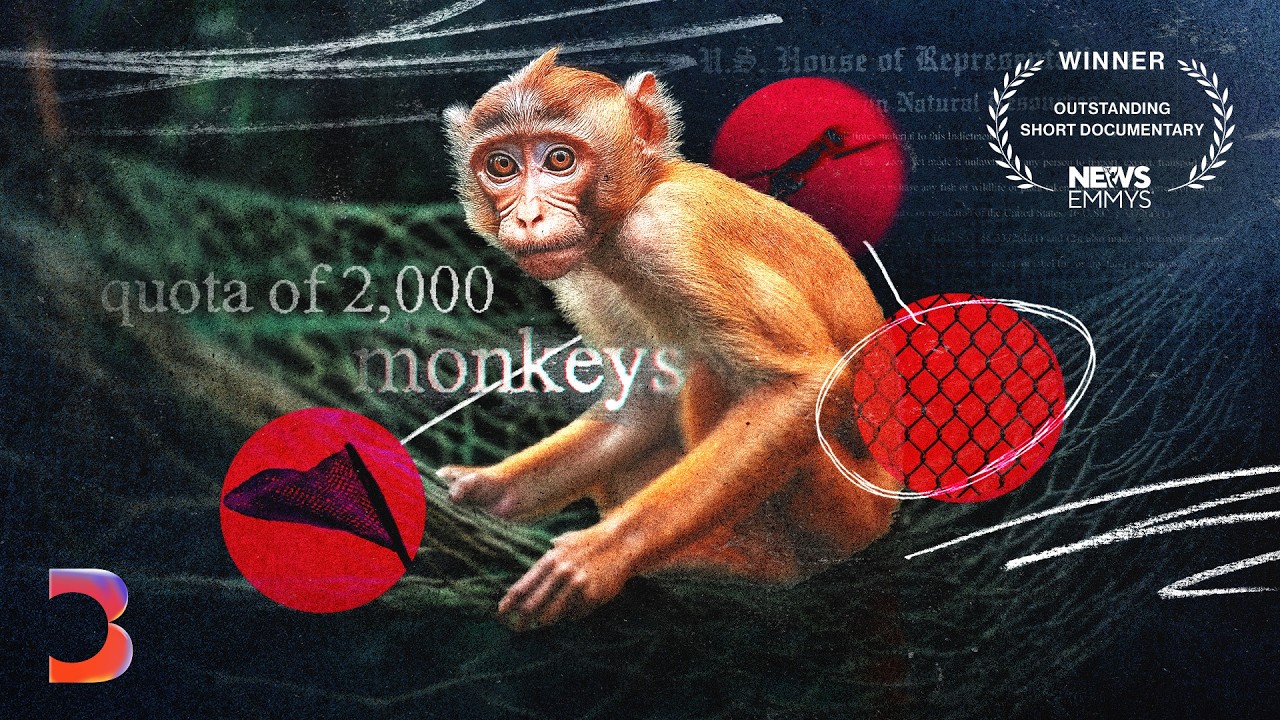
- The long-tailed macaque trade involves over 30,000 monkeys being traded each year, raising questions about their destination and the buyers 1m48s.
Investigating Monkey Laundering and Undercover Operations
- A special agent for the US Fish and Wildlife Service plays a crucial role in investigating and disrupting underground smuggling networks, including those involved in monkey laundering 2m40s.
- Monkey laundering refers to the practice of taking a wild monkey, moving it to a facility, and falsifying paperwork to make it appear as if the animal was born in captivity, often to circumvent laws prohibiting the capture of wild animals 3m23s.
- In 2010, an investigation was launched into macaque farms in Cambodia that were allegedly capturing wild macaques and falsifying paperwork to make it seem like they were captively bred 3m59s.
- An undercover operation was conducted at an animal research trade fair in Washington D.C., where a special agent posed as a lawyer representing investors in primate businesses to gather information from companies involved in the primate trade 4m36s.
- The undercover operation revealed that some companies were willing to discuss and engage in monkey laundering, with representatives sharing stories and laughter about the practice 5m11s.
- Wild primates were found with bullet wounds and injuries indicative of being captured from the wild, despite being declared as captive, prompting an investigation into primate facilities in Cambodia 5m15s.
The Vanny Bio Research Whistleblower and the Commune Project
- An undercover operation was deemed necessary to investigate the issue, and in March 2017, an email was received from Francis Yeung, who claimed to be working at Vanny Bio Research Cambodia, the largest macaque facility in Cambodia 6m10s.
- Francis Yeung expressed his desire to expose the immoral treatment of monkeys at Vanny Bio Research, leading to a meeting with Cruelty Free International in the UK, where he provided details about the transportation of monkeys from Cambodia to the US 6m58s.
- The monkeys were transported in small crates by road from Cambodia to Bangkok, then transferred to another truck at the Thai border, and driven to the airport, where they were left for several hours before being flown to the US 8m1s.
- Francis Yeung provided video footage and information about the facility, including a project called the Commune Project, which aimed to supplement captive-bred monkeys with wild-caught monkeys due to insufficient supply 9m3s.
- The Commune Project involved setting up a farm in an area with a high density of monkeys, where they would be collected, prompting concerns about the sourcing of wild monkeys 9m32s.
Operation Long Tail Liberation and the US Fish and Wildlife Service Investigation
- The information was shared with the US Fish and Wildlife Service, leading to the launch of Operation Long Tail Liberation, an undercover effort to catch monkey smugglers 9m44s.
- The operation aimed to document the smuggling of monkeys into the US, marking the beginning of a four-year process to expose the illicit trade 10m22s.
The Impact of the COVID-19 Pandemic on the Monkey Trade
- A former primate biomedical industry scientist, who is now PETA's Senior Science Advisor for Primate Experimentation, shares their experience and knowledge about the primate industry, having spent 30 years in the field and leaving due to unacceptable treatment of animals and poor science 11m3s.
- The COVID-19 pandemic led to a monkey shortage as the Chinese government stopped exporting monkeys, prompting Cambodia to increase its exports from 5,000-6,000 to 30,000 monkeys per year, with many being sent directly to the US 11m48s.
- Monkey breeders have expressed concerns that the numbers of monkeys coming from Cambodia are impossible to achieve naturally, suggesting that the math does not add up 12m14s.
- Locals in Cambodia are often hired to capture wild primates using methods such as electrocution devices, and then bring them to facilities for export 12m56s.
The US Department of Justice Indictment and the Arrest of Masphal Kry
- In November 2022, the US Department of Justice unveiled an indictment outlining a massive monkey smuggling scheme, accusing officials from Vanny of being the architects of the process that smuggles thousands of monkeys from Southeast Asia into the US 13m18s.
- The indictment is extremely detailed, with over half a million pieces of evidence, including internal company emails, shipping records, and videos 13m44s.
- The monkey business in the US is a multi-billion-dollar industry, with companies like Charles River Labs, Worldwide Primates, and Inotiv being major players, and it is believed that Worldwide Primates and Inotiv were heavily involved in the Cambodian shipments 13m56s.
- The indictment was posted on November 16th, and the individuals listed were all foreign nationals, making it difficult for US officials to arrest them until they were on US soil 14m48s.
- Masphal Kry, the Cambodian Assistant Director in the Forestry Department, was arrested by Fish and Wildlife at JFK Airport as he transited through the US 15m11s.
The Trial of Masphal Kry and the Evidence Presented
- A trial began in March 2024, focusing on the alleged involvement of a Cambodian government official, Masphal Kry, in a conspiracy to smuggle wild-caught monkeys into the US, with the prosecution trying to build a case against him as none of the executives from Vanny were caught or arrested 16m16s.
- The trial revealed that 30,000 wild-caught monkeys entered the US during a five-year period, with the prosecution calling several witnesses, including an informant, Francis Yeung, multiple Fish and Wildlife agents, and an expert on long-tailed macaques 16m50s.
- The expert witness, who had experience with long-tailed macaques, was approached by the Fish and Wildlife legal team to provide information on the range, distribution, endangered status, and the implications of mixing wild and captive monkeys 18m1s.
- The expert analyzed a chart showing the annual birth and growth rate at Vanny's breeding facilities in Cambodia and found discrepancies, suggesting that the facility was exporting more monkeys than could have been born within the group, implying that the extra monkeys came from other facilities or the wild 18m20s.
Challenges in the Trial and the Defense's Strategy
- During the trial, the defense attempted to discredit the expert witness by portraying them as a radical conservationist unable to conduct good science, but the witness denied this characterization 19m8s.
- The US Department of Justice gathered extensive evidence, including emails, videos, and documents from inside the company, but as the trial proceeded, almost all charges were dropped, leaving only two charges 19m34s.
- Masphal Kry was involved in a trial for conspiracy and smuggling, where he was caught on video suggesting the construction of a different road to make smuggling easier 20m13s.
Key Evidence and the Prosecution's Failure to Secure a Conviction
- The Fish and Wildlife Service established a chain of evidence tracing a wild monkey from Cambodia to the US by having an informant mark the crate containing the monkey 20m30s.
- When the marked crate landed in JFK, Fish and Wildlife agents identified it as containing a wild monkey, despite paperwork claiming it was a captive monkey 20m40s.
- The defense requested a document with Masphal Kry's name connected to wild monkeys, but the prosecution failed to provide it 20m53s.
- The jury asked questions during deliberation, including whether an individual is responsible if they follow their boss's orders and commit an illegal act 21m15s.
- The prosecution failed to prove Masphal Kry acted outside his capacity as a government official, leading to his acquittal 21m34s.
- The verdict was a surprise, as it was expected that the prosecution would secure a conviction 21m50s.
The Aftermath of the Trial and the Fallout for the Fish and Wildlife Service
- After the trial, Masphal Kry received a hero's welcome in Cambodia, and the Fish and Wildlife Service faced criticism for not securing a conviction 22m42s.
- The investigation was deemed flawed due to poor leadership, mismanagement of informant funds, and influence from radical nonprofits 23m4s.
The Broader Implications of the Case and the Need for Ethical Awareness
- Despite the acquittal, the case sent a message to the monkey business, highlighting the issue of monkey laundering and the US demand for wild monkeys 23m22s.
- The real issue lies with the people in the US who are buying the monkeys, who should be more aware of the ethics and science behind the trade 24m5s.
- There are seven more indicted individuals waiting to be brought to trial in the United States. 24m28s
- The trial has revealed that wild monkeys are being injected into the US biomedical industry, which has significant consequences. 24m38s
- Prior to this case, the issue of wild monkeys being used in the US biomedical industry was not publicly discussed. 24m45s