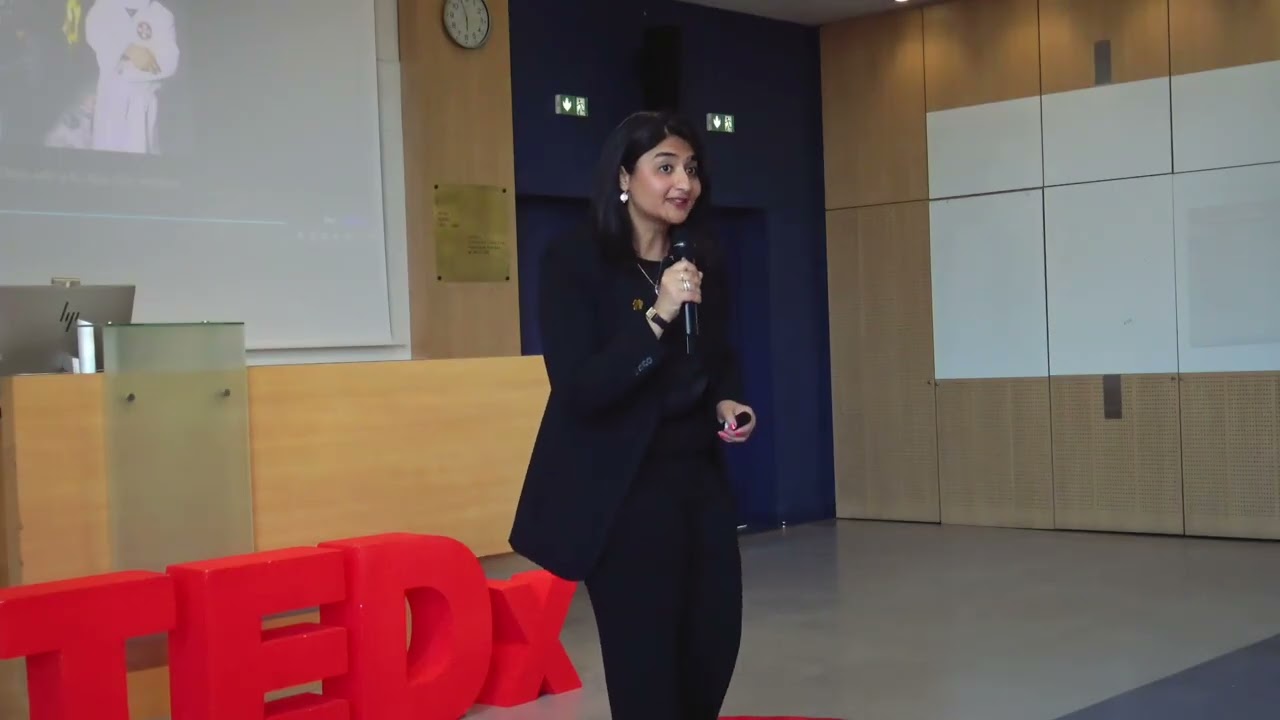


Personal Experiences with Prejudice and Division
- The world felt tense after the 9/11 attacks in 2001, with Islamophobia being prevalent in the news, streets, and air, making it difficult for a teenager to find their place in society 10s.
- A personal encounter with a classmate who had a preconceived image of people from Pakistan and the Muslim world as frightening and distant, and despite attempts to argue with facts, the classmate's opinion could not be changed, revealing that people often protect a feeling of safety rather than an image or perception 1m42s.
- Over the years, similar encounters occurred, with people making judgments based on birthplace, and both parties would become defensive and double down on their arguments, highlighting a common experience that many people face 3m30s.
- Despite living in the most connected time in human history with access to vast amounts of information, people are more divided than ever, often talking at each other instead of with each other, and this phenomenon can be observed in various settings, including campuses, parliaments, and dinner tables 5m10s.
The Ineffectiveness of Argument and the Need for Recognition
- Research suggests that arguing and presenting facts does not work in changing people's opinions, as people are taught to argue and debate but not to listen and see, and a more effective approach is through recognition, which involves acknowledging another person's dignity and the legitimacy of their perspective 6m40s.
- Recognition is a radical act that separates the person from the opinion and the relationship from the debate, allowing for a better understanding and bypassing the threat of social suicide and betrayal to one's group that often comes with changing one's mind 8m20s.
- Psychologist Jonathan Haidt's study found that people do not reason their way to their beliefs, but rather feel their way there first and then use logic to defend what they already believe, highlighting the importance of understanding what arguing does to people 10m30s.
The Psychological Impact of Challenging Beliefs
- When a person's worldview is challenged, their body releases cortisol, a stress hormone that can hinder rational thinking and lead to a fight or flight response, causing them to stop listening and focus on pushing back 10s.
- Recognition is a more effective approach than presenting facts and arguments, as evidenced by a 2016 study where researchers from Stanford and UC Berkeley found that a ten-minute conversation where people were asked about their lives and listened to led to significant attitude shifts, even nine months later, because they felt seen 2m6s.
Real-World Examples of Recognition in Action
- Daryl Davis, a black jazz musician from the USA, is a powerful example of the impact of recognition, as he met with Ku Klux Klan members, asked them how they could hate him if they didn't know him, and listened to their responses, leading to over 200 Klan members leaving the organization over the next 30 years 4m42s.
- Nelson Mandela also demonstrated the power of recognition when he became the first black president of South Africa in 1995 and wore the Springbok rugby jersey, a symbol of apartheid, to show understanding and recognition of the white Afrikaners' identity and fears, leading to a moment of reconciliation 8m15s.
The Broader Significance of Recognition
- Recognition is not just effective between individuals, but also at the scale of a country, and is particularly important in today's world where arguments are plentiful and cheap, but true understanding and trust are rare 10m30s.
Practical Methods for Practicing Recognition
- To practice recognition in daily life, the "three R method" can be used, which involves recognizing the stake, reflecting it back, and reframing the disagreement to move towards a solution, allowing for recognition without agreement and the ability to keep one's conviction with an open mind 14m10s.
- This approach requires stopping the instinct to treat the other person as an enemy to defeat and instead seeking to understand and recognize their perspective, as being right is not enough to resolve disagreements 16m40s.
Creating a Safe Space for Change and Understanding
- To effectively communicate and bring about change, it is essential to ask a question and then listen attentively until the other person feels heard and understood, as people are more likely to change when they feel safe enough to reconsider their stance 10s.
- Simply being right is not sufficient to inspire change in others, and instead, creating a safe environment where individuals feel comfortable sharing their thoughts is crucial 10s.
- A powerful way to acknowledge someone and make them feel heard is by saying "I hear you, thank you," which can be a significant step in building trust and fostering open communication 10s.