

Struggles with Self-Worth and the Search for Fulfillment
- For a significant part of adult life, there was a struggle with self-acceptance, and the belief was that achieving a certain goal would bring a sense of self-worth, but this approach did not work, and it is likely that it will not work for others either 10s.
- A personal path forward has been discovered over the last 12 years, which allows for success without compromising one's well-being, and this is the path that will be shared 2m6s.
- A recent experience on a flight involved an encounter with a 5-year-old girl who took cashews and introduced her stuffed animal, Roger, to a passenger, and this interaction had a profound effect 4m6s.
- The girl's family, including her younger brother and father, who appeared exhausted, also made an impression, and the father's situation was relatable to a personal experience of having three young children 6m42s.
Reflections on Past Experiences and Family Life
- The memory of traveling with three kids under the age of five, particularly on flights from San Francisco to Detroit, was recalled, and the challenges of keeping them entertained without modern technology were discussed 10m10s.
- A specific flight was remembered where the desire to trade places with a more relaxed passenger in first class was strong, but later, when in a similar situation, the desire was to go back to being with family and experiencing the chaos of traveling with young children 14m20s.
- Rushing through life, particularly during high school and college, was a common theme, with the goal of getting to the next stage, such as Wall Street, where a 100-hour workweek was the norm, and eventually starting a company, which was achieved but initially resulted in financial losses 10s.
The External Pursuit of Success and Its Limitations
- Despite being a proponent of having aspirational goals and working hard, the issue was not the hard work or goals, but rather the discomfort in one's own skin and the constant desire to be somewhere else, with the idea that a future day would bring resolution to all problems 42s.
- After 14 years of hard work, the first payday arrived, which was a significant milestone, but it did not bring the expected life-changing results or sense of fulfillment, and instead, it marked the beginning of a period of feeling lost and uncertain about the future 2m6s.
- The realization came that the pursuit of external achievements was actually a means of running away from internal issues, such as self-doubt and a lack of self-love, and that trying to find internal validation through external means is ultimately unfulfilling, much like drinking salt water to quench thirst 4m30s.
The Internal Game: Self-Love and True Fulfillment
- It was understood that two games are being played simultaneously: an internal game and an external game, with the external game being more visible and familiar, but the internal game being the source of true joy, happiness, and fulfillment, and that everything created in the world starts with the internal journey 6m40s.
- The importance of self-love and internal validation was emphasized, and it was noted that the internal game is often avoided, but it is the key to true happiness and success, and that Graham's journey was a testament to the fact that external achievements are not a substitute for internal fulfillment 8m50s.
Introducing Metacognition as a Path to Growth
- The path forward in life is to do internal work, as life is an internal game played in an external arena, and this internal work is referred to as metacognition, which means thinking about one's own thinking and reflecting on one's own thoughts 10s.
- Metacognition can be built as a muscle through practices such as meditation, coaching, journaling, therapy, or being alone with one's thoughts, and building this muscle can lead to having it all, including building something meaningful, having passion and ambition, and finding peace 1m20s.
- After working on metacognition for 12 years, it was learned that one can win without crushing their soul, and the goal is to share the three most powerful practices of metacognition that were used to change life 2m40s.
The First Practice: Firing the Internal Coach
- The first practice is to "fire your coach," which refers to the internal voice that can be harsh and critical, and this voice can be internalized and become one's operating system, as seen in the example of an 8-year-old boy being told by his coach that his value is based on his performance 4m10s.
- Recognizing and letting go of this internal coach can be challenging, as it may be seen as a source of motivation, but it can also be damaging and lead to self-criticism, as experienced by Graham Weaver when his firm, Alpine Investors, suffered a significant loss 6m50s.
- The internal coach can be overly critical and berating, leading to feelings of failure and self-doubt, but becoming aware of this voice and learning to let it go can be a powerful step in personal growth and development 8m30s.
- The internal coach that people often listen to is actually their own fears incarnated, and running from this fear can be a major obstacle in life, driven by fears of not being enough, not mattering, or failing 10s.
- This internal coach can not only hurt the individual but also those around them, such as family and team members, by bringing a negative voice and attitude to interactions with them 10s.
- The most loving thing one can do for themselves is to "fire the coach," or let go of this internal voice of fear, in order to win without crushing their soul 10s.
Identifying and Addressing 'Nails' in the Mind
- The practice of metacognition involves recognizing and addressing the "nails" in one's head, which are the painful issues or problems that one avoids talking about or dealing with, often because it hurts to confront them 2m6s.
- These "nails" can be obvious and painful, and people often accumulate them over time, creating their own or experiencing those imposed by others, and they can take many forms, such as bad relationships, unfulfilling jobs, or unresolved past issues 2m6s.
- As Carl Jung said, the area where one's fear lies is often where their task or challenge is, and this can be a key to identifying and addressing one's "nail," with the example of Olivia being given, who got engaged and then had to deal with her partner Jim's drinking problem, which was a "nail" that she had to confront 2m6s.
- Olivia was in a relationship where her partner, Jim, would yell at her, apologize, and then repeat the cycle, but she proceeded with the marriage despite having second thoughts, and later realized she made a mistake as things got worse, especially after having children 10s.
- The situation with Olivia's marriage is used to illustrate the concept of having a "nail" in one's life, which is a problem that is left unaddressed, and pulling out this nail can be difficult but is necessary for growth and change, with the first step being to admit the problem and talk about it with others 2m6s.
The Process of Removing Nails and Embracing Change
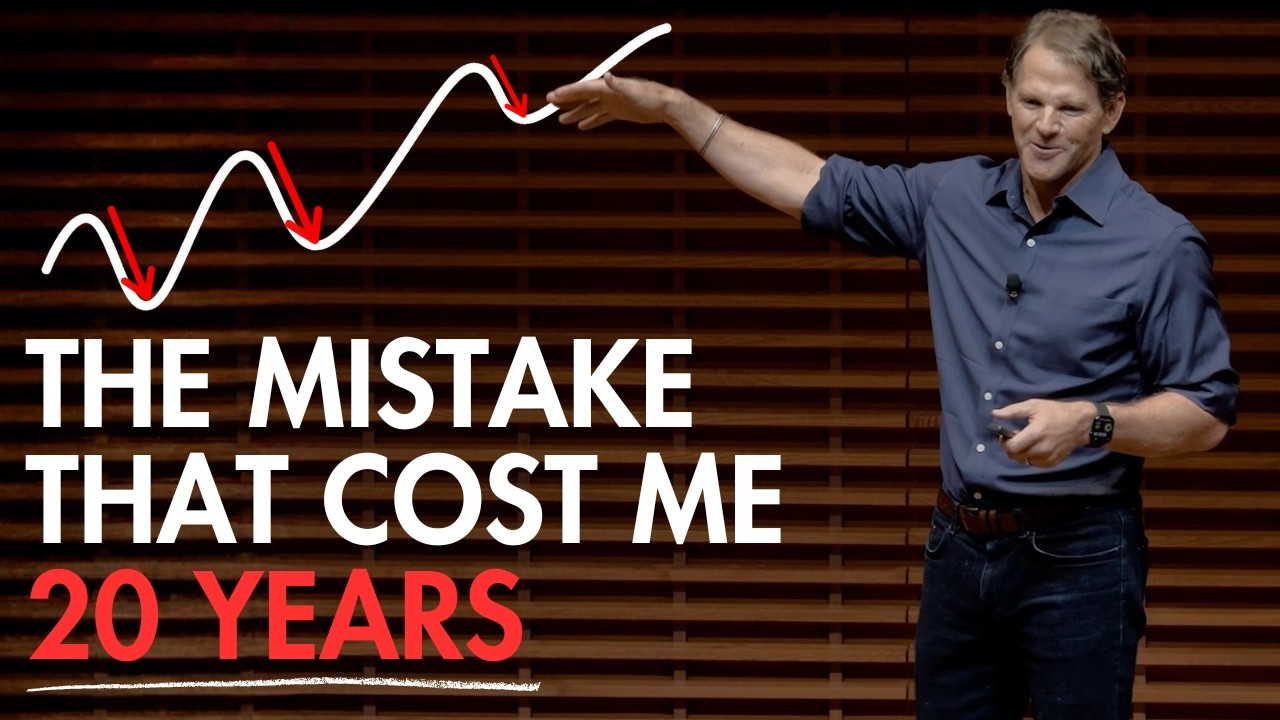
- To pull out the nail, one must assemble a team of supportive people, such as friends or a therapist, and resolve to make a change, even if it means facing a difficult period first, as illustrated by a chart that shows life as a non-linear journey with peaks, plateaus, and valleys 4m37s.
- The concept of "worse first" is introduced, where making a positive change in one's life often requires going through a difficult period, such as a hard breakup or a stressful time after quitting a job, but this difficulty is necessary to reach a better place in the long run 6m15s.
- Facing one's fears and problems is described as a superpower that can lead to self-love, growth, and positive change, and is necessary to "win without crushing your soul", with the advice to "fire the coach and pull out your nails" 8m40s.
The Second Practice: Trusting the Second Voice
- The idea of a "second voice" is introduced, which is a voice of intuition, higher self, or soul, that speaks through energy and excitement, rather than fear, and is a more positive and guiding force in one's life, with the example of Olivia's initial dread being an example of this voice at work 12m10s.
- The importance of trusting this second voice is emphasized, as it can provide guidance and help individuals make positive changes in their lives, and is a key part of the practice of metacognition, which involves being aware of and trusting one's own thoughts and feelings 14m20s.
- Students often face dilemmas, such as choosing between two jobs, job A and job B, where job A is a clear and familiar option, while job B may be a new and intimidating alternative, and by asking open-ended questions, it becomes clear which option is truly desired 10s.
- The decision-making process can be simplified by recognizing the difference between being unclear and being afraid, and it is often the latter, as the soul already knows the answer, but fear can prevent individuals from making the right choice 2m6s.
- The concept of listening to one's intuition or second voice has been discussed in various contexts, including Christianity, Buddhism, and by individuals like Steve Jobs, who emphasized the importance of following one's heart and intuition 4m6s.
- Hearing one's soul is not the same as following it, and fear can prevent individuals from taking action, but writing down fears can help to overcome them by making them a problem to be solved rather than a paralyzing force 6m8s.
- By putting fears on paper, individuals can shift their focus from being controlled by fear to finding solutions to problems, and this simple yet effective tool can help individuals make decisions that align with their true desires 8m10s.
- Ultimately, the key to winning without crushing one's soul is to trust one's second voice and listen to intuition, rather than being controlled by fear or external expectations 10m0s.
Practical Applications of the Second Voice in Decision-Making
- Meditation was started as a practice to watch the internal voice and realize that it is not necessary to just meditate for a few minutes, but it can be done throughout the day, leading to a shift from being a harsh critic to a best friend 10s.
- This practice helped in becoming more present, supportive, and accepting, and also led to the realization of things that were draining energy, such as bad habits and unhealthy relationships, which needed to be removed or changed 10s.
- Removing these "nails" was not done quickly or gracefully, but over time, and it was realized that the anticipated negative consequences were not as bad as expected, and the positive outcomes were much better, leading to personal growth and less fear of making changes 10s.
- Trusting the second voice, or intuition, was a significant change, and an example of this was realizing that private equity was not the right fit, which led to a shift in business focus from private equity to the talent business, resulting in more fulfilling and high-performing deals 10s.
- It was learned that doing something that one loves and is excited about is the most powerful formula for success, and that extraordinary work requires tapping into the second voice and being true to oneself, which can lead to significant growth and achievement, as seen in the increase of assets over 50x at the firm Alpine 10s.
- The importance of trusting the second voice and being true to oneself was emphasized, as faking enthusiasm and interest can only be sustained for a short time, and extraordinary work requires every part of a person over a long period of time 10s.
Synthesizing the Three Practices and the Path to Self-Love
- The three practices of firing one's coach, removing nails from one's head, and trusting one's second voice were found to be a gateway to something much bigger, which is self-love, and this realization came from internal reflection and growth 0s.
- A quote from the Andy character in The Office, "I wish there was a way to know you're in the good old days before you've actually left them," is referenced to illustrate the importance of appreciating the present moment and not taking it for granted 0s.
- The point of significant life events, such as raising children or taking a flight, is not just about reaching a destination, but about the experiences and moments that occur during the journey, like building a racetrack with children or reading to them 0s.
- The path to the life one wants involves internal work and traversing through the three practices of firing one's coach, removing nails from one's head, and trusting one's second voice, which helps to shift from being one's harshest critic to one's best friend 0s.
- It is essential to pay attention to the things that give one energy and have the courage to move towards those things, as everything one wants is on the other side of overcoming fears and challenges 0s.
- The message to the class of 2026 is to stop running and realize that they have already arrived and are in the good old days, and they should go live them and appreciate the present moment 0s.