

Early Life and Academic Foundations
- Many individuals have experienced being labeled as studious by relatives during family gatherings or social events, despite secretly harboring a desire to win sports trophies. 0s
- Adults frequently advise young people to focus on only one pursuit, suggesting that it is impossible to choose or accomplish everything. 0s
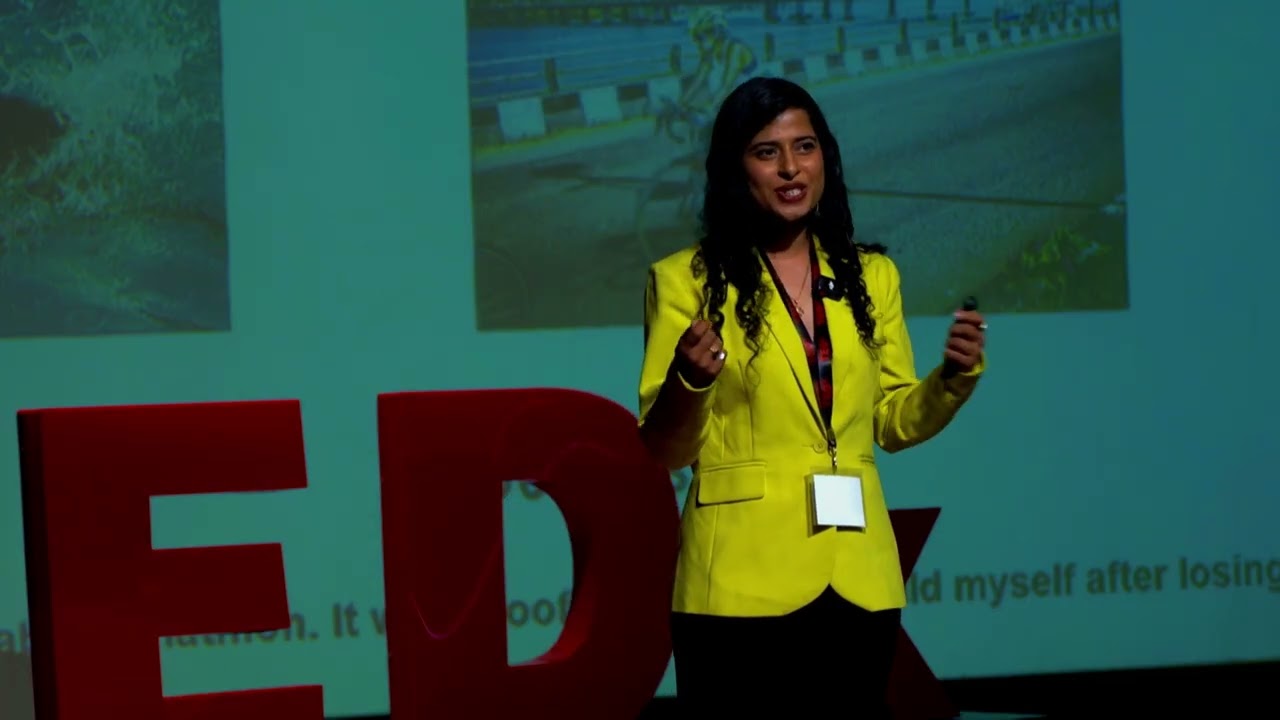
- Komal Singh serves as an engineering manager at a company that builds products used by millions of people globally on a daily basis. 18s
- Beyond her professional career, Komal Singh is a double Ironman finisher, a 100-kilometer course record holder, and a participant in various ultra-marathons, marathons, and half-marathons. 18s
- Komal Singh has held aspirations to climb mountains, including a specific goal to climb Mount Everest. 18s
Identity and Childhood Pressures
- The discussion explores the intersection of two distinct personal identities: the academic topper who wanted to be a trekker, and the athlete who wanted to be an engineer. 35s
- As the eldest child, Komal Singh describes the experience as being in an "unpaid internship" of responsibility starting from the age of five. 53s
- During her school years, Komal Singh consistently ranked among the top students, a performance that was a source of pride for her parents and relatives. 53s
- The individual was frequently compared to other children by adults during their youth 0s.
Developing a Competitive Drive
- Beyond academic performance, the individual represented their school in CBSE cluster basketball tournaments 7s.
- A significant personal memory involves a cricket tournament where the individual was run out after scoring only one run 15s.
- The individual experienced intense emotional distress over the cricket loss, feeling as though the defeat was a personal failure and an insult from the universe, rather than being upset by teacher reprimands or the loss of a trophy 22s.
- The individual possessed a drive to push their personal limits, a trait that would eventually influence the trajectory of their entire life 36s.
- Following a successful academic path, the individual earned good grades, attended IIIT, and established a career as an engineering manager 45s.
Transition to Mountaineering
- Upon reaching a certain level of professional success, the individual began to question what the next objective in life should be 55s.
- The film Yeh Jawaani Hai Deewani served as a catalyst for changing the direction of the individual's life, specifically inspiring a desire to stand on the same mountain featured in the movie 1m3s.
- Motivated by the film, the individual and their friends organized a three-day trekking trip despite having limited information and preparation 1m15s.
- A transformative experience while standing on a mountain led to the decision to pursue mountaineering as a career path. 0s
- The initial roadmap for this career involved a series of treks and expeditions, beginning with enrollment in a basic mountaineering course and the ultimate goal of climbing Mount Everest. 7s
Medical Setbacks and Identity Crisis
- During a technical peak expedition, a fracture occurred, which served as a significant turning point. 23s
- A medical diagnosis revealed that the individual had very weak bones, with a warning that continuing to place heavy physical loads on the body could lead to permanent disability or the inability to walk. 33s
- Receiving this medical news caused a crisis of identity, as the individual felt lost after the envisioned future as a mountaineer was no longer viable. 45s
- Unable to remain idle or stay home during the recovery process, the individual sought a new physical challenge to replace the goal of mountaineering. 56s
Training for the Ironman 70.3
- The Ironman 70.3 triathlon was identified as a new objective, which the individual mentally reframed as a "mountain without snow." 1m5s
- The Ironman 70.3 race consists of a 1.9-kilometer open water swim, a 90-kilometer bike ride, and a 21.1-kilometer run, all of which must be completed within a cutoff time of 8.5 hours. 1m12s
- A commitment was made to complete this triathlon within a six-month timeframe, leading to official registration for the event. 1m25s
- At the time of registering for the event, the individual did not know how to swim, which presented a significant challenge because swimming multiple laps as a beginner often leads to breathlessness. 0s
- A shin injury prevented the individual from running for six months, necessitating a training regimen focused exclusively on swimming and biking. 15s
- After six months of training, the individual achieved comfort in the pool and the ability to swim continuous laps. 30s
Overcoming Open Water Fears
- A new fear emerged regarding swimming in open water, specifically concerning the presence of aquatic life such as jellyfish. 38s
- To prepare for a race in Goa, which was only the second time the event was being organized in India, the individual traveled to the location one week before the race. 45s
- The individual practiced swimming on the actual race beach every morning and evening when the tides were low to overcome the fear of open water. 55s
- Other swimmers at the beach observed the individual's practice and expressed doubt that the individual would finish the swim within the required cut-off time. 1m5s
- External opinions and judgments should be treated as data points rather than final verdicts, and while one may hear such comments, they should not be absorbed as personal truth. 1m15s
Completing the Ironman 70.3
- On the day of the race, the individual entered the water and was stung by a jellyfish shortly after starting. 1m28s
- Despite the jellyfish sting, the individual successfully completed the swim within the designated cut-off time. 1m35s
- During a race in Goa, a participant completed a 90-kilometer bike ride and began a 21-kilometer run, but suffered a twisted left leg after 7 kilometers in brutal weather conditions 0s.
- After falling on the road and experiencing significant distress, the participant was advised by a volunteer to quit the race 10s.
- Despite the suggestion to stop, the participant reflected on six months of dedicated training, including daily 5:00 am swimming sessions, and decided to continue 25s.
- With the assistance of a fellow athlete, the participant walked and crawled toward the finish line, ultimately completing the race in seven hours, well within the 8.5-hour cutoff 45s.
- Crossing the finish line served as a personal milestone to prove the ability to persevere even when faced with setbacks 1m5s.
Preparing for the Full Ironman
- Following this experience, the participant registered for a full Ironman, which consists of a 3.8-kilometer swim, a 180-kilometer bike ride, and a 42-kilometer run 1m15s.
- Preparation for the full Ironman involved nine months of rigorous training, totaling over 20 hours of exercise per week 1m30s.
- Fifteen days before the full Ironman race, a doctor diagnosed the participant with a disc bulge, a condition that makes sitting or standing extremely difficult 1m40s.
- The doctor advised against participating in the race and suggested deferring the event to the following year due to the severity of the injury 1m55s.
The Full Ironman Experience
- Because the specific international race was not available in India, the decision was made to travel to Australia to participate after all bookings were finalized. 0s
- Upon arriving at the start line, there was physical pain, leading to a moment of hesitation regarding whether to enter the ocean. 15s
- The memory of nine months of training served as the motivation to proceed and enter the water. 25s
- The race was completed at a slow and gradual pace to avoid pushing the body too hard, as there was a desire to avoid repeating a past experience where a mountain-related goal was lost. 30s
- After 15 hours, the finish line was reached, and Komal Singh was officially recognized as an Ironman. 45s
- Crossing the finish line served as personal proof that it is possible to rebuild oneself even when a previous blueprint has been damaged. 55s
Integrating Professional and Athletic Identities
- Upon returning to India, the body was given four to five months of rest to recover. 1m5s
- A realization occurred that the roles of an engineer and an athlete did not need to remain separate or parallel. 1m12s
- The professional identity shifted to that of an engineer who carries the mindset of an athlete into the workplace. 1m20s
- This new perspective allows for comfort even when facing criticism regarding a lack of experience or the inability to meet project deadlines. 1m25s
- Engineering principles are applied to athletic challenges by breaking down large races into smaller, manageable, and solvable problems, which eliminates the need to quit. 0s
Continued Athletic Achievements
- A 100-kilometer border race was completed in the Thar Desert in Jaisalmer, which began at 12:00 PM. 15s
- The 100-kilometer race was finished while experiencing a menstrual cycle, and the participant achieved the status of female course record holder at that time. 25s
- An Ironman race in Germany was completed in 13 hours, marking an improvement over a previous Ironman race in Australia that took 15 hours to finish. 35s
- The improvement in the Ironman race time was driven by a desire to perform better after gaining a better understanding of how the body reacts during the event. 40s
Embracing Multiple Passions
- Individuals should reject the notion that they must choose only one path or "river" in life, as it is possible to possess multiple, diverse interests simultaneously. 50s
- People can be both responsible and adventurous, or excel in fields like mathematics while also being skilled in creative pursuits like drawing. 58s
- Rather than draining one interest to feed another, individuals should allow their various passions and identities to merge. 1m5s
- When life removes a specific identity or opportunity, it is not a requirement to replace it, but rather an invitation to integrate new experiences with existing ones to form a unique identity. 1m12s
- The advice is to persist in pursuing multiple dreams rather than listening to those who suggest that only one path should be followed. 1m22s