

Introduction and Background
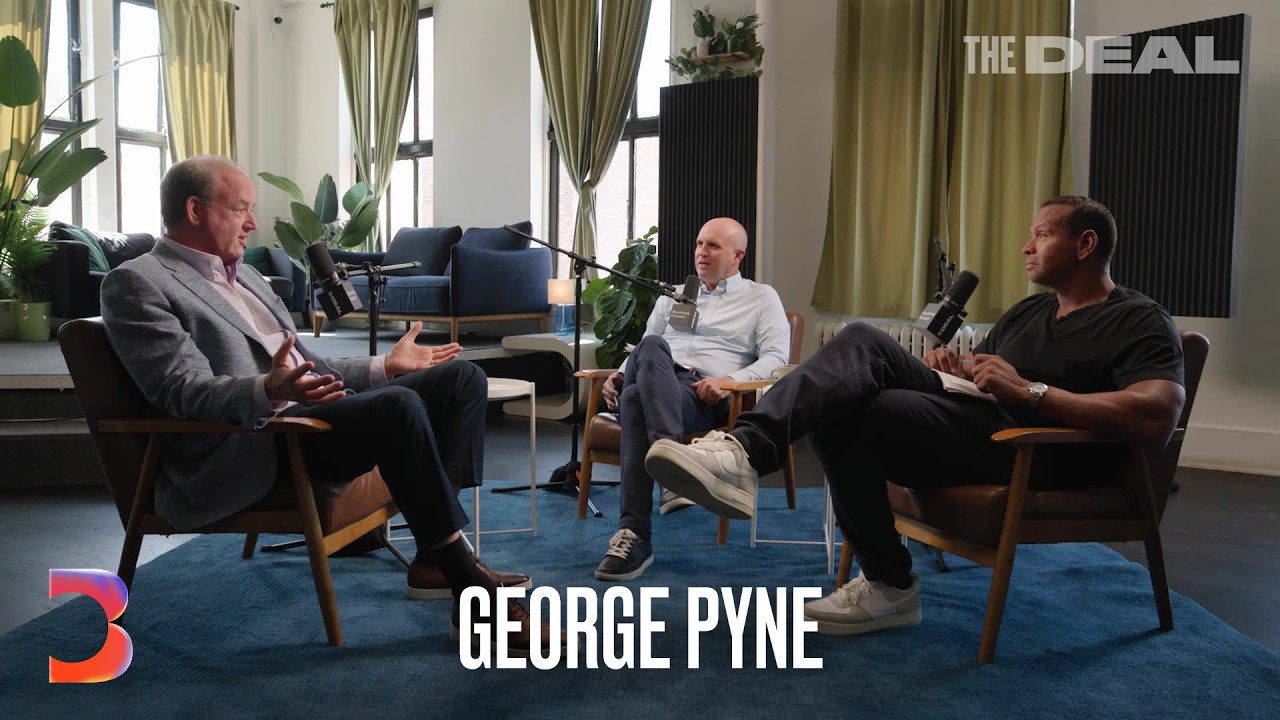
- George Pyne is the founder of Bruin Capital, and his background includes being the former COO of NASCAR and former president of IMG, making him a well-connected figure in the sports world 8s.
- Pyne has a unique combination of being a wonderful family man, having built an incredible business, and possessing world-class relationships with an amazing culture 38s.
- George Pyne introduces himself as the founder and CEO of Bruin Capital, choosing not to use a Boston accent 54s.
- Pyne does not have a "signature deal" but is most proud of leading the safety initiatives at NASCAR after Dale Earnhardt's death, which involved creating safety policies and procedures, as well as navigating the communications challenges that followed 1m48s.
- The moment of Dale Earnhardt's death was a seminal and challenging time for the sport, with NASCAR facing intense scrutiny and Pyne having to stabilize the situation and find a way forward 2m34s.
- To address the difficult moment, Pyne emphasizes the importance of leading by example and taking tough positions, although the specific actions he took over the initial 30-day period are not detailed 3m27s.
- The Hans device was installed, which was unpopular at the time, and data recorders were put in cars, which was also controversial, to push through changes that the organization had never done before 3m31s.
- A leader has to take a stand, do things that are uncomfortable, and be thoughtful, even if it means going against the grain, to lead and do what they believe in 4m0s.
Early Career and Mentors
- George Pyne started out in the real estate world after graduating from Brown, and he moved to Atlanta with $5,000 and a car with 170,000 miles, using credit cards to pay the bills 4m35s.
- Pyne worked in a big real estate company in Atlanta, building 27 buildings downtown, and then started a little sports business on the side, signing up NASCAR in 1995 5m25s.
- At the time, NASCAR was called Winston Cup, with 16 races on the Nashville network, and Pyne helped grow the company, eventually getting it on Fox and NBC with nine offices 5m37s.
- Pyne was anointed, along with Brian France, to develop a commercial business for NASCAR, which took off and had an amazing run, but Pyne eventually left at 40 years old to do something else 6m12s.
- Pyne had a friend at Goldman Sachs who suggested he meet Ted Forsman, who had just bought IMG, and Pyne went to see him, not knowing who Ted was at the time 6m33s.
- George Pyne had the opportunity to work with Ted Forstmann, a private equity legend, after a two-hour meeting that was initially supposed to last 30 minutes, and Pyne felt he could learn a lot from Forstmann 6m44s.
- Forstmann had bought 24 Hour Fitness from Mark Mastrov for approximately $1.08 billion, and Mastrov had a positive experience working with him 7m20s.
- Pyne had three great mentors in Atlanta: John Portman, a renowned American architect; Bill France, the billionaire owner of NASCAR; and Ted Forstmann 7m35s.
- From Forstmann, Pyne learned the importance of evaluating the risk-reward ratio, being conservative, and minimizing risk before going all-in on an idea 8m8s.
- Pyne also learned from Forstmann and his other mentors the value of hard work and smart decision-making 8m18s.
- Bill France and his brother Jim France advised Pyne to know when to push and when not to push, which Pyne considers great advice for having good judgment 8m38s.
- The transition from working for the France family at NASCAR to working for Forstmann at IMG was significant, as NASCAR was a family business with less politics, whereas IMG was a global company with more politics and different inputs from investors 9m24s.
- Pyne had to adjust mentally to the new environment at IMG, where he had to navigate more complex decision-making processes and politics 9m45s.
- Working in different environments, such as NASCAR and a global financier's company, requires different management skills, with a focus on both style and substance, and the ability to adapt to various settings 10m23s.
IMG and Growth Strategies
- At IMG, the biggest challenge was trying to reinvent and grow the company, with a focus on growing earnings, as the company's investor, Ted, prioritized profit over scale and volume 10m43s.
- To achieve this goal, a key strategy was to develop a business plan and check in on it regularly, a discipline that was initially applied to the commercial side of NASCAR and later to the core business 11m30s.
- This approach has been effective in driving results, as numbers can confirm the strategy, but it's the strategy that drives the numbers 12m5s.
- A collaborative approach to developing a business plan is essential, involving staff and stakeholders throughout the process, rather than presenting a plan at the end of the year 12m13s.
- One successful example of growing EBITDA at IMG was the transformation of IMG Academy, which was previously unprofitable despite its success in training elite athletes, by implementing a new strategy and leadership 12m52s.
- The appointment of Sam Zusman, who is now at the Barclays Center, was a key factor in turning IMG Academy into a profitable business 13m7s.
- George attended Stanford Business School and Tel Aviv Law School, and he put Sam, his chief of staff, in charge of running IMG Academy, which was not very profitable at the time, but became profitable under Sam's management due to his experience in yield management from working at McKinsey 13m17s.
- IMG Academy was later sold for roughly $1.2 billion, and George's company had bought 40% of it for $6 million with a two-year payment plan, which was a challenging deal to make during the 2009 financial crisis 13m56s.
Investing in College Sports
- George learned from Ted that it's essential to find new areas for growth, and he discovered that college sports had a large and diverse fan base, with 190 million fans, making it an attractive market for investment 14m40s.
- George invested in college sports, which became a significant growth engine for his company, and he was one of the first to do so, starting around 2010 15m12s.
- To invest in college sports, George looked at the revenue generated by college teams compared to professional teams, and he realized that college teams had a lot of potential for growth, using the example of the Georgia Bulldogs and the Atlanta Falcons 15m50s.
- George's company restructured its sales approach to focus on selling sponsorships and other revenue streams like professional teams, which required hiring new salespeople with experience from other leagues 16m13s.
- George's investment in college sports involved managing sponsorships and other revenue streams for teams like the Georgia Bulldogs, but the exact nature of the investment is not fully explained in the provided text 16m36s.
- George Pyne invested in universities by rolling up small companies that had the marketing rights to these institutions, eventually representing 85 universities in sponsorship and local media rights, and 200 universities in licensing 16m43s.
- This move replaced the existing local or regional infrastructure and was a key driver of growth during his time at IMG 17m8s.
The Power of Sports and Bruin Capital's Formation
- Pyne finds the business of sports compelling because it aggregates hundreds of millions of people around a shared interest, creating a loyal fan base that is unmatched in other industries 17m27s.
- He believes that in a fragmented media landscape, sports become more valuable as they provide a unique opportunity to tap into consumer loyalty and create one-to-one relationships 18m0s.
- This one-to-one relationship allows for personalized content and targeted product suggestions, which can be applied to various sports teams and leagues worldwide 18m12s.
- Pyne decided to leave his role as an operator and start his own business, Bruin Capital, at the age of 48, seeking a more horizontal and entrepreneurial environment 19m12s.
- He considered the potential risks of failure, but ultimately decided that he would rather take the chance than wait until he was 60 to pursue his own venture 19m37s.
- Pyne's decision was influenced by his age and his desire to take control of his career, having previously held significant roles at companies like NASCAR 19m46s.
- George Pyne decided to take a shot and start his own business at the age of 48, despite having no money and being in a comfortable position, drawing inspiration from his past experiences of taking risks at the age of 25. 19m56s
- He started Bruin Capital from a temporary office in White Plains, New York, with no secretary or staff, and built the company from scratch, eventually operating in 71 countries and working with every major league or federation in the world. 20m43s
- Pyne's three-year plan for Bruin Capital involved investing in businesses similar to those he had built in the past, such as NASCAR and IMG, where he had developed media, PR, sponsorship, licensing, and marketing capabilities. 21m5s
- The idea for Bruin Capital was conceived with the help of a friend, Kaveh Khosrowshahi at Allen and Company, who encouraged Pyne to start his own business after IMG was sold to Endeavor. 22m0s
- Pyne had been thinking about starting his own business for two years prior to the sale of IMG and was motivated by an "itch" to scratch and a desire to do something for himself and his partners. 22m16s
- Raising the first-time fund for Bruin Capital was a challenging and scary experience for Pyne, who had to navigate the process as an entrepreneur and operator with limited experience in raising capital. 22m46s
- Raising money for Bruin Capital was a lot harder than initially realized, but having good people believe in the venture, such as Kaveh and Martin Sorrell, was crucial in securing funds 23m3s.
- Martin Sorrell, the CEO of WPP, committed to investing a third of the raise, which was a significant help in securing the remaining funds 23m37s.
- The company raised $250 million in six to nine months, which was a relatively short period of time 24m2s.
Building Bruin Capital and Investment Philosophy
- Transitioning from being a successful athlete to a successful entrepreneur was made possible by having incredible mentors, such as George Steinbrenner, and surrounding oneself with the best people 24m22s.
- The key to success was having a 40- or 50-year outlook in business, staying in one's circle of competence, and bringing in the best people to help run the company 24m46s.
- Staying focused on sports and real estate, areas of expertise, and avoiding transactional thinking, was essential in achieving success 25m0s.
- The sports ecosystem has become an attractive investment opportunity, with many funds being created and even the NFL embracing private equity 25m43s.
- Recognizing the potential for investment in the broader sports ecosystem early on was a key factor in Bruin Capital's success 26m1s.
- George Pyne saw the potential for deploying capital against good ideas in sports after witnessing Ted's investment in IMG, which led to great results, and decided to start his own venture, Bruin Capital, to capitalize on sports opportunities 26m22s.
- IMG was a global company with a presence in 30 countries, and Bruin Capital has a global network with 14 advisors, many of whom have worked with Pyne at IMG, providing access to investment opportunities in sports worldwide 26m55s.
- Bruin Capital invests in the ecosystem and adjacencies of sports, rather than buying teams, and focuses on lower middle market private equity with huge growth potential 27m31s.
- The company adds operational expertise and opens up new markets for the businesses it acquires, allowing them to grow globally, as seen in the example of Deltatre, which expanded its US business significantly after being acquired 28m6s.
- Bruin Capital has a presence in 71 countries, with a strong presence in Europe, the United States, and Australia, and is able to cross-sell its services, providing a real value add in opening markets 28m23s.
- George Pyne is an operator and is still hands-on in the business, working closely with CEOs to address problems and provide guidance, which is different from other forms of private equity where deal guys lead the deals rather than subject matter experts 28m36s.
- When considering a potential investment, there are no boards or committees involved, and decisions are made by people with hands-on experience in the sports and media industry 29m18s.
- The ideal investment opportunity for Bruin Capital would be a company earning $10 to $20 million in EBITDA, primarily in the technology sector, with strong growth fundamentals and a capable CEO 30m2s.
- The company's growth potential is evaluated through two lenses: whether it can grow on its own and whether Bruin Capital's network can add value to the business 30m38s.
- When determining the valuation of a potential investment, the focus is not solely on the multiple, but also on the growth trajectory and whether there is cultural alignment between the companies 31m8s.
- Bruin Capital prefers to work with founders who have sought them out directly, rather than through a formal process, as this indicates a level of trust and understanding of the company's values 31m38s.
- The decision to invest is often more about cultural alignment and shared values than it is about the financial terms of the deal 32m23s.
- Once an investment is made, Bruin Capital is committed to the partnership and views it as a long-term relationship, rather than a transactional deal 32m32s.
- When considering acquiring a company, expectations are clearly communicated to ensure everyone is on the same page, and if the owner is comfortable with those expectations, a fair value is paid for the company, rather than focusing on getting the last nickel 32m41s.
- The approach is similar to the Berkshire Hathaway model, led by Charlie Munger, where the focus is on partnering with talented individuals and companies rather than just making a profit 33m9s.
Box to Box Investment and CEO Assessment
- Bruin Capital invested in Box to Box, a media company that produces sports content, including the popular "Drive to Survive" series, due to the company's talented CEOs, James and Paul, and its potential for growth in areas such as podcasts, short-form media, and branded content 33m37s.
- The investment in Box to Box was also influenced by a recommendation from David Hill, a former Fox Sports executive, who spoke highly of the company's CEOs 33m51s.
- Bruin Capital aims to add value to Box to Box by introducing the company to new relationships and contacts, and by helping the company explore new areas of growth 34m12s.
- The company's CEOs are seen as talented and hungry for success, with a desire to be great at everything they do, which aligns with Bruin Capital's approach to partnering with companies 35m40s.
- Bruin Capital's companies are generally under-leveraged, but the company is working to improve its use of debt, with the goal of being the best it can be while maintaining a lower leverage than its peers 35m5s.
- The company recently secured its first credit facility for Box to Box, which was made possible by the company's willingness to learn and adapt 35m24s.
- When assessing a CEO or founder, the process involves getting to know them, often through socializing, to determine if they are driven, have a good team, and if the business has strong growth fundamentals 35m48s.
- The goal is to believe in the CEO and the business's growth potential, and to be able to add value, rather than just placing a bet on the company's success 36m20s.
The Evolving Landscape of College Sports
- The college sports industry is going through significant changes due to its massive success and the resulting large amounts of money involved, leading to the need to share revenue with players 37m22s.
- The industry generates an estimated $6-8 billion annually, and with the courts no longer being deferential to the college model, changes are being made to allow players to participate in the revenue 37m59s.
- The lack of a central authority in college sports, with many independent competitors working in their own self-interest, is contributing to the challenges and turbulence in the industry 38m20s.
- Despite the current challenges, it is expected that the college sports industry will adapt and find a way to work through its issues, similar to how the Olympics have done in the past 38m40s.
- The changes in college sports are not just about the money, but also about recognizing the value and contributions of the players, with the goal of finding a fair and sustainable model for the industry 37m55s.
- The college sports industry's success and challenges are being closely watched, with many interested parties, including investors, athletes, and fans, waiting to see how the industry will evolve and adapt to the changing landscape 37m11s.
- The recent college football playoffs were exciting, with Alabama's game going down to the last play, and the product on the field was good, despite some blowouts in other games 39m7s.
- The off-field issues in college football, such as player movement and compensation, will eventually get figured out, although it won't be easy 39m21s.
Network, Relationships, and Industry Insights
- George Pyne has cultivated an extensive network in the sports industry, with many people being only one or two degrees away from him, which is partly due to his track record and reputation for being a good person who delivers results 39m41s.
- Pyne's approach is built on the principles of telling the truth, working hard, and not embarrassing the company, which he learned from Bill France, and he tries to emulate the example of Roger Penske 40m15s.
- Pyne's network and reputation have been built over decades, and he believes that trust and respect are the basis for his relationships in the industry 40m45s.
- Pyne is well-connected at the highest levels of major sports leagues in the US and abroad, and he can call every commissioner of every league and get on the phone 41m8s.
- The commissioners of the sports leagues are generally bullish about the state of their leagues, with many having secured strong media deals, such as the NBA's 2.5 times increase in media revenue 41m27s.
- The sports industry is holding up well despite changes in the media landscape, with strong television revenue and long-term deals in place for many leagues 41m50s.
- However, the increasing involvement of institutional investors in sports is likely to change the game, and Pyne advises sports teams and leagues to have a capital plan in place 42m6s.
- To be successful in the sports industry, it's essential to differentiate oneself from competitors and have a defensive capital plan in place to address potential disruptions, such as a competitor with significant capital 42m15s.
- A capital plan is necessary for sports organizations to go on offense and defense, as seen in the example of golf, where an influx of capital changed the game 42m35s.
- The NFL has done a good job of limiting private equity's influence, ensuring investors have no say in the league's operations, but still benefiting from the influx of institutional capital 43m18s.
- The introduction of institutional capital into the NFL will provide liquidity for limited partners, solve family issues for some teams, provide capital for real estate investment, and increase the value of franchises 43m30s.
- To continue growing in value, sports franchises will need to explore different outlets for capital, as the current model of relying on individual owners may become unsustainable 44m10s.
- The cost of buying an NFL team is becoming increasingly expensive, with some owners paying hundreds of millions of dollars for limited rights, making it essential for teams to understand the capital markets and have a long-term capital plan 44m16s.
- The key to success in the sports industry is understanding the capital markets and having a long-term capital plan, but this is a "nice problem to have" as it's a result of the industry's success 44m37s.
Deal-Making Style and Personal Preferences
- George Pyne's deal-making style is described as "decisive," and he values his instant gut over data when making decisions 44m55s.
- Pyne's dream deal-making partner would be someone who is well-capitalized and smart 45m5s.
- The best piece of advice Pyne has received on deal-making is to "know when to squeeze and know what not to squeeze" 45m10s.
- Pyne doesn't have a hype song before big meetings or negotiations but instead relies on a good workout as a substitute 45m23s.
- If George Pyne could only watch one sport for the rest of his life, it would be American football 45m29s.
- His favorite team is the Patriots, as his dad played for them 45m37s.
- The team he wants to see win a championship more than any other is the Missouri Tigers, likely due to his son's connection to the team 45m44s.
- A surprising fact about George Pyne is that he played the viola 45m52s.