
U.S.-China Relations and the Semiconductor Industry
- President Trump discussed chips with Xi Jinping, and the market is digesting the outcome of their meeting, particularly for Nvidia, with the Philadelphia Semiconductor Index down almost 4% 10s.
- Nvidia's stock was on track for its biggest decline since February, partly due to the market's reaction to the meeting between President Trump and President Xi, with Trump mentioning that China needs Nvidia's H 200 chips and wants to develop its own 2m6s.
- Chinese state media reported that China views Taiwan as the number one issue for U.S.-China relations, and President Trump expressed his desire to see tensions cool down between China and Taiwan, while also being noncommittal on a $14 billion package awaiting his approval 4m42s.
- The meeting between President Trump and President Xi also discussed the future of artificial intelligence and potential collaboration on guardrails related to the technology, with Boeing officials meeting with Chinese officials in a positive sign for a potential deal 6m15s.
U.S. Workforce and Manufacturing Capacity in the Semiconductor Industry
- The broader chip industry perspective suggests that the United States is working to drive up manufacturing capacity and its workforce, with remarkable programs being built across the country to meet the need for skilled workers, and an estimated 150,000 more people needed in the work environment 10m10s.
- The news of the week highlights capacity reliance and the brutal economics of semiconductor manufacturing, with talent being a key component, and the United States focusing on building its workforce to support the growth of the chip industry 12m20s.
- The US is working towards building more foundry capacity and having the necessary skilled workforce to make them successful, with a $200 million investment in workforce development as a result of the CHIPS Act 10s.
- The investment aims to build a national infrastructure and workforce development, funding regional nodes around the country to address regional workforce needs, in partnership with the National Science Foundation and the Department of Commerce 42s.
Challenges in Talent Acquisition and Industry Awareness
- The US faces a challenge in terms of the image and awareness of the industry among students, with a need to educate the country about the importance of the industry, as many people are unaware of the role of chips in their daily lives 1m6s.
- There has been a mix of relying on talent from abroad, such as TSMC, and building a domestic workforce, with the goal of creating US jobs and filling roles in the industry 2m6s.
- The issue of talent in Silicon Valley and San Francisco has been a long-standing challenge, particularly in the field of AI, with universities and companies competing for top talent 4m30s.
Ongoing U.S.-China Tensions and AI Industry Implications
- The conversation about the US-China relationship and its impact on the AI and chip industry is ongoing, with concerns about the future of the industry and the potential for profit-taking 6m10s.
Cerebras and the AI Chip Market
- Cerebras, a company that has seen significant growth, has three venture capital backers that invested in the company a decade ago and are now poised to collect billions of dollars from their bets, with Benchmark having a significant stake of around 8% 7m20s.
- Semiconductor company ARM and its majority backer SoftBank made an attempt to acquire Cerebras in the weeks before its listing, but those offers were ultimately rebuffed, indicating huge competition and interest in AI chip companies and infrastructure 1m42s.
- The excitement around Cerebras's debut and massive AI spending has led investors to focus on whether companies like Alphabet and Meta and Amazon can justify the soaring capital expenditures with sustained revenue growth 2m6s.
- NVIDIA is expected to be the largest beneficiary of capital expenditure, with its reports coming out next Wednesday, and the future revenue that could come from this capital expenditure is now over $900 billion spread across Alphabet and Amazon's cloud computing divisions 4m10s.
Custom Silicon and Cloud Ecosystems
- Custom silicon or TPU continues to drive workflows into cloud ecosystems, capturing more revenue overall, and garnering more margin by designing custom silicon, making it an underappreciated narrative in the market 6m30s.
- The use of self-made chips, such as Amazon using Cerebras shares and their own in-house chips, is seen as a benefit, as it allows companies to have more control over their hardware and offer a competitive price-to-performance ratio to their customers 8m20s.
- The world of hyper scalers, including Amazon and Alphabet, is becoming more interdependent, with hyper scalers delivering compute and partnering with foundational model companies to connect with enterprises, driving incremental growth in the landscape 10m40s.
Apple and OpenAI Partnership Dynamics
- Tensions are rising between Apple and OpenAI, with OpenAI stating that they have not seen the expected benefits from their partnership and that Apple's use of their technology remains limited and hard for users to find 10s.
- The partnership between Apple and OpenAI was initially seen as an opportunity for OpenAI to get its product in front of the huge Apple user base, with the potential to result in billions of new subscribers annually 10s.
- OpenAI depends on partnerships to get their technology into the hands of people, and Apple is a key partner for ChatGPT, but the integration of OpenAI's technology into Apple's products has not been as successful as expected 2m6s.
- Apple is opening up its own platforms to other developers, which may not be helping the dynamic with OpenAI, and the company's own intelligence offerings are not working as hoped, leading to a dependence on Google 4m42s.
Corporate and Market Developments in the Tech Sector
- Samsung's management is making a rare visit to union leaders to avert a chip factory strike, which could cause the company $17 million per day, and Bill Ackman's Pershing Square has taken a new stake in Microsoft, arguing that the market is underestimating the tech giant's resilience 42s.
- Elon Musk's XAI is officially entering the coding race in an attempt to catch up with Claude, as coding agents become the next multibillion-dollar fund in AI, and Elon Musk is racing to close the gap 42s.
- Apple is benefiting from the investments made by other AI developers over the years, allowing them to integrate advanced tools into their own products 10s.
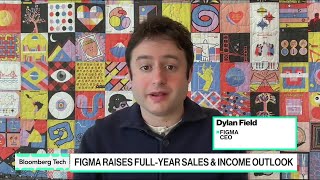
- Figma is defying fears that AI would disrupt the design stack, with revenue growth accelerating to 46% and successfully monetizing AI features 2m6s.
Figma's AI Integration and Financial Performance
- Figma's net dollar retention for customers is now at 139%, with strong cash flow and a margin of 27% free cash flow, leading to raised guidance 2m6s.
- The company started charging customers a fee to use AI beyond a certain limit in March, with many willing to pay for more credits, while a small group opted not to use the product anymore 2m6s.
- Figma's Weave feature allows users to create a workflow that connects different outputs from models, such as images, videos, and 3D models, and push them through a workflow 2m6s.
- The company is working to change the narrative that investors just want to sell first, by focusing on the long-term and making sure they are doing the right thing for their strategy 2m6s.
- Figma is helping people understand the different facets of design, which is not just about creating something beautiful, but also about form and function 2m6s.
Figure's Humanoid Robots and AI Automation
- Figure has completed a demonstration of its humanoid robots working continuously for over 24 hours, scanning, flipping, and sorting packages at roughly human speed, empowered by AI software running directly on the robots, with no human operation involved 10s.
- The robots worked in shifts, with each robot operating for around four hours on a single battery charge, after which it would message another robot to take its place and then go to charge wirelessly, allowing for nearly continuous operation with minimal downtime 2m6s.
- The goal of Figure is to achieve 24/7 operations with minimal failures, and the company has made significant progress in this area, with the conveyor system running continuously since the middle of the week and the robots processing over 16,000 packages 4m20s.
- Figure's CEO, Brett Adcock, stated that the company is focused on making the robots more reliable, with a goal of achieving a 90% success rate for package flipping and barcode scanning, and that the current robots are operating at roughly human speed, taking around three seconds per package 6m15s.
- The company is also working on manufacturing the robots in large volumes, with plans to produce between 60 and 70 humanoid robots in a single week, and is exploring ways to create a truly general-purpose machine 10m30s.
- Figure's demonstration sparked some skepticism, with some viewers questioning whether the robots were truly operating autonomously, but Brett Adcock assured that there was no human operation involved and that the robots were fully autonomous 42s.
- To build a humanoid robot like the one in the movie "I Robot", it is necessary to design the entire hardware system, including rotors, electromagnetics, battery systems, actuator design, kinematics, and structures, which is currently being done in-house, and also manufacture the robots and do all the AI neural net training, 10s
- The company has a full end-to-end integrated system that is now being used for real use cases like humans, and they are doing this at human speeds, 24/7, to show how reliable the systems are, 42s
Challenges and Progress in Humanoid Robot Manufacturing
- The largest bottlenecks for the company are data for training their Helix neural net and manufacturing, but they are spinning up manufacturing and are now at several thousands of run rate annually, 1m30s
- The company has over $1 billion of cash on the balance sheet, and from a financial perspective, they are in a good spot, manufacturing at unprecedented volumes and building next-generation models, 2m6s
- The goal is to solve the data problem and manufacturing problem to get humanoid robots out at scale, and they are also considering coming up with more names for the robots, currently getting them from online fans, 2m40s
Amazon's Strategic Expansion and Leadership
- Amazon is scaling in a vertically-integrated manner, with a focus on data centers, which is a major area of spending for the company, and CEO Andy Jassy is making key decisions on where to allocate resources, 4m10s
- Andy Jassy is different from Jeff Bezos as the Amazon CEO, as he is more detail-oriented and has brought his AWS pedigree to the role, with a focus on being everywhere in AI, 5m30s
OpenAI's Compute Challenges and Industry Demand
- OpenAI's Chief Financial Officer discussed the demand the company is seeing and the computer needs it is up against, with compute being a clear bottleneck, 7m40s
- The current demand for compute in 2026 is unprecedented and has led to energy and supply chain issues, with memory shortages in Southeast Asia and chokepoints in the supply chain, highlighting the need for partnerships and strategic planning 10s.
Leadership and Partnership Dynamics at OpenAI
- Working with Sam Altman is reportedly great, with a strong bond and a good partnership, as they have a complementary dynamic, with Altman pushing boundaries and being curious, while the other person creates an environment that fosters curiosity and optionality 4m6s.
- The relationship between OpenAI's founders, including Sam Altman, has been under scrutiny in a lawsuit brought by Elon Musk, who is questioning the company's charitable status and seeking $134 billion in damages, as well as the removal of Altman and other executives from their positions 6m42s.
- The lawsuit is centered on credibility, with Musk's attorneys trying to portray Altman as untrustworthy, while OpenAI's lawyers are presenting evidence to contradict Musk's claims, and the jury will now deliberate and issue a non-binding recommendation to the judge 8m10s.
- If Musk wins the lawsuit, he is seeking significant changes, including the removal of Altman and other executives, the transition of the company back to a non-profit, and $134 billion in damages, which would have huge implications for OpenAI 12m6s.
- The outcome of the lawsuit is uncertain, with the judge having the final say, and the stakes are high for OpenAI, as the company waits with bated breath for the verdict and its potential impact on its future 14m42s.