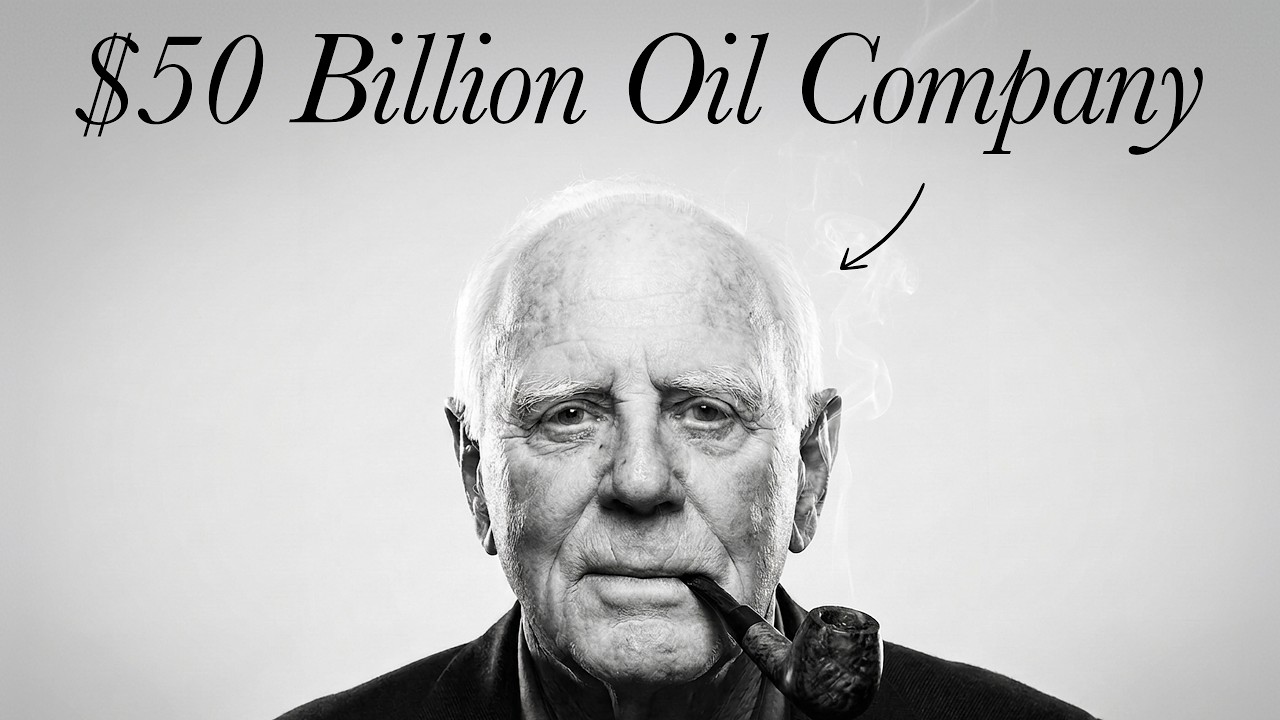


Early Life and Foundational Values
- Raymond Plank reflects on his life at age 90, aiming to share lessons that help others achieve their potential and contribute to the common good 0s.
- A foundational value was established around age 10 when Plank’s father advised him on the importance of trying to make a small difference for the benefit of others 35s.
- A second cornerstone of Plank’s values was a postcard written by his mother shortly before her death at age 47, which encouraged him to maintain his courage and faith 1m5s.
- Plank’s mother died from a blood clot following a routine appendectomy, an event that occurred just before he was scheduled to bring her home from the hospital 1m35s.
Entrepreneurial Beginnings and Work Ethic
- Influenced by these early experiences, Plank chose to pursue self-employment and riskier initiatives rather than working for a large corporation 1m55s.
- Apache Corporation was founded by Plank in 1954 with an initial investment of $250,000, which grew to a value of $50 billion by mid-2008 2m5s.
- Plank maintained a daily diary for 60 years, which serves as the basis for his book, A Small Difference, a work that focuses on his personal philosophy and accumulated life maxims 2m35s.
- During his childhood on a farm, Plank developed a strong work ethic, learning that life was structured and that privileges were earned rather than assumed 3m15s.
- Plank’s early entrepreneurial experiences included selling eggs, which provided him with foundational marketing and sales skills 3m35s.
- During his high school years, Plank gained experience in manual labor by sawing, stacking, and selling firewood 4m5s.
- During his youth, Raymond Plank developed multiple entrepreneurial ventures, including a syrup business created by extracting and boiling sap from trees, as well as raising chickens to sell eggs to local grocery stores and meat markets in Minneapolis 0s.
- Plank attributed his early success to the values instilled by his father, specifically integrity, a strong work ethic, and a drive to be successful, noting that his father was highly supportive of his business efforts 35s.
Family Hardships and Financial Conservatism
- A sense of financial conservatism influenced Plank’s life, stemming from his father’s experience of losing his net worth during the Great Depression 1m0s.
- Despite the loss of his father's net worth during the Great Depression, the family maintained stability through self-raised food, clothing, and a mortgage-free home, aided by his father's reputation for honesty and creditworthiness 1m18s.
- Plank’s mother died at age 47 due to a blood clot following a routine hospital procedure, an event that left Plank unable to write in his diary for six months 1m45s.
- The experience of his mother's death prompted Plank to question why such a tragedy would occur, a reaction compared to that of Teddy Roosevelt, who famously wrote "The light has gone out of my life" in his diary after his wife and mother died on the same day 2m15s.
Wartime Experiences and Personal Courage
- In his early 20s, Plank served as a fighter pilot during World War II, flying a four-engine bomber and managing a crew of ten 4m15s.
- Plank’s intense zest for life is attributed in part to his experiences in combat, where he witnessed many of his friends die and fail to return from the war 4m25s.
- John D. Rockefeller was characterized by a low-key demeanor and a relentless approach to problem-solving and seizing opportunities. 0s
- When faced with rejections from bank presidents while seeking loans for his early oil company, Rockefeller viewed these setbacks as mere signals to seek funding elsewhere until he succeeded. 25s
- Raymond Plank exhibited similar traits of being hardcore and relentless in both his professional and personal life. 45s
- To pursue a woman named Elizabeth McCabe after meeting her without exchanging contact information, Plank called two dozen different people with the surname McCabe in Minneapolis until he located her. 55s
- Plank’s relationship with Elizabeth McCabe ended when he was deployed to fight in the war. 1m18s
- During his military service, Plank flew 40 missions, 19 of which resulted in his squadron being shot up. 1m23s
- Plank viewed courage not as the absence of fear, but as a quality that only exists when one is actually afraid. 1m32s
- The trials Plank faced in his early 20s during the war made the risks he later took in business seem inconsequential by comparison. 1m40s
Business Philosophy and Strategic Risk
- The Apache Corporation titled the first volume of its company history "Journey into Risk Country" to reflect the early years of the business. 1m52s
- Plank’s desire to be an entrepreneur and take risks was influenced by his wartime experiences, including witnessing the deaths of his friends. 2m3s
- Throughout the early 1940s, Plank recorded quotes in his diary regarding the importance of courage, including Winston Churchill’s assertion that courage is the first of human qualities because it guarantees all others. 2m18s
- Upon being discharged from the army, Plank felt he was in charge of his personal destiny for the first time. 2m42s
- Plank decided he wanted to build a business and concluded that working for a large company was not suitable for him. 2m52s
- Plank shared Rockefeller’s belief in the importance of acting quickly to seize business opportunities before they disappeared. 3m5s
Founding the Apache Corporation
- Raymond Plank anticipated a significant economic boom in the United States, driven by technological innovation and the deferred availability of goods and services following the Great Depression and World War II 0s.
- To capitalize on the expected expansion of new businesses, Plank established the Northwest Business Service to provide tax and accounting services to small enterprises 35s.
- The Northwest Business Service gained initial clients by joining professional organizations like the "One Two Club," which restricted membership to one representative per business type and required members to refer business prospects to one another 52s.
- Through his accounting work for various clients, including Minneapolis oil investors, Plank identified an unexpected business opportunity in the oil industry 1m25s.
- Post-World War II conditions, including the depletion of American resources and government incentives for domestic drilling, encouraged investment in oil and gas exploration 1m45s.
- High post-war income tax rates, which exceeded 90% for top earners, combined with tax incentives for drilling and production, motivated wealthy individuals to invest in oil and gas ventures 2m5s.
- While providing accounting services to oil and gas investor groups, Plank investigated industry costs and discovered that unscrupulous promoters were using kickbacks to overcharge investors 2m35s.
- Upon reporting these findings to the investors, Plank was asked to take over the management of their substantial assets, despite his lack of experience in finding, completing, or producing oil wells 3m5s.
- Raymond Plank founded the Apache Corporation in 1954 with $250,000 and a small initial staff consisting of a geologist, an executive assistant, and a landman 3m25s.
Operational Philosophy and Tax-Efficient Investing
- Apache Corporation operated under the core philosophy of achieving more with fewer resources than competitors, exemplified by the internal mantra, "How good is our latest discovery? It's better than it is." 0s
- A fundamental tenet of the company was extreme cost-consciousness, with Raymond Plank emphasizing a sensitivity to redundant expenditures and a commitment to ensuring every dollar spent served as a sound investment. 15s
- Raymond Plank identified significant waste within the oil industry, adopting a strategy of hustling and moving faster than established competitors who were satisfied with the "easy pickings of the trade." 42s
- The primary product of the Apache Corporation was initially a tax-efficient investment vehicle designed for individuals in the highest income brackets. 1m5s
- Apache leveraged the government's desire to encourage domestic energy production, which provided oil and gas investments with unusually generous tax benefits. 1m25s
- Because tax loopholes were frequently closed by the government, Raymond Plank was required to continuously reinvent the company's business model. 1m35s
- Apache structured drilling opportunities to provide investors with both the potential for profit from oil discovery and immediate, substantial tax deductions. 1m45s
- In a provided example, an investor contributing $200,000 could receive an immediate tax deduction of $160,000, which, for an investor in a 90% tax bracket, resulted in a tax savings of $144,000 and an effective out-of-pocket cost of $56,000. 2m0s
- Oil royalties offered additional benefits through a depletion allowance, which allowed owners of oil-producing properties to exclude 27.5% of their income from taxation as a return of the depleted resource. 2m35s
- These tax structures allowed investors to receive large upfront deductions and pay reduced taxes on future production income, creating a model that was highly advantageous for both the investors and the partners at Apache. 3m0s
Capital Acquisition and Internal Conflicts
- Raymond Plank addressed Apache’s initial lack of capital by attracting wealthy investors through a strategy that highlighted tax benefits, which reduced the downside risk for investors even if oil wells were only moderately successful 0s.
- By offering investors a share in the upside if oil was discovered, Plank successfully raised millions of dollars to acquire leases and drill wells 0s.
- Plank recognized that while he lacked technical knowledge of the oil and gas industry, his expertise in finance and tax law provided a unique competitive advantage 25s.
- To bridge his knowledge gap, Plank hired experts in geology and engineering and learned the technical aspects of the business through field visits and constant interaction with his staff 25s.
- A significant conflict developed between Plank and his co-founder, Truman Anderson, characterized by deep-seated disagreements and volatile arguments that disrupted the office environment 1m5s.
- The tension between the two men stemmed from fundamentally different values: Plank focused on the long-term growth of the company, while Anderson was driven by a desire for personal fortune and fame 1m25s.
- The power struggle escalated when Anderson attempted to seize control of Apache by bugging the company’s offices and conference rooms, an action Plank described as a "Watergate type blunder" 1m45s.
- Plank attributed Anderson’s downfall to an out-of-control ego, noting that "ego can quickly outstrip one's competence and fat heads get flattened" 1m55s.
- Following the removal of Anderson, Plank maintained board support during difficult periods by implementing a practice of over-communication, which included writing daily reports on his activities 2m15s.
- After leaving Apache, Truman Anderson experienced financial failure in a car wash business and subsequent oil ventures before eventually passing away following a heart attack 2m45s.
Modern Business Tools and Corporate Diversification
- Raymond Plank maintained a practice of pinning competitors' annual reports to the wall behind his desk to facilitate the study of their business strategies 0s.
- AppLovin operates an advertising platform that connects businesses with over a billion potential customers in mobile games through full-screen video advertisements 15s.
- Advertisements on the AppLovin platform are watched for an average of 35 seconds, and the service is designed for quick setup and rapid scaling of advertising spend 30s.
- Vanta provides an AI-powered security and compliance automation service intended to help companies prove their security posture to potential customers 1m5s.
- Vanta automates compliance monitoring and risk management, with the company reporting that the average customer achieves a 526% return on investment 1m25s.
- Raymond Plank purchased a small plane that he piloted himself, which he described as a life-changing event that allowed him to attend meetings and conduct business deals on short notice 1m45s.
- To manage costs, Plank arranged for his company, Apache, to be charged only the equivalent of commercial airfare for his personal use of the plane 2m5s.
- Plank sought to mitigate the impact of the cyclical nature of the oil and gas industry, noting that revenue could drop significantly when oil allowables in Oklahoma and Texas were cut 2m15s.
- Between the late 1950s and the early 1960s, Plank transformed Apache into a diversified conglomerate to bridge revenue gaps during industry downturns 2m25s.
- Apache pursued an offensive strategy of acquiring successful, entrepreneurial-driven businesses in exchange for company stock 2m35s.
- Over a period of approximately 10 years, Apache acquired 58 different businesses across diverse sectors, including agriculture, plastics, telephone, steel, auto parts, ranching, utilities, and lumber 2m50s.
Conglomerate Management and Strategic Pivots
- Raymond Plank managed a conglomerate by acquiring various businesses, eventually selling them to transition into a focused oil and gas company. 0s
- Unlike many 1960s conglomerates that imposed heavy corporate overhead and centralized practices on acquired companies, Plank allowed former owners to continue running their operations while maintaining centralized control over capital allocation. 15s
- By 1966, Apache Telephone Holdings had consolidated 12 small telephone companies with the intent of selling the group to a larger entity. 42s
- Plank negotiated a deal to sell the telephone holdings to Continental Telephone CEO Phil Lucier, but the transaction was halted when Lucier was killed by a car bomb in a St. Louis restaurant parking lot. 55s
- The perpetrators and motives behind the bombing of Phil Lucier were never identified, and it is believed he may have been the unintended target. 1m12s
- During the 1970s, Plank shifted his strategy away from the mini-conglomerate model to focus exclusively on becoming an independent oil and gas company as market conditions for energy improved. 1m23s
- Plank demonstrated a lack of emotional attachment to past business decisions, choosing to reverse course and divest assets whenever conditions changed. 1m42s
- In 2011, Apache benefited from land and oil wells acquired between 1970 and 1977 because new drilling technologies, developed by others over the intervening decades, significantly increased the value of those long-held assets. 1m56s
- Maintaining a long-term perspective and staying in an industry can lead to unexpected gains when external technological advancements revitalize previously exhausted assets. 2m15s
Long-Term Market Perspectives
- John D. Rockefeller benefited from the mass production of the automobile, as the invention significantly increased the demand for oil, an industry in which he held a major interest 0s.
- Steve Jobs observed that Disney’s film library gained immense value over time due to the invention of new technologies like VHS, DVD, and streaming services, which allowed Disney to generate substantial profit from older assets like Snow White 15s.
- A core business philosophy is that if an individual remains in a market long enough, technological advancements created by others may eventually increase the value of their existing assets 55s.
Personal Reflections and Life Maxims
- Raymond Plank emphasized that learning becomes more fulfilling when it is transferred into achievement, and he noted that he felt he was learning faster in his ninth decade than at any other point in his life 1m15s.
- Plank believed that self-respect is a prerequisite for earning the respect of others 1m40s.
- To persuade people effectively, Plank recommended using analogies and delivering presentations without a script 1m50s.
- Plank observed that markets rarely stabilize at points that would be considered rational 2m10s.
- Regarding his personal life, Plank acknowledged that he prioritized his work over his family, admitting that he shortchanged his wife and children, though he expressed no desire to dwell on past regrets 2m20s.
- Plank maintained that living, learning, and growing constitute the core of personal happiness 2m55s.
- Plank believed that individuals who focus only on themselves are soon forgotten, while those who care for others leave a lasting legacy 3m5s.
- Similar to a strategy used by John D. Rockefeller, Plank would personally cover the startup costs of new programs until they were established, a tactic that often encouraged partners to join the investment once the risk was mitigated 3m15s.
The Apache Way and Industry Strategy
- Raymond Plank’s business strategy involved purchasing smaller oil wells from major oil companies that had not received significant investment 0s.
- Major oil companies often neglected these smaller wells because their corporate incentives prioritized pursuing large-scale, "power law" level discoveries 0s.
- The company shifted its operational focus from drilling to an "acquire and exploit" model, which relied on internally generated cash flow from assets they owned and operated 35s.
- Large integrated oil companies were willing to sell these assets as part of their efforts to reduce costs, redeploy cash, and focus on new, virgin exploration opportunities within their global portfolios 55s.
- Raymond Plank compared his company’s strategy to "pigs following cows through a corn field," noting that the scraps left behind by major firms like Shell, Mobil, and Texaco were highly profitable for his specific business model 1m25s.
- A core philosophy guiding the company was the belief that "beaten paths are for beaten men," emphasizing the importance of avoiding conventional industry practices 1m45s.
- Raymond Plank viewed his lack of traditional industry knowledge as a competitive advantage, as it prevented him from being constrained by how others in the field learned and practiced 2m0s.
- The development of the "Apache way" was characterized by a desire to be counter-positioned and to operate independently of established industry norms 2m0s.
Legacy and Moral Standards
- Reflections from Raymond Plank’s son highlighted his father’s commitment to high moral standards, integrity, and a passion for life 2m15s.
- Raymond Plank’s personal values included treating individuals with respect and equality, regardless of their social status, and striving to create opportunities for future generations 2m15s.