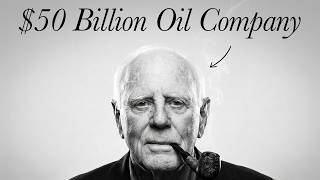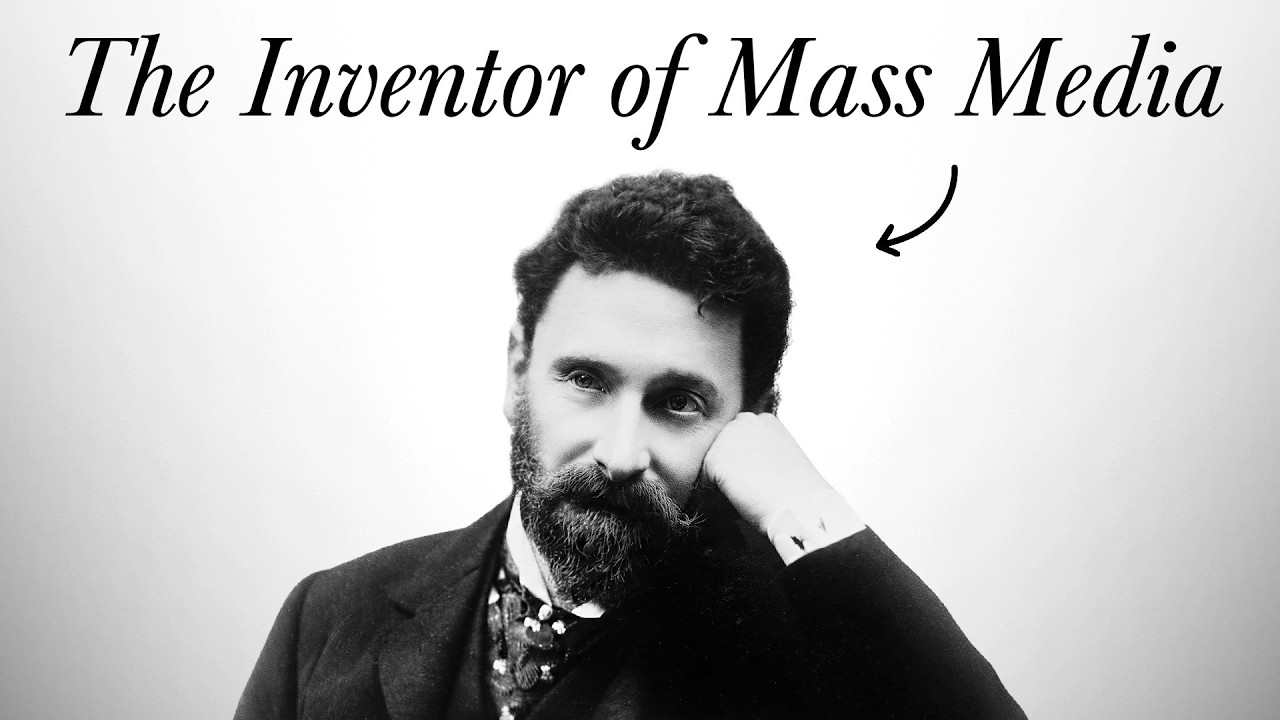


Introduction to Joseph Pulitzer and His Legacy
- Joseph Pulitzer is often better known for the prize that bears his name, but his contributions to the birth of modern mass media in the 19th century are significant and remain relevant in today's information age, making him a notable figure alongside industrialists like Carnegie, Rockefeller, Morgan, and Vanderbilt 10s.
- Pulitzer's achievement was to transform American journalism into a medium of mass consumption and immense influence by recognizing the social changes triggered by the industrial revolution and harnessing elements of entertainment, technology, business, and demographics 1m20s.
- His life story is fascinating, with similarities to notable figures like Ted Turner, Teddy Roosevelt, and Howard Hughes, and provides a compelling narrative of importance, timeliness, and intrigue, with a dramatic shift in his life after losing his sight 2m6s.
Pulitzer's Early Life and Background
- Pulitzer was born in Hungary, and by the time he was 17 years old, he had endured the death of his father and seven out of his eight siblings, with his father's death plunging the family into poverty and prompting Pulitzer to escape to America 4m10s.
- Pulitzer's early life was marked by his industrious nature, love of reading and learning, and a furious temper, with his father's death at 47 years old due to tuberculosis creating a financial nightmare and a lasting impact on Pulitzer's obsession with his health 5m30s.
- After his family's financial downfall, Pulitzer's only path forward was to risk his life fighting in the American Civil War at the age of 17, marking the beginning of his journey to become a prominent figure in American mass media 8m40s.
- Joseph Pulitzer was presented with an opportunity to escape to the United States during the American Civil War, which was in its third year, with soldiers dying at a rate of 13,000 a month, and he took it as a means to escape his circumstances, not to fight, but to gain a new life 10s.
Pulitzer's Immigration and Early Struggles in America
- Pulitzer had no money, limited options, and did not speak the language, so he joined the military in exchange for passage to America, and after the war, he was paid $135.35 and released into American society, where he faced record high unemployment 42s.
- He initially went to New York, looking for work during the day and sleeping on the streets at night, but then decided to move to St. Louis, where he could utilize his German language skills and find work, taking on various jobs such as caring for mules, working on a riverboat, and doing construction 2m6s.
- Pulitzer's early life was marked by a fiery temper, which led to arguments and fist fights, including an incident where he dropped a beef steak on a guest's head while working as a waiter, resulting in the end of his time in that job 2m6s.
- Despite the challenges, Pulitzer had a drive for self-improvement and a voracious appetite for information, which led him to join subscription libraries, where he spent most of his free time reading and learning, often bringing apples for sustenance to avoid leaving the library 2m6s.
Pulitzer's Work Ethic and Early Career Development
- Pulitzer's approach to life and work was characterized by taking every task seriously and trying to do the best job possible, which is exemplified by his dedication to learning and self-improvement, and is reminiscent of the idea known as "Carlile's prescription" 2m6s.
- Joseph Pulitzer's approach to work was to focus almost all of his attention on the task directly in front of him, with 98% of his attention devoted to the task at hand, as inspired by a quote from Munger, and this mindset helped him get his start in the newspaper industry 10s.
- Pulitzer went to a German aid society, where the president, who also owned a newspaper, observed his hard work and diligence, leading to Pulitzer being offered a job at the West Lis Post, a German newspaper owned by two of the city's most eminent Germans 2m6s.
- The owners of the West Lis Post, who became mentors to Pulitzer, took a risk on the 20-year-old with no experience, but they soon realized they had made the right decision as he made up for his lack of experience with raw, resolute effort and a strong work ethic 2m6s.
- Pulitzer's dedication to his work was all-consuming, with his time for work seeming to be all the time, and he was known for being exasperatingly inquisitive and unwilling to put forward anything but his best effort, which sometimes made him a positive annoyance to those around him 2m6s.
- Pulitzer's strong work ethic and innate intelligence, combined with his drive and habit of spending all his free time reading, reminded others of similar traits found in biographies of notable figures like Ben Franklin, who also impressed older, more successful people with his conversations and the way his mind worked 2m6s.
Pulitzer's Entry into Journalism and Media
- Joseph Pulitzer discovered his calling as a newspaper editor, a profession that allowed him to shape the world, and he was determined to make a career out of it, recognizing the limitless possibilities it offered 10s.
- Pulitzer's intense personality, conversational skills, quick wit, and energy made a strong impression on those who met him, including older and more successful individuals who took an interest in him 10s.
- As a young reporter, Pulitzer was extremely driven, always looking for news, visiting schools and public institutions, attending meetings, and knocking on doors to gather information, demonstrating his unquenchable thirst for news 10s.
- Pulitzer's writing style stood out from his competitors, and he was known for using language in heated and controversial disputes, which sometimes went beyond the limit, showcasing his aggressive and argumentative personality 10s.
- An older and wiser person cautioned Pulitzer that he needed to become more conservative and forbearing to avoid trouble, warning him that he might someday meet someone like himself 10s.
Pulitzer's Political Ambitions and Journalism
- At the time, politics and journalism were closely intertwined, with no such thing as an objective newspaper, and many newspaper editors became elected politicians, and vice versa, which was reflected in Pulitzer's own career 10s.
- Pulitzer was nominated for a congressional position at a young age and used his newspaper as a tool to help himself get elected, demonstrating his ambition and determination to succeed in both journalism and politics 10s.
- In just five years, Pulitzer had transformed from a Hungarian teenager to an American lawmaker, and he saw no reason why he couldn't do both jobs simultaneously, using his reporting to advance his political work 10s.
Pulitzer's Anti-Corruption Stance and Personal Hypocrisy
- As a legislator and journalist, Pulitzer was vocal about his anti-corruption stance, criticizing the behavior of others and using his reporting to expose what he saw as an "army of darkness" of lobbyists descending on the Capitol 10s.
- Joseph Pulitzer was known to publicly criticize certain behaviors, but then engage in those same behaviors privately, which is a common trait among people who are obsessed with the behavior of others 10s.
- Pulitzer was not afraid to attack lobbyists and call them corrupt, but this would often lead to violent confrontations when he encountered them in person, resulting in multiple deaths due to people responding violently to stories or publications about them 42s.
- Pulitzer got into a physical altercation with a lobbyist named Augustine, where he pulled out a pistol and fired, but missed, and then grazed Augustine's leg with a second shot, leading to Pulitzer being indicted for felonious assault and later getting off with a small fine 2m6s.
- Despite being early in his media career, Pulitzer had an innate understanding of how to use media to his advantage, often bringing up issues repeatedly in his newspaper to keep them in the public eye, and knowing that silence was the best approach when he wanted to avoid attention 4m10s.
- Pulitzer's life was marked by hypocrisy, where his public statements and private actions did not match, such as accepting a high-paying job from a political ally despite speaking out against corruption, and being against unionization when his own employees tried to unionize 6m30s.
Pulitzer's Media Empire and Business Acumen
- Pulitzer's media empire began to take shape while he was still working for a newspaper, and he would go on to use his understanding of media to build a successful career, despite his personal contradictions and hypocrisies 8m40s.
- Joseph Pulitzer was approached by the proprietors of the Wishless Post to buy into the paper, as he was the most valuable member of their staff, and he accepted, buying into the paper for $5,000, which he didn't have, so he went into debt 10s.
- A year after buying into the paper, Pulitzer had a falling out with his two mentors, and they offered to buy him out for $30,000, six times his original investment, which is equivalent to half a century worth of wages for a skilled worker at that time 2m6s.
- Pulitzer then spotted a journalistic business opportunity when a small German language newspaper in St. Louis was put on the auction block due to the economic downturn caused by the collapse of the banking firm Jay Cook and Company, and he won the auction, paying a modest sum 4m42s.
- The newspaper Pulitzer bought had few subscribers, but its membership in the Associated Press (AP) was a valuable asset, as it gave access to a vast source of national and international news, and he sold this membership to the owners of the St. Louis Globe for about $20,000 6m15s.
Pulitzer's Financial Challenges and Newspaper Expansion
- After making about $50,000, Pulitzer had a period of depression, having no purpose or job, but he continued to study the newspaper industry, reading every single newspaper, including the New York Sun, which focused on city news and presented it in a highly readable style 10m0s.
- Pulitzer was inspired by the New York Sun's approach and wanted to buy a newspaper in New York, but he was unsuccessful for a while and had to start by buying a newspaper in St. Louis, which he would do in a few years, and he continued to have unlimited ambition and a desire to learn from the industry 12m0s.
- Joseph Pulitzer had an edge in the newspaper industry because he could do every single job inside a newspaper, having come from inside the industry, which gave him confidence when looking to buy newspapers 10s.
- The Sun, a penny newspaper, was an example of a successful and entertaining publication that sold over 100,000 copies daily, and Pulitzer thought it was the best newspaper in the world, which influenced his approach to the industry 10s.
Pulitzer's Personal Life and Professional Ambitions
- James J. Hill, a successful railroad founder, shared a similar advantage with Pulitzer, as he understood the railroad as an operating business, not just a financial instrument, having come from a background in freight, warehousing, and transportation logistics 2m6s.
- Pulitzer faced a period of professional aimlessness, feeling tired, aimless, homeless, and loveless at the age of 28, with no definitive profession or family, but he was driven by speculative impulses and a singular pursuit of his goals 4m6s.
- Pulitzer met and married a woman, but he warned her about his dedication to his professional pursuits, and she realized that his attention would never be hers alone, even on their honeymoon 4m6s.
- Pulitzer heard about a struggling evening paper called The Dispatch, which was going to be auctioned off at a bankruptcy sale, and he hired a "Trojan horse" to bid on his behalf to avoid driving up the price, ultimately acquiring the paper for $2,500 6m6s.
Pulitzer's Acquisition and Management of Newspapers
- Despite getting the paper at a relatively low price, Pulitzer faced the challenge of turning around a newspaper that was losing a significant amount of money, and he had to do the math to figure out how to make it profitable 6m6s.
- Joseph Pulitzer assessed the financial situation of his paper and realized he would run out of cash in 17 weeks if he couldn't turn it around, prompting him to merge with another paper, the Post, run by Dylan, to bring in readers and time 10s.
- The merger made sense as Pulitzer and Dylan shared similar political views, and it would prevent a potentially disastrous circulation fight for Dylan, while Pulitzer would benefit from the additional readers and time 10s.
- Pulitzer's business acumen and ability to recognize value where others didn't drove the merger, but he was also known for not sharing power, which would eventually lead to him buying out Dylan 10s.
- Pulitzer had a remarkable work ethic, often staying late into the night and arriving early in the morning to examine the paper's vital signs, demanding precise information on various aspects of the paper's operations, including sales, advertising, and expenses 10s.
- His thirst for details was insatiable, and he developed a precise mix of questions to provide him with a realistic take on the financial health of his paper, a habit he would never give up throughout his life 10s.
Pulitzer's Innovative Journalism and Advertising Strategies
- Vanta is an AI-powered security expert that helps companies prove their security to gain more customers, and it automates compliance, continuously monitors controls, and provides a single source of truth for compliance and risk, with the average Vanta customer reporting a 526% return on investment 10s.
- Joseph Pulitzer had an excessive confidence in his own judgment, which led him to make bets that others were not willing to make, such as publishing an evening newspaper, which was considered a waste of time by many people at that time 2m6s.
- Pulitzer was convinced that evening papers had a great future, and he was right, as the advent of the telegraph and faster printing presses made it possible to publish an afternoon newspaper with fresh news, making morning papers look outdated 2m6s.
- Pulitzer understood the importance of self-promotion and realized that promoting his newspaper inside the newspaper would lead to larger circulation and more readers, so he pushed his staff to combine news reporting with promotion 2m6s.
- Pulitzer was a hands-on owner who could do every single job, from reporting to writing editorials, and he worked side by side with his reporters and editors, which earned him a reputation as intensely enthusiastic 2m6s.
- Pulitzer recognized that the best ad is a story and that advertisements should be made interesting to read, just like news stories, and he aimed to make the advertising columns of his newspaper as varied and interesting as the news columns 2m6s.
Pulitzer's Competitive Tactics and Business Growth
- Pulitzer's competitive nature and business strategies eventually drove one of his competitors to bankruptcy, and he repeated the same strategy when he acquired another newspaper called the Star 2m6s.
- Joseph Pulitzer joined in on the bidding for the Star, which started at $100 and eventually reached the $700 range, at which point he dropped out, but the winning bid of $790 was placed by a man working for him, allowing Pulitzer to gain control of the evening field 10s.
- Owning a newspaper provided numerous benefits, including shaping public opinion and generating significant income, with Pulitzer's small newspaper in St. Louis earning him $88,000 per year, a substantial amount compared to the average skilled worker's annual income of $600 42s.
Pulitzer's Remote Management and Expansion to New York
- Pulitzer's success can be attributed to his ability to manage his newspaper remotely, receiving daily preprinted reports that provided essential information, such as circulation, advertising, and expenses, which allowed him to keep track of his business while pursuing other opportunities 2m6s.
- Despite being sympathetic to the labor movement, Pulitzer would not tolerate any challenges to his authority within his newspaper, and when his workforce tried to unionize, he fired the printers and refused to be instructed on how to manage his business 10s.
- Pulitzer's ultimate goal was to compete on the biggest stage in New York, and he eventually acquired the New York World from Jay Gold, who had unintentionally acquired the paper and was looking to rid himself of it, with Pulitzer going into debt to make the purchase 2m6s.
- The New York World was a valuable asset despite its anemic circulation of 15,000 and financial losses, and Pulitzer was willing to take on significant debt to acquire it, betting that he could repeat his success in St. Louis on a grander scale 2m6s.
Pulitzer's Management Style and Family Conflicts
- Pulitzer's ability to manage his existing newspaper remotely, using daily reports and brief updates from his managers, allowed him to pursue new opportunities in New York while maintaining control of his business in St. Louis 2m6s.
- Joseph Pulitzer was half a million dollars in debt and had an insatiable need to be occupied, driven by ambition, and was also incredibly ruthless, which was evident in his dealings with his younger brother Albert, who had a small paper in New York 10s.
- Pulitzer proposed a merger between his paper and his brother's paper, offering Albert a profit of no less than $100,000 a year, but Albert declined, as his paper was making money and was not threatened by Joseph, leading Joseph to respond with a threat that ultimately resulted in Albert's most valuable staff members leaving for a rival newspaper 42s.
Pulitzer's Newspaper Reforms and Staff Dynamics
- Joseph Pulitzer made significant changes to the paper, including dropping "New York" from the name, and used various tactics to promote the paper, such as reprinting press comments and engaging in debates with his staff, which helped to establish the paper's reputation and attract new talent 2m6s.
- Pulitzer was excessively hands-on, paying attention to every detail, and believed in the importance of argument and debate in measuring a person's character, which led to the departure of old-timers and the arrival of new, younger staff members who were excited to work for him 2m6s.
- Pulitzer had a clear vision for the paper, emphasizing the importance of simple, colorful, and detailed writing, and believed that vagueness was a sin, instead advocating for specific and descriptive language, which became a hallmark of the paper's style 2m6s.
- Under Pulitzer's leadership, the paper began its path to becoming the most widely read newspaper in American history, with a focus on catchy headlines and engaging stories that could be read and remembered by anyone, and Pulitzer's own presence and personality played a significant role in shaping the paper's success 2m6s.
Pulitzer's Leadership and Newspaper Quality Standards
- Joseph Pulitzer was a demanding individual who expected a great deal from his staff, but even more from himself, and his newspaper's quality would greatly affect his mood 10s.
- Pulitzer studied numerous newspapers, including those from New York, Britain, Germany, and France, to stay informed and gain an edge in the competitive media landscape 10s.
- Despite criticizing the wealthy and their sense of entitlement, Pulitzer aspired to join their ranks, demonstrating a hypocritical aspect of his personality 10s.
Pulitzer's Content Strategy and Visual Appeal
- In a time when 1,028 newspapers competed for readers, Pulitzer understood that content was key to standing out, and he made a smart move by hiring a gifted cartoonist to create illustrations for his newspaper 42s.
- Pulitzer paid his cartoonist more than twice the salary of his reporters, highlighting the importance he placed on images in his newspaper 42s.
- The use of illustrations greatly increased his newspaper's circulation, as many readers at the time were visual learners and struggled to read English 2m6s.
Pulitzer's Public Image and Controversial Tactics
- Pulitzer believed that newspapers should constantly make enemies and that the most successful papers would be those with the most enemies, and he was skilled at getting attention to increase his circulation 2m6s.
- He was responsible for raising the funds for the Statue of Liberty's pedestal through a nationwide campaign, using a form of mass crowdfunding where donors' names would be printed in his newspaper 2m6s.
- Over 120,000 people donated to the campaign, and Pulitzer raised the required amount in less than five months, which also boosted his newspaper's circulation 2m6s.
Pulitzer's Influence and Rivals in Journalism
- Pulitzer's success spawned imitators, including William Randolph Hearst, a young dropout from Harvard who sought to transform the San Francisco Examiner into a west coast version of Pulitzer's The World 2m6s.
- Joseph Pulitzer did not object to wealth, but rather believed that inherited fortunes were a social evil, whereas earned wealth was not, and he had a strong desire for wealth, luxury, and power, which motivated him to engage in business deals with the wealthy 10s.
Pulitzer's Health Decline and Adaptation to Blindness
- Pulitzer's life took a turn for the worse when he started experiencing health problems, including insomnia, indigestion, anxiety, depression, and likely hypochondria, due to overworking, and he eventually went blind at the age of 40, which was devastating for him as he relied heavily on reading and insisted on reviewing every line of copy before publication 2m6s.
- The prognosis for Pulitzer's eye condition was grim, with the retina in his right eye detached and the left retina in danger of detaching, leading to a high likelihood of total blindness, and he spent the last two decades of his life battling serious health problems, including chronic pain, insomnia, and extreme sensitivity to noise 4m30s.
- Despite his poor health, Pulitzer remained actively involved in running his newspaper, relying on hundreds or thousands of telegrams sent every week, which he would dictate or have read aloud to him, and he was able to keep all the information in his head, allowing him to continue managing his business 6m40s.
Pulitzer's Management Style in the Face of Adversity
- Pulitzer's management style did not change despite his physical absence from the office, as he expected his employees to communicate with him regularly and keep him informed about all aspects of the paper, and he encouraged them to share any suggestions or ideas they had for the improvement of the paper 8m50s.
- Pulitzer's life underwent a significant transformation, from being homeless and getting kicked out of hotel lobbies to becoming a wealthy and powerful individual who could buy the very hotel where he was once homeless, a change that reflected his earned wealth and success 10m50s.
Pulitzer's Personal Life and Family Struggles
- Joseph Pulitzer's life is described as having a unique trajectory, with him going from a derelict to owning a prominent place, and this transformation is documented in detail through telegrams and newspaper reports 10s.
- Pulitzer had a dysfunctional family life, with six or seven children, two of whom passed away at young ages, and a wife who spent most of her time in society, making news for her extravagant spending on jewelry and houses 42s.
- Despite his success, Pulitzer's personal life was marked by suffering, particularly due to his loss of sight, which prevented him from reading, an activity he loved and spent 8-12 hours a day doing 2m6s.
- Pulitzer's inability to enjoy his life is highlighted as one of his greatest failures, with his son noting that he never learned how to enjoy life, and this is evident in his descent into darkness and madness 2m6s.
Conclusion and Reflection on Pulitzer's Life
- The book ends as a cautionary tale, with Pulitzer being bereft of friends and companions, estranged from his sibling, and having a broken family, with his wife Kate being willing to fill the void but ultimately ceasing to ask due to his frequent rejections 2m6s.
- Pulitzer's wife Kate reflects on the meaninglessness of life in a letter to Joseph, marking their 25-year wedding anniversary, and notes that despite the tragedies people make of their lives, everything ultimately amounts to nothingness 2m6s.