
Early Career Struggles and Breakthroughs
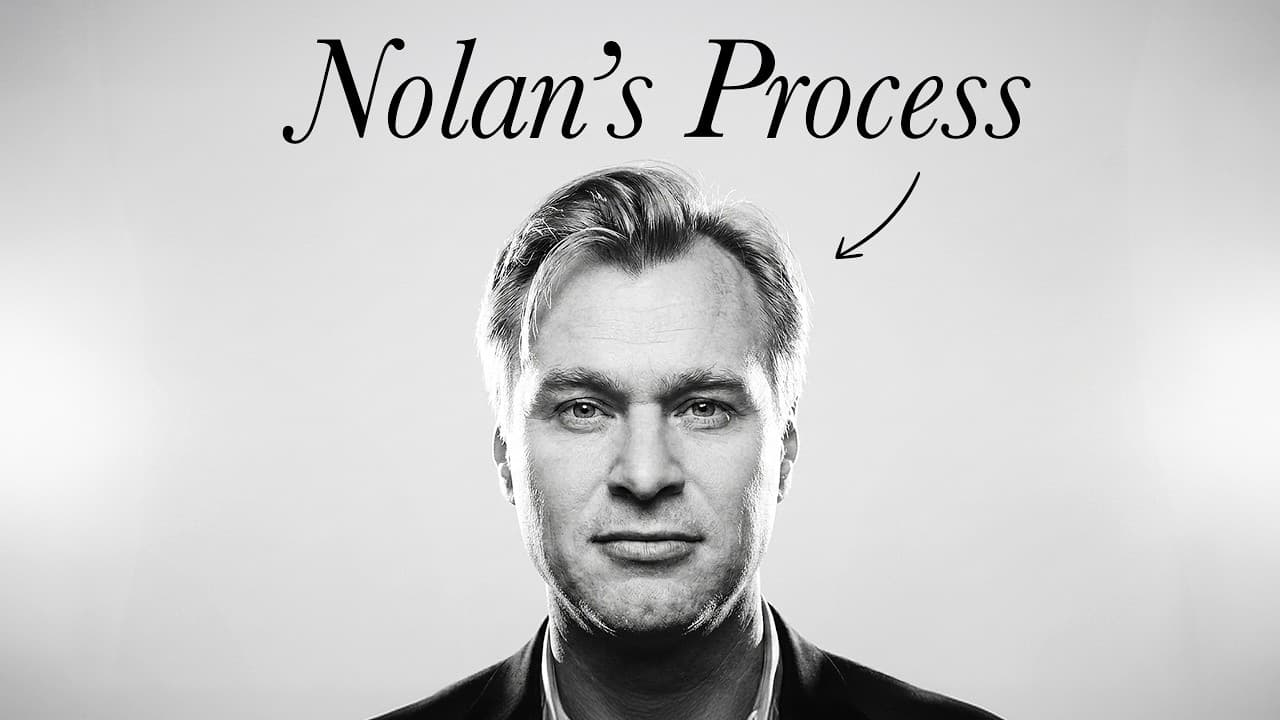
- Christopher Nolan spent a year attempting to secure distribution for the film Memento, facing rejection from every distributor he approached despite their positive feedback. 0s
- Memento was a deeply personal project for Nolan, and he felt compelled to create it regardless of the initial lack of industry support. 13s
- During the filmmaking process, Nolan emphasizes the importance of trusting one's initial instincts when becoming fully immersed in a project. 25s
- Two years after a difficult screening process for distributors, Memento earned two Oscar nominations. 42s
Professional Reputation and Studio Relations
- Over the past two decades, Nolan has transitioned from creating micro-budgeted short films to directing blockbusters that have grossed over $5 billion at the box office. 50s
- Nolan is regarded by studios as a reliable director who can secure significant budgets, such as $200 million, for original script ideas. 1m2s
- Nolan is part of an exclusive group of directors who have written or co-written all 11 of their feature films to date. 1m13s
- Collaborators recognize Nolan for his discipline, punctuality, and commitment to secrecy on set. 1m21s
Security and Production Discipline
- During the production of Dunkirk, only 20 of the more than 600 crew members were permitted to read the script. 1m26s
- To maintain security, Nolan has personally delivered scripts to actors' homes, waited for them to finish reading, and then retrieved the documents. 1m36s
- Script copies used on set are watermarked with actors' names to ensure that any missing copies can be traced back to the responsible individual. 1m32s
- Nolan prefers to film every frame himself and refuses to utilize a second unit. 1m50s
- Crews working with Nolan follow a strict schedule, typically working from 7:00 a.m. to 7:00 p.m. with a single lunch break. 1m57s
Creative Philosophy and Filmmaking Conviction
- Nolan maintains a dedicated following, and he views the intense obsession fans have with his films as a natural extension of his own deep immersion in the filmmaking process. 2m6s
- Nolan believes that to endure the all-consuming nature of filmmaking, a director must approach every project with the conviction that they are creating the best film ever made. 2m33s
- The book The Nolan Variations: The Movies, Mysteries, and Marvels of Christopher Nolan by Tom Shone provides insight into Nolan's creative philosophy and career. 2m55s
Analog Lifestyle and Core Principles
- Christopher Nolan’s filmography and career are defined by a recurring set of core ideas, one of which is his commitment to living in an analog world 0s.
- Nolan does not use email or a smartphone, opting instead for a flip phone, which necessitates that communication with him, such as with author Tom Shone, must be facilitated through an assistant to arrange physical meetings 25s.
- A central philosophy for Nolan is the belief that humans should utilize technology rather than being controlled by it, a sentiment that aligns with the founder of Honda’s principle of building technology to serve humanity 42s.
Obsession as a Creative Engine
- Obsession serves as the primary engine for Nolan’s career, driving him to dedicate his finite life energy to his craft 1m5s.
- Nolan views himself as a craftsman and approaches every film project with the intention of creating the best movie possible, acknowledging that while this may not always be the outcome, he operates as if it will be 1m18s.
- The filmmaking process is described by Nolan as arduous, physically demanding, and a source of strain on his personal relationships, which reinforces his requirement that every project must be something he loves 1m35s.
Creative Control and Screenwriting
- Despite his significant financial success and long-term studio partnerships, Nolan maintains deep involvement in all aspects of his films 1m50s.
- Nolan prefers to write or co-write his own scripts rather than receiving fully formed projects, as he desires complete creative control 2m6s.
- Nolan favors screenwriting because he views screenplays as stripped-down, simple documents, noting that the more concise they are, the better they function 2m20s.
- The concept of stripping projects down to their essence is a principle shared by David Ogilvy, a successful advertising executive who emphasized getting to the core of a subject 2m35s.
Management Techniques and Artistic Identity
- Christopher Nolan emphasizes the importance of starting with a written document to maintain clear thinking and define the essence of his projects. 0s
- A management technique known as the "TUR memo" involves responding to inquiries with only three options: "yes," "no," or "speak," the latter of which requires an in-person conversation for efficiency. 7s
- Christopher Nolan identifies as a craftsman rather than an artist, a perspective he shares with George Lucas, who similarly stated in his biography that he makes movies rather than works of art. 27s
- Christopher Nolan demonstrates a comfort with ambiguity in his films, such as Inception and Tenet, reflecting his belief that the world is complex and often beyond human comprehension. 52s
Fascination and Early Cinematic Interests
- A noted characteristic of Christopher Nolan is that he "dreams with his eyes open." 1m13s
- The company Ramp utilizes first principles thinking to help businesses control costs, noting that a dedication to cost management can lead to increased revenue and competitive advantages. 1m20s
- Christopher Nolan frequently uses the word "fascinating" to describe various subjects, including art, architecture, short stories, and ideas. 2m6s
- Everything that captures Christopher Nolan's fascination is ultimately connected to his craft, as he treats the world as a classroom for his filmmaking. 2m15s
- Christopher Nolan’s interest in cinema began in childhood, as he started creating home movies at the age of eight. 2m25s
- Christopher Nolan has maintained an obsession with movies for as long as he can remember. 2m33s
Inspiration and Technical Development
- Christopher Nolan develops his creative work by gathering inspiration from diverse sources, including short stories, films, personal experiences, walks, and periods of quiet reflection, which allow his brain to process and apply these ideas to his projects 0s.
- The concept of an idea as a "resilient parasite" is central to the film Inception, illustrating that for an idea to be truly owned, an individual must perform the mental work to internalize it rather than simply accepting it from others 25s.
- At age seven, Christopher Nolan was inspired by the 1977 release of George Lucas’s Star Wars, which sparked a fascination with both the films and the technical processes behind them 1m25s.
- Nolan’s creative process is characterized by intense obsession; when he becomes interested in a subject, he repeatedly consumes the material and researches every available detail to understand how it was constructed 1m55s.
- A core driver of Nolan’s work is a deep-seated desire to understand the mechanics of filmmaking 2m15s.
- At age eight, Nolan began making his own films using a Super 8 camera, which was limited to approximately two and a half minutes of recording time and lacked sound 2m25s.
- At age 13, Nolan identified his career path after discovering that Ridley Scott directed both Blade Runner and Alien, two films he greatly admired 2m45s.
Formative Years and Boarding School Discipline
- Christopher Nolan identified the director as the singular, consistent connection across films with different writers, actors, and stories, which led him to pursue directing as a career 0s.
- Nolan’s upbringing involved frequent travel between England and the United States due to his father being English and his mother being American 15s.
- Nolan attended a boarding school called Haileybury, an institution he described as Spartan, old-fashioned, and militaristic 20s.
- The boarding school environment was characterized by a "sink or swim" Darwinian atmosphere where students were required to adhere to a strictly timed, rigorous schedule from waking until 9:00 p.m. 45s.
- The discipline, high pain tolerance, indifference to physical discomfort, and ability to manage large workloads that Nolan exhibits in his professional life were developed during his time at this boarding school 30s.
- While many students found the boarding school experience difficult, Nolan noted that he personally enjoyed it, though he acknowledged that others struggled significantly 40s.
Solitude and Focused Thinking
- Instead of sleeping after lights out, Nolan would lie in the dark listening to film scores from movies like Star Wars, 2001: A Space Odyssey, and Chariots of Fire on his Walkman 1m15s.
- Nolan valued listening to music in the dark because it provided an imaginative space that allowed him to think about films and stories without the distraction of visual imagery 1m25s.
- The practice of sitting or lying in the dark to focus the mind is a method used by others, such as Jim Simons of Renaissance Technologies, who would lie on his sofa in the dark to solve complex problems 1m45s.
- Bill Gates also utilized a method to minimize distractions during the early days of Microsoft by intentionally removing the radio from his car 2m5s.
Subconscious Processing and Time Perception
- Christopher Nolan emphasizes the importance of providing the brain with space to think by optimizing daily routines, such as calculating travel times to maximize productivity during commutes 0s.
- A core element of Nolan’s creative process involves feeding his subconscious with specific fascinations, which may later influence his intuition and work 35s.
- Nolan is deeply fascinated by the camera's ability to perceive time in ways that are impossible for the human eye, a concept that serves as the foundation for the nonlinear structures and plot presentations in his films 52s.
- While humans possess a strong, subjective sense of time and utilize tools like clocks, Nolan views time as an inherently mysterious and difficult-to-understand phenomenon 1m25s.
- During his time at boarding school as a teenager, Nolan developed a sense of punctuality, discipline, and an indifference to cold weather that later became hallmarks of his professional reputation among film crews 1m43s.
- Nolan experienced a unique upbringing characterized by a paradox of freedom and constraint; he lived 4,000 miles away from his parents in Chicago while attending a boarding school in England, which forced him to be independent within a rigid, disciplined environment 2m6s.
Long-term Development of Inception
- The development of the film Inception spanned approximately 20 to 23 years, originating from ideas Nolan conceived when he was 16 years old 2m35s.
- The initial concepts for Inception, including the idea of shared dreaming and the influence of external music on a sleeping person, were developed by Nolan during late-night sessions at his boarding school 2m55s.
- The long gestation period for Inception is compared to the development of the instant photography camera by Edwin Land, which took roughly 30 years to evolve from its initial concept in 1946 to its final, color-capable form in 1973 3m35s.
- Steve Jobs envisioned a handheld computer in the 1980s, a concept that predated the release of the iPad by approximately 40 years, illustrating how ideas can be held for decades before the technology exists to realize them 0s.
University Filmmaking and Practical Experience
- During his time at University College London, Christopher Nolan prioritized his role as president of the film and TV society over his formal academic studies 42s.
- Nolan spent much of his college career in a windowless, soundproof basement that served as his office, where he effectively created his own curriculum focused on filmmaking 42s.
- When a literature professor encouraged Nolan to apply his obsession with movies to his academic reading, Nolan expressed that such a shift in focus would not happen 1m15s.
- Nolan utilized his time in the film society to gain practical experience in the craft of filmmaking, including operating cameras, editing and cutting film by hand, and syncing sound 1m35s.
- Over three years, Nolan managed the film society, raised funds, and produced short films to learn the technical aspects of film production 1m52s.
Business Principles and Security Platforms
- According to Peter Thiel’s book Zero to One, successful individuals often find value in unexpected places by applying first principles rather than relying on established formulas 2m6s.
- AppLovin is an advertising platform that connects businesses with over a billion potential customers in mobile games through full-screen video advertisements 2m25s.
- AppLovin advertisements maintain an average viewer retention time of 35 seconds and allow businesses to scale their advertising spend and revenue 2m38s.
- Vanta provides an AI-powered security platform designed to automate compliance and monitor security controls for businesses 3m15s.
- Vanta aims to help companies secure contracts by proving their security posture, with the average customer reporting a 526% return on investment 3m45s.
Resourcefulness and Early Production
- Successful founders and filmmakers share the necessity of having a distinct point of view, which serves as a unique take on the world rather than creating an undifferentiated commodity. 0s
- Steve Jobs exemplified this concept through his focus on creating "insanely great products." 0s
- After being rejected by the National Film and Television School and the Royal College of Art in England, Christopher Nolan began his career working as a camera operator for a small video shop, producing corporate and media training videos. 15s
- Nolan’s early career demonstrates a trait of relentless resourcefulness, which is linked to his obsession with maintaining control over his work. 28s
- Nolan produced his first film while working a full-time job, writing the script on a typewriter with a focus on what could be achieved with minimal resources. 42s
- To fund the production, Nolan used bonuses from his cameraman job and shot the film exclusively on weekends over the course of nearly a year. 42s
- Due to budget constraints, the production team rehearsed scenes like a play to ensure they could be captured in one or two takes, allowing them to process only 10 to 15 minutes of footage per week. 42s
- The production team frequently traveled to locations in taxis and filmed without obtaining official permits, with Nolan personally operating the camera. 42s
Narrative Structure and Historical Influence
- The use of a typewriter for scriptwriting highlights Nolan's preference for an analog approach, a trait shared by author Cormac McCarthy, who famously used a single $50 typewriter for 50 years to write millions of words. 1m15s
- Nolan’s first film was initially written in chronological order before he rearranged the scenes, a structural choice influenced by Quentin Tarantino’s Reservoir Dogs. 1m45s
- High-level professionals in film often possess a deep historical database of knowledge, allowing them to draw inspiration from works created decades prior, such as Pulp Fiction and Citizen Kane. 1m45s
- Nolan challenged the traditional insistence that film narratives must be presented chronologically, questioning why his first film should be restricted by that convention. 1m45s
Chronological Conservatism and Daily Routine
- Christopher Nolan writes his scripts in chronological order before cutting them up and rearranging the scenes to reject what he terms "chronological conservatism." 0s
- Nolan argues that because human conversations and literature do not follow a strictly chronological structure, films should not be required to do so either. 10s
- He suggests that the tendency for films to follow chronological order was an influence derived from television. 18s
- Nolan maintains a unique work-life setup where his home in Los Angeles and his production facility are located in nearly identical residences that sit back-to-back on the same block. 42s
- By walking through the backyards of these two properties, Nolan can complete his daily commute between his home and his office in under one minute. 55s
The Success of Memento
- At age 27, following the production of his first film, Following, Nolan remained focused on new ideas despite having been rejected from film school. 1m5s
- Nolan developed the concept for Memento, a story about a man with short-term memory loss attempting to solve his wife's murder using tattoos as clues, with the specific intention of telling the narrative backward. 1m20s
- Memento served as the catalyst for a significant upward trajectory in Nolan's career. 1m45s
- During the 2000 Venice Film Festival debut of Memento, Nolan experienced a moment of fear when the audience remained silent for a few seconds following the film's abrupt ending. 1m52s
- The silence at the festival was followed by a standing ovation, which Nolan identified as the turning point of his life. 2m6s
Studio System Navigation and Constraints
- Nolan’s approach to his work reflects a personal belief that there is more to the world than what is immediately visible or understood. 2m25s
- Christopher Nolan expressed a personal fascination with the concept of being unable to trust one's own mind 0s.
- During the development of the film Insomnia, Christopher Nolan struggled to secure meetings with major studio executives 5s.
- Steven Soderbergh facilitated the production of Insomnia by personally approaching the head of production at Warner Brothers to insist on a meeting with Christopher Nolan 15s.
- Steven Soderbergh and George Clooney served as executive producers for Insomnia to help guarantee the project for the then 31-year-old director 30s.
- The experience of making Insomnia served as a turning point that taught Christopher Nolan how to operate and work within the studio system 42s.
- Christopher Nolan operates under the philosophy that constraints breed resourcefulness, which in turn helps a director maintain control 50s.
- Christopher Nolan views the pressures of time and money as tools that accelerate his creative process and force decision-making 1m5s.
- By working faster and cheaper than expected, Christopher Nolan aims to prevent studio interference and maintain creative power 1m25s.
Studio Waste and Pre-production Efficiency
- Christopher Nolan observes that large studios often encourage waste by hiring large teams of artists and designers, which creates a "beast" that requires constant feeding 1m45s.
- Unlike the studio approach of spending millions on projects that may never materialize, Christopher Nolan prefers to conduct extensive pre-production work from his home to avoid unnecessary spending 2m15s.
- Christopher Nolan identifies as a pessimist who constantly imagines potential failures in order to take proactive steps to avoid them 2m35s.
Collaboration with Hans Zimmer
- Christopher Nolan describes his 20-year creative partnership with Hans Zimmer as successful because Hans Zimmer is a minimalist composer who utilizes maximalist production values 2m55s.
- The minimalist nature of Hans Zimmer’s musical ideas provides Christopher Nolan with the necessary space to work as a filmmaker between the notes 3m10s.
Emotional Focus and Minimalist Values
- Christopher Nolan approaches film scoring by reversing the traditional process, prioritizing the emotional core of the story before developing the technical mechanics 0s.
- Nolan is described as a minimalist with maximalist production values, a trait he shares with his frequent collaborator Hans Zimmer 7s.
- To maintain the emotional focus of a project amidst the chaos of production, Nolan writes a one-page summary of the film's vision before shooting begins and references it throughout the process 18s.
- Nolan maintains a pessimistic and superstitious outlook regarding his work, operating under the assumption that a project will fail so that he can take proactive steps to prevent that outcome 38s.
- Nolan emphasizes the importance of personal belief in one's own work, noting that when external criticism is negative, the creator's internal satisfaction is the only thing that remains 58s.
- Nolan prefers working within constraints, such as tight budgets, because these limitations encourage improvisation 1m21s.
Analog Filmmaking and Information Skepticism
- A recurring theme in Nolan's films is the belief that there is more to the world than what is immediately visible 1m33s.
- Nolan advocates for an analog approach to filmmaking, favoring the texture of celluloid over digital formats and physical sets over computer-generated imagery 1m40s.
- The appeal of Nolan's work is linked to a broader cultural trend where value is placed on elements that cannot be easily replicated or digitally manipulated 1m53s.
- Nolan expresses skepticism toward modern technology, specifically the belief that the vast majority of human knowledge is accessible online 2m6s.
- To test the accessibility of information online, an experiment was conducted where ten random facts were pulled from a library book; only one of those ten facts could be successfully located on the internet 2m21s.
Workflow and Creative Freedom
- In 2006, Christopher Nolan committed to a specific working method regardless of prevailing industry standards, emphasizing that his work takes place in an analog world 0s.
- During the production of the 2006 film The Prestige, the studio expected the negative to be digitized for electronic editing, but Nolan chose to maintain a workflow of shooting on film, editing electronically, and then manually cutting the film based on frame numbers 15s.
- Nolan’s filmmaking ethos involves taking genre rules and subverting them, while increasingly favoring a minimalist approach that strips away unnecessary elements as he gains more experience and confidence 42s.
- A line spoken by the Joker in the Batman series—"The only sensible way to live in this world is without rules"—is noted as reflecting Nolan’s own perspective 1m15s.
- Following the critical acclaim and financial success of Memento, which earned two Oscars and returned five to ten times its budget, Nolan experienced a period of rapid career growth 1m30s.
- The success of The Dark Knight, which grossed over one billion dollars, shifted Nolan’s position at Warner Brothers from solid to unassailable, granting him the creative freedom to pursue any project he desired 1m45s.
- Achieving this level of creative control was described by Nolan as both liberating and intimidating, as it forced him to decide how to utilize the opportunity he had finally earned 2m15s.
- With this newfound freedom, Nolan chose to develop Inception, a project he had wanted to create for a long time 2m35s.
Intuition and the Culmination of Inception
- Nolan views the world as a classroom for gathering influences, but he emphasizes that a creator must have internal experiences or ideas already "rattling inside" to effectively connect with and be inspired by external stories 2m45s.
- Nolan incorporated a core concept from a short story by Jorge Luis Borges into Inception, which provided the necessary framework to overcome a writing block that had stalled the script at 80 pages for several years 3m10s.
- Inception is characterized as the culmination of half a lifetime of work 3m35s.
- Christopher Nolan first conceived the idea for the film Inception when he was 16 years old, continuing to develop the concept throughout his time at university, his early career in Hollywood, and his life as a father and successful filmmaker 0s.
- Principal photography for Inception began on June 19, 2009, which was 23 years after Nolan first conceived the idea 25s.
Sculpting Ideas and Subconscious Intuition
- Nolan approaches storytelling as a three-dimensional exercise, similar to sculpture, by "flipping" his initial ideas to visualize them as objects he can hold or walk around 42s.
- As a career progresses, influences and events begin to operate on a subconscious level, leading Nolan to accept that a director's work is largely instinctive and unconscious 1m5s.
- This reliance on intuition is compared to the perspective of Steve Jobs, who believed that intuition played a more significant role in his career than intellect as he aged 1m15s.
- An experienced investor noted that performance can be inversely correlated to the size of a team, as team members may lack the specific subconscious intuition required to execute an idea effectively 1m35s.
Ruthless Editing and Creative Refinement
- During the production of Inception, Nolan encountered a significant creative wall that caused him to fear that the $200 million budget had been wasted 2m15s.
- While most filmmaking challenges involve minor adjustments, similar to tightening lug nuts on a tire, some obstacles require a "ruthless cut" to overcome 2m35s.
- This strategy of a "ruthless edit" is compared to the approach taken by Steve Jobs upon his return to Apple, where he reduced the company's product line from 300 items to four 2m55s.
- To refine a creative project, such as selecting 10 songs for an album from a pool of 20, one should ruthlessly cut the list down to the three most essential items and then carefully reintroduce others only if they are absolutely necessary 0s.
- This process of ruthless editing serves as a metaphor for avoiding dependency and learning how to navigate challenges independently 32s.
Independence and Navigational Metaphors
- The act of laboriously searching for information, such as using the Dewey Decimal System in a library, is considered valuable in itself, even if the specific information gained is not retained 48s.
- There is a perceived danger in over-relying on modern technologies or corporations that track movements and manage information, as these entities encourage dependency and the outsourcing of personal thinking 1m15s.
- When visiting a new city, it is beneficial to wander and get lost, as this practice teaches the ability to find one's way without relying on maps or phones 1m33s.
- The practice of navigating without digital aids serves as a metaphor for filmmaking, where one must reconcile two-dimensional plans with three-dimensional space while maintaining independence 1m48s.
Breaking Rules and Pure Present Tense
- While filmmakers should avoid feeling restricted by rules, they often benefit from working within self-imposed constraints 2m1s.
- Stanley Kubrick’s 1968 film 2001: A Space Odyssey is described as the "punk rock of movies" because it does not merely break rules, but operates as if no rules exist at all 2m10s.
- This philosophy of operating without acknowledging rules is reflected in the approach to filmmaking, such as in the production of the war movie Dunkirk 2m35s.
- Dunkirk was designed to exist in the "pure present tense" by removing traditional war movie elements like political figures, maps, and backstory, focusing instead on the simple moral calculus of survival 2m45s.
- The production of Dunkirk rejected standard genre conventions by omitting visually chaotic devices like quick cuts, smoke, and fire that are typically used to depict war 3m15s.
- The film Dunkirk is characterized by the absence of specific elements, though the text does not explicitly define those missing components 0s.
Discipline and Operational Resilience
- A core principle of Christopher Nolan’s filmmaking process is the combination of discipline and obsession 3s.
- Nolan maintains a commitment to continue filming regardless of circumstances, a philosophy he ensures his entire team understands 8s.
- While Nolan has a reputation in the film industry for experiencing good luck with weather, he characterizes this belief as inaccurate 15s.
- Nolan frequently encounters poor weather conditions, but his operational strategy is to proceed with filming regardless of the environment 18s.
- By consistently shooting in any weather, Nolan signals to the cast and crew the seriousness of the production 25s.
- The narrator notes that 426 books have been completed, with 1,000 remaining 33s.