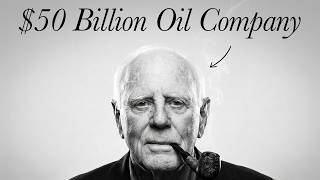
Influence and Legacy of Soichiro Honda
- Soichiro Honda's biography was influenced by James Dyson, who applied Honda's framework of taking an existing product, identifying its flaws, and improving it obsessively to make it simpler and more pleasurable to use, throughout his career 10s.
- The book "Honda: The Man and His Machines" by Sol Sanders, written in 1975, describes Honda as a free spirit and a maverick who endured significant changes in Japan during his 60-year career, including the Great Depression, World War II, and the country's post-war economic miracle 42s.
- Honda's personality is characterized by his constant nervous activity, passion for motors and machines, and his straightforward and direct approach to problems, which sometimes embarrassed the Japanese due to their cultural emphasis on conformity 2m6s.
- Honda's career was marked by his obsession with improving products, particularly the Honda Super Cub, which has been in constant production for over 60 years and has sold over 100 million units, with Honda continuously improving its design and engineering 2m6s.
Honda's Personality and Leadership Style
- Honda believed in maintaining his company's youthfulness by hiring young people and giving them opportunities, and he considered himself an employee of his own company, working alongside young engineers to drive innovation and improvement 2m6s.
- Honda's company president is described as unconventional, working closely with employees and engaging in dialogue on the same level, demonstrating a unique approach to leadership 10s.
- The story of Honda's impact on the motorcycle market is comparable to James Dyson's effect on the vacuum cleaner market, as both innovators took an old and narrow market, made it respectable, and expanded it to an unprecedented size 42s.
Comparisons and Philosophical Foundations
- Honda believed in the Edisonian principle of design, emphasizing the importance of learning by doing and persevering through failure, as evident in his quote that success can only be achieved through repeated failure 2m6s.
- Honda also stressed that technology should serve mankind, not the other way around, and that people should not be slaves to technology, but rather use it as a tool to achieve a better life 2m6s.
- He warned against prioritizing machines over humanity, emphasizing the need to use machines to improve human lives, and repeated the importance of seeking solutions to problems at their root 2m6s.
Early Life and Formative Experiences
- Honda was born in a remote village to a blacksmith father, and one of his earliest memories was of electricians installing lighting in his village, which sparked his fascination with engineering and technology 4m30s.
- Honda's early life and career were marked by a strong interest in using technology to improve people's lives, and his experiences shaped his approach to innovation and leadership 4m30s.
- Honda's childhood was marked by poverty, with him wearing shoes made with soles of rice straw that his mother had to mend every night, and he describes his childhood simply as "We were very poor" 42s.
- Despite the poverty, Honda's father was a craftsman who cared about doing great work and doing things the right way, teaching Honda the importance of solving problems at the root and doing things his own way 1m30s.
- Honda developed an interest in machinery and engines at a young age, and was fascinated by the sounds and smells of motors, with his first encounter with an automobile leaving a lasting impression on him 2m6s.
- Honda's obsession with motor vehicles only grew stronger, and he was determined to build a car himself one day, with every opportunity to see an automobile filling him with exhilaration 3m20s.
Childhood and Family Influence
- Honda's father's blacksmith shop was transformed into a bicycle repair shop, where Honda would help and read trade magazines, including The World of Wheels, which led him to apply for a job at a Tokyo repair shop 4m10s.
- At the age of 16, Honda moved to Tokyo to work in the repair shop, despite his father's initial reluctance, and he was full of ambition to become an expert car mechanic 5m30s.
- Honda had to endure a traditional Japanese apprenticeship, which involved waiting over a year to do any meaningful work, a experience he found torturous and the most trying of his life 6m40s.
- A major earthquake struck when Honda was around 17 years old, which turned out to be good luck for him, although the exact nature of this good luck is not specified in this part of the text 8m0s.
Early Career and Apprenticeship
- Before the earthquake and subsequent fires, the shop where Honda worked employed 16 repairmen, but after the disaster, only two were left, including Honda, who would later become crucial to the repair shop's operations 10s.
- Honda's experience working for his boss for six years was invaluable, as he acquired skills as a repairman and mastered knowledge of the automobile, which would eventually lead to his boss helping him set up his own business 42s.
- Honda's natural fondness for machinery and his hard work ethic allowed him to quickly acquire skills, and he believed that everything he did, no matter how trivial, would eventually profit him in the long run 1m6s.
- When Honda started his own business, he faced humble beginnings, with only one apprentice, and had to build a reputation by taking on repairs that other shops deemed hopeless or had failed to complete 2m6s.
- Honda's principle of starting with the hardest problem first was forged during this time, as he was forced to take on challenging repairs due to being considered too young by potential customers, and this approach would later become a core principle of the Honda company 2m42s.
Entrepreneurial Beginnings and Innovation
- Honda's first product was cast metal spokes, which he created in response to the wooden spokes that burned in the earthquake fires, and this innovation led to his first patent, with over a hundred more to follow 4m10s.
- By the time Honda was 25, his repair shop was earning a significant profit, and he was employing 50 people, which allowed him to indulge in a lavish lifestyle, spending his money freely and enjoying his time, often in extravagant ways 6m0s.
- Honda had a hot temper, which led him to get into trouble, including an incident where he used a fire engine hose to douse tax officials, and he believed that his experiences, including his hell-raising days, were beneficial to building products later in his life 10s.
- He thought that his wide range of experiences, including carousing late at night and drinking with normal people, helped him acquire knowledge of human nature and understand the feelings of people from all walks of life 42s.
Interest in Racing and Unconventional Behavior
- Honda was interested in racing cars and saw it as a form of research and development, which would later become a key aspect of the Honda organization's success, and he developed a great interest in the design and construction of racing cars 2m6s.
- He was known for his unorthodox approach to business and life, earning him the nickname "Mr. Thunder" due to his instantaneous temper and sometimes erratic behavior, and he was extremely ambitious and wanted to control his own destiny 2m6s.
- Honda decided to venture into manufacturing, starting with piston rings, despite the initial difficulty in persuading his board of directors, and he used an unusual strategy to get his way, which included taking time off due to severe facial neuralgia 4m30s.
Transition to Manufacturing and Challenges
- After overcoming the initial obstacles, Honda began to live and work in the factory, literally all day and night, and turned into a hermit, complete with long hair, in order to learn about manufacturing and improve his products 6m0s.
- Honda's initial manufacturing efforts were done by hand, but he soon realized that this approach could not maintain quality, and after a failed batch of piston rings sold to Toyota, he became a disciple of interchangeability and automation, using his engineering genius to improve the manufacturing process 8m0s.
- Honda's mechanical originality was evident when he developed automatic equipment for producing piston rings, allowing relatively uninitiated women workers to operate the machines during the 1930s as the male manpower pool dwindled due to wartime 10s.
- Despite facing numerous challenges, including earthquakes, fires, and war, Honda demonstrated unshakable optimism and continued to work with machines, eventually leading him to start making motorbikes out of necessity 42s.
Innovation in Post-War Japan
- Honda's first motorbike was created by fitting a gasoline-powered motor, previously used by the military to operate generators for radios, onto a bicycle, providing a solution to the post-war chaos and oil shortages in Japan 2m6s.
- The makeshift motorbike became an instant success, and when the surplus military motors were exhausted, Honda decided to design and build a motor for the bicycle, showcasing his ability to improvise and innovate 2m6s.
- Honda's decision to enter the motorbike business was met with criticism and skepticism from his relatives, friends, and even his wife, but he remained focused on his vision and trusted his own judgment, recognizing the importance of his product in economizing gasoline use 2m6s.
- In 1949, at the age of 43, Honda founded a company that would thrive for over 80 years, with his early success stemming from his ability to find value in unexpected places and think about business from first principles 2m6s.
Advertising and Business Partnerships
- Apploven is an advertising platform that connects businesses with over a billion potential new customers in mobile games, allowing for full-screen video ads with an average retention time of 35 seconds, and can be launched in minutes with no complex setup or expertise needed 10s.
- Vanta is an AI-powered security expert that helps companies prove their security to customers, automates compliance, and continuously monitors controls, with the average customer reporting a 526% return on investment, and offers a $1,000 discount for new customers 42s.
- Honda decided to switch to building motorcycles, christening his new machine "the Dream", which marked the beginning of a successful production line that spread globally 2m6s.
- Honda's success can be attributed to his partnership with Fuji Sawa, who handled the business side of things, as Honda was more focused on building the best products possible and often neglected profits, which led to financial difficulties, including almost going bankrupt due to unpaid debts from shops he sold to on credit 2m6s.
- Fuji Sawa played a crucial role in Honda's career, bringing financial and marketing expertise to the table, and their partnership lasted a lifetime, despite their vastly different personalities, with Fuji Sawa's wife initially warning him that the two unconventional Japanese characters would never be able to work together 2m6s.
- Honda recognizes the importance of teamwork and values individuals with different talents and personalities, believing that a person who cannot mix with people of different temperaments is rather useless, and talent should be sought far and wide 10s.
- Honda's erratic genius is balanced by someone who is great at finance and developing distribution channels, such as Fujisawa, who helps solve Honda's cash flow problem by making wholesale shops pay upfront for the product 42s.
- Fujisawa builds a distribution network from scratch for Honda's products by sending a letter to 18,000 bicycle shop owners in Japan, which is a great marketing strategy that results in setting up a distribution network of 5,000 dealers 2m6s.
Product Philosophy and Employee Motivation
- Honda decides to build a simpler product that anybody could use, rather than just catering to a small group of motorcyclists, and sets out to design a smaller engine, resulting in the creation of the Cub, which becomes one of the most successful products of all time 2m6s.
- Honda believes he can make something as great and widely appealing as the Cub because he understands the minds of people better than others, thanks to his wide-ranging pleasure-seeking activities, and he works tirelessly on his product because he is doing what he likes to do 2m6s.
- Honda encourages his employees to work on things that they love to do, telling them that they should understand that they are working first for themselves and second for the company, and that they must do something that pleases them, which is a revolutionary idea in Japan 2m6s.
Business Independence and Financial Risks
- Honda's goal was to win by building the best product in the world, and he explicitly stated that he did not want any government help, instead believing that the problem had to be solved by his own achievements in the technical field 10s.
- A group of private businesses held a meeting to ask the government to adopt measures to promote exports and discourage imports to Japan, but Honda did not participate because he felt that Japanese technology and products should be able to compete on their own merit 42s.
- Honda spent a significant amount of money on high-quality tools to produce high-quality products, even risking bankruptcy, and he believed that these tools would remain valuable assets even if the company went bankrupt 2m6s.
- After leveraging the company to buy these machines, Japan went into a deep recession, and Honda was unable to pay for the machines, but a supporter inside his main creditor bank convinced the bank not to foreclose on Honda, giving him time to recover 2m6s.
The Super Cub and Market Expansion
- Honda's decision to target non-motorcycle users with the Super Cub was a strategic move, similar to Steve Jobs' approach with the Apple 2, and the Super Cub was designed to be a low-priced, easy-to-ride, and cheap mode of transportation that could be used by anyone 4m30s.
- The Super Cub was a highly successful product that opened up a new market for motorcycle transportation, and Honda's relationship with his creditor bank was a key factor in his ability to recover from the recession and achieve long-term success 6m0s.
- Honda's approach to business and innovation was centered on creating high-quality products that could compete globally, and he was willing to take risks and invest in the best tools and technology to achieve his goals, even if it meant going against the prevailing wisdom of the time 10s.
Changing Public Perception of Motorcycles
- Honda had to change the perception of the entire motorcycle product category to achieve success, and the company laid down a saturated advertising campaign to address the very low reputation of motorcycles in the public, which was associated with rough, dangerous, and criminal behavior 10s.
- The company's advertising program was based on the belief that the primary resistance to motorcycle sales was not due to a lack of familiarity with the vehicle, but rather the social acceptance of motorcycles as serious transportation, and they targeted the American market first 42s.
- Honda's ads did not set out to sell their own products, but rather to sell motorcycling as a whole, featuring illustrations of people from respectable walks of life, such as students, housewives, and businessmen, with motorcycles, and they became the largest advertiser of motorcycles on US network TV 2m6s.
- The company's slogan, "You meet the nicest people on a Honda," was spread far and wide, and their ads showed ordinary, presentable people in all walks of life on a Honda, targeting not just potential owners but also their families to seek parental and family acceptance of the Honda as an acceptable means of transportation 2m6s.
Research and Development Strategy
- Honda prioritized research and development over everything else, and they used racing as a means of R&D, with the goal of inventing new products, and the company's founder was inspired by attending the greatest motorcycle race in the world at the time, which led him to reorganize the company and set up R&D as a separate company 4m30s.
- The founder's experience at the motorcycle race made him realize that he needed to concentrate on research to understand why foreign motorcycles had three times the horsepower of Japanese motorcycles, despite having the same number of cylinders, and this led to a fundamental reorganization of the company 5m30s.
- Honda set up a special research organization as a separate company to enable individuals to make the best of their ability, and to prevent research from being treated as a stepchild in the parent company, which prioritizes profits 10s.
- The research organization was given a specific portion of Honda's sales, and in return, it would hand over any developments to Honda manufacturing, allowing Honda to focus on research and engineering without being bogged down by marketing and finance problems 42s.
Honda's Personal Involvement in R&D
- Honda's commitment to research was personal, and he spent most of his time at the research and engineering laboratories, working side by side with development engineers, and viewing himself as just an employee of his own company 1m30s.
- The founder of Sony, Masaru Ibuka, noted that Honda's unique feature was his ability to pursue an idea regardless of obstacles, and his focus on engines as an engineer, which made him outstanding and allowed the company to accumulate unique engine technology 2m6s.
- Honda's focus on engines led to periods where sales would fall off, but after a technical breakthrough, sales would skyrocket, and the company would boom, with Honda resisting suggestions to move into other fields and insisting that the company's products must have an engine 3m30s.
- Honda believed in the importance of racing as a form of research and development, which he called "floating research," and used it to improve the technical qualities of his engines and apply the knowledge gained to production 5m0s.
Business Philosophy and Independence
- Honda's decision to go it alone and not partner with larger American car manufacturers, unlike his competitors, was a key aspect of his approach, and he believed that his company was unique and should maintain its independence 6m0s.
- Honda's approach to research and development is centered around the principle of respecting humanity, where technology is a means to achieve human desires, and the company's fundamental philosophy is that technology should serve a need, rather than the other way around 10s.
Innovation and Organizational Culture
- The quality of Honda's development is not solely dependent on the amount of money devoted to R&D or the number of people involved, but rather on the creativity and enthusiasm of the people working on the projects, and the company manages R&D to ensure that everyone enjoys their work 42s.
- Honda believes that excellence in products is the key to success, and that the best product can transcend national boundaries, and he encourages his team to pursue excellence without compromise, even if it means going to extremes 2m6s.
- The company's founder, Honda, is described as a transportation maniac and an engineer who is talented at cutting through technological challenges, and he has ensured the company's continued innovation by staffing it with young people and giving them the freedom to propose and work on their own research projects 10s.
- Honda accepts the inevitable conflict between young and old generations as essential to progress, and he has made youthfulness a key part of the company's management policy, believing that young engineers must be given more opportunities to drive innovation 2m6s.
- The company's R&D system is designed to give each individual the opportunity to work on whatever project they like, and to take responsibility for their own research, and Honda believes that this approach is essential for creating a culture of innovation and progress 42s.
Collaboration and Personal Growth
- Honda also emphasizes the importance of individuals seeking assistance from others for their weaknesses, and utilizing their strengths to the maximum, and he believes that this approach is essential for building a strong and effective organization 2m6s.
- Honda reflected on his work upon retirement, stating that he felt he had made nothing but mistakes, a series of failures, and regrets, but noted that each mistake was due to a different reason, allowing him to learn and improve 10s.
- Despite the mistakes, Honda emphasized that he always tried his hardest and succeeded in improving his efforts, demonstrating his perseverance and commitment to growth 10s.
Reflections and Retirement
- When asked about his activities in retirement, Honda replied that he was "Fumbling with machines", indicating that he remained engaged with his passion for mechanics and technology even after retiring 10s.