

Human Decisions and Industrial Safety
- Rajan, a 38-year-old chemical plant worker, died due to a decision made by someone in the plant to take a shortcut to meet a production deadline 0s.
- Shortcuts taken to meet production goals often become normalized over time, leading to situations where employees do not perceive them as significant decisions 35s.
- Despite the presence of high-quality machinery, trained employees, and safety signage, industrial incidents are frequently caused by human decisions rather than mechanical failure 1m5s.
Economic Impact of Safety Investments
- Financial analysis indicates that for every rupee a chemical plant saves on safety, it incurs a cost of six rupees later, representing a mathematical reality rather than just a moral or emotional argument 1m25s.
- Safety should be viewed by leaders in the chemical industry as a powerful business decision rather than a burden or a compliance-related cost 1m55s.
Hidden Costs and Incident Reporting
- The letter "P" in the "PRICE" framework stands for the invisible payments made daily, likened to water dripping from a bucket with small holes 2m25s.
- These "holes" represent hidden costs, such as skilled workers leaving due to safety concerns and unreported near-miss incidents 2m45s.
- According to the Heinrich triangle, for every major accident, there are numerous smaller, unreported injuries and significant near-misses 3m15s.
- The National Disaster Management Authority reported 130 serious accidents in the chemical industry over a decade, resulting in 260 deaths and 560 serious injuries, though these figures do not account for the many unreported incidents 3m35s.
Safety as a Revenue-Generating Investment
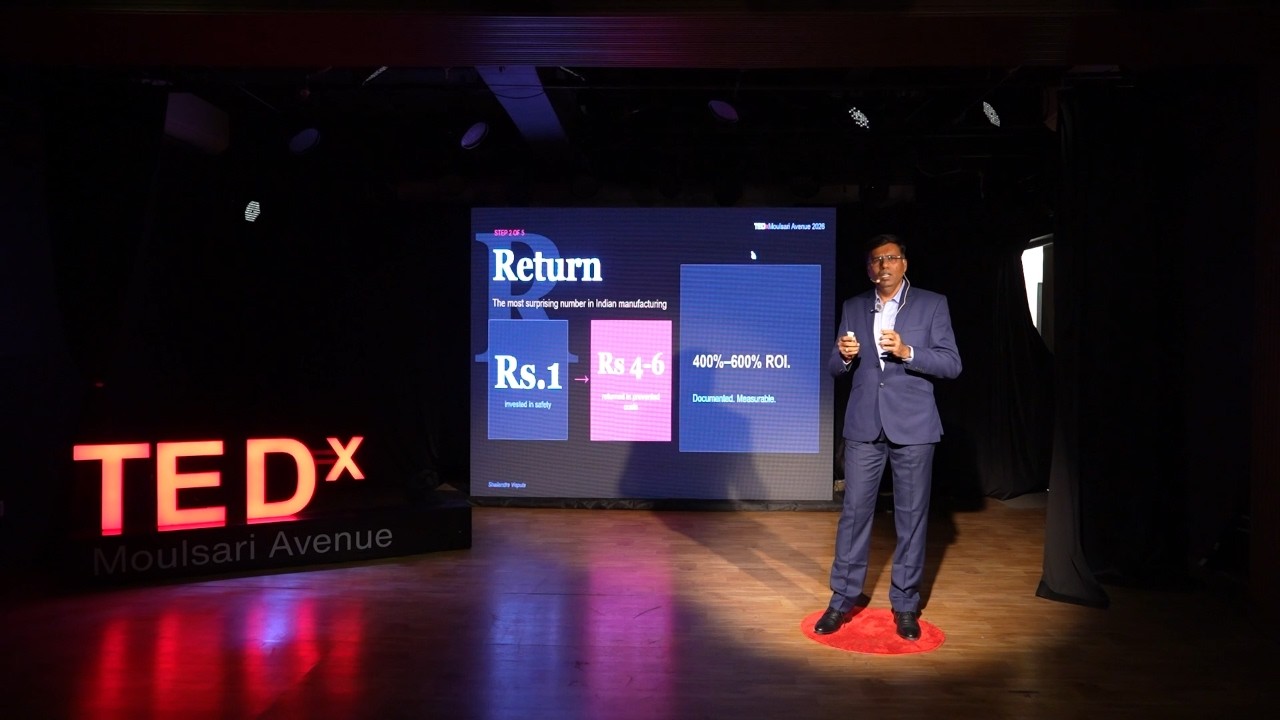
- The letter "R" represents the concept that safety is the best investment in the manufacturing industry, surpassing automation, equipment, or other processes 4m25s.
- Many individuals mistakenly perceive safety as an overhead cost or a mandatory budget item rather than a revenue-generating investment 4m45s.
Financial Returns on Safety Practices
- A comparison between two stall owners illustrates the impact of safety practices: one owner consistently checks gas connections and trains workers, while the other skips safety checks, leading to a gas leak, fire, and the total loss of the second owner's business, reputation, and income 0s.
- The Occupational Safety and Health Administration indicates that investments in workplace safety can yield a return of 4 to 6 rupees for every rupee spent by reducing downtime, avoiding shutdowns, lowering insurance costs, and retaining talent 35s.
- Safety is often overlooked as a primary project expense, despite the potential for 400% to 600% returns on investment 1m5s.
- Car insurance is widely accepted as a necessary cost because the consequences of an accident are catastrophic, yet safety measures in industrial settings are frequently not viewed with the same level of necessity 1m20s.
Consequences of Neglecting Safety Standards
- In December 2020, a chemical plant in Visakhapatnam restarted operations after a 43-day shutdown without following maintenance protocols, resulting in a styrene gas leak that caused 13 deaths, thousands of hospitalizations, and an initial 50-crore rupee liability ordered by the National Green Tribunal 1m55s.
- A strong safety system is ineffective if the underlying organizational culture is flawed, particularly when employees operate under the assumption that "nothing happened" until a disaster occurs 2m35s.
- The 1984 Bhopal industrial disaster, which involved a leak of over 40 tons of methyl isocyanate gas and resulted in approximately 3,800 deaths, serves as a historical example of the dangers of ignoring safety standards and operating below required levels 2m55s.
Cultivating a Proactive Safety Culture
- Safety culture is defined as the collection of small, often unobserved decisions made by operators on the shop floor, such as actions taken at 2:00 a.m. when no one is watching 3m35s.
- Improving safety culture requires a shift in perspective and thought process among leaders rather than relying solely on new government policies or equipment 4m5s.
India's Industrial Growth and Safety Requirements
- India is currently the world's sixth-largest chemical producer with a market value of $250 billion, and it has the potential to reach a $1 trillion valuation by 2040 as global companies seek alternatives to Chinese supply chains 4m30s.
- India possesses the necessary chemistry and ambition to grow its economy, but global buyers require assurance that manufacturing plants can deliver products safely, reliably, and at scale 0s.
- A safe plant is inherently more productive and profitable, serving as the essential foundation for India to achieve a one-trillion-dollar economic goal 12s.
Strategic Shift for Future Productivity
- Safety is not an enemy of productivity or the bottom line, but rather a prerequisite that allows workers to think clearly and perform well, which in turn helps the plant thrive 26s.
- The story of Rajan, a worker who died leaving behind two children, serves as an example of a preventable tragedy caused by leadership culture and specific decision-making rather than inevitability 42s.
- Achieving global recognition and building a safer, more productive industrial future in India requires a fundamental shift in perspective rather than merely upgrading equipment 1m5s.
- When facing deadlines, pressure, or temptation in a plant environment, leaders should critically evaluate the potential long-term costs of ignoring safety protocols 1m20s.
- In the chemical industry, every rupee saved by cutting corners on safety today will eventually result in a cost of six rupees later, often at a point where the damage is irreversible 1m35s.
- It is more effective to pay the price for safety willingly and proactively now to avoid paying a much higher, unwilling price in the future 1m48s.