

1. Popular but inefficient technique #1 - Rereading 1m29s
- Rereading is a common revision technique among students.
- Studies indicate that rereading has low utility in terms of exam preparation strategy.
- Compared to other techniques, rereading is less effective.
- Professor John Dunlosky rated rereading as having low utility based on extensive research.
2. Popular but inefficient technique #2 - Highlighting 3m29s
- Highlighting is very popular but mostly ineffective.
- Evidence suggests it has low utility and can hinder performance on tasks requiring inference making.
- Highlighting could be useful if students know how to use it effectively.
- It is often used despite its proven limited effectiveness.
3. Popular but inefficient technique #3 - Summarising 4m51s
- Summarising is widely used but the evidence of its effectiveness is mixed.
- It may be beneficial for those already skilled at summarising but is otherwise of low utility.
- Most learners need extensive training to summarise effectively, reducing its feasibility.
- In comparison to other techniques, summarising is not the most efficient.
4. Active Recall, and the evidence behind why it's the most effective revision strategy 6m42s
- Active Recall or practice testing is highly effective and has high utility.
- The technique involves retrieving facts from memory, which strengthens neural connections.
- Professor Dunlosky's review paper endorses practice testing as a form of revision with significant positive impact.
- It's recommended to implement Active Recall in study routines for efficiency.
5. Study #1 - Spitzer 1939 9m18s & 6. Study #2 - Butler 2010 10m22s
- A study from 1939 showed that practice testing led to a 10-15% improvement in student scores.
- A 2010 study found that practice testing yielded up to a 30% improvement in exam scores over re-studying material using common techniques like rereading, highlighting, and summarising.
- Both studies support the effectiveness of practice testing over traditional study methods.
7..Study #3 - Karpicke & Blunt 2011 11m16s
- Conducted with students split into four groups to study material and test a week later.
- Group 1 studied the text once, Group 2 four times, Group 3 created a mind map after one study, Group 4 practiced recalling as much as possible after one study.
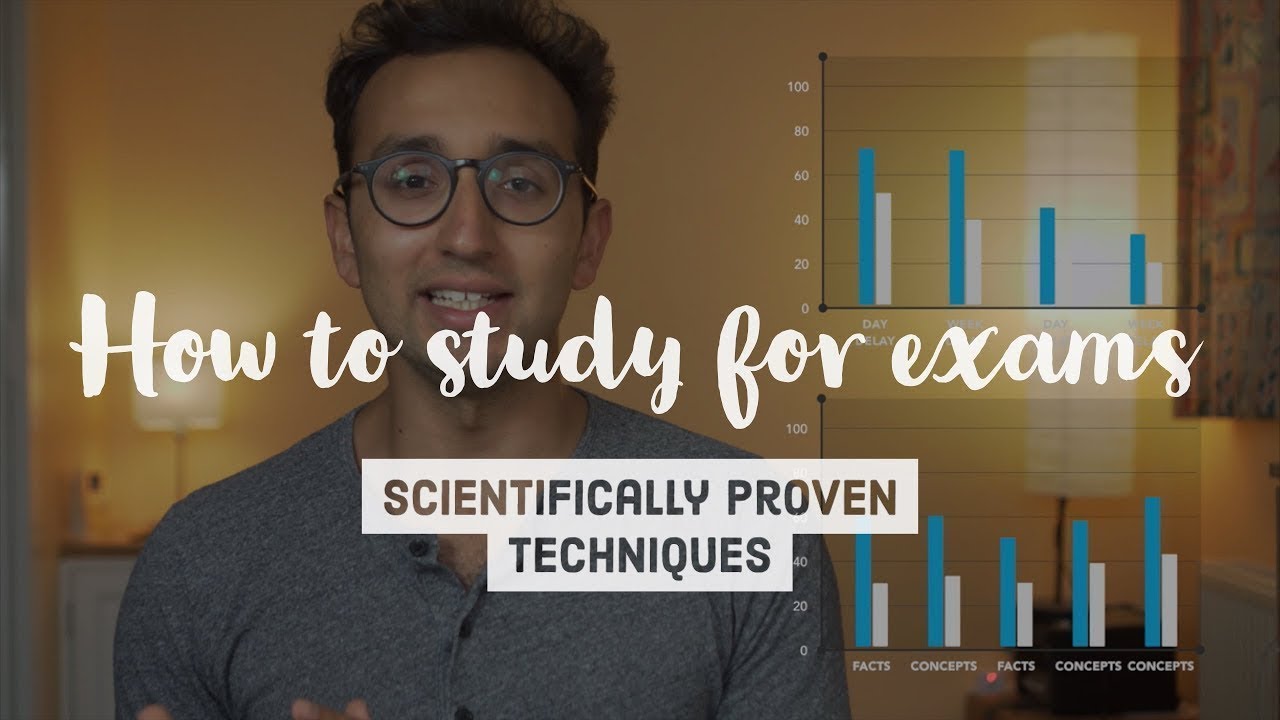
- On verbatim questions, Group 4 (active recall) performed significantly better than Group 2 (studied four times).
- On inference questions, Group 4 also performed the best, indicating active recall's effectiveness over repeated study.
- Before the experiment, students predicted that repeated study would be most effective, showing a mismatch between intuition and evidence.
- The evidence suggests active recall is more efficient than strategies like repeated reading.
8..Specific, practical strategies for incorporating Active Recall into your revision / study routine. 13m41s
9..Strategy #1 - Anki flashcards 14m19s
- Anki is advocated for memorizing facts; ratings of easy, medium, or hard determine when cards will reappear.
- Users can use Anki to memorize specific details, facts, or essays for exams.
- Anki's algorithm adapts over time and assists with spaced repetition for efficient studying.
- The app is free, and there's an optional paid iOS version.
10..Strategy #2 - Closed-book spider diagrams 16m7s
- The technique involves writing down everything remembered about a topic after studying, without the book open.
- After creating a spider diagram from memory, the book is reopened to identify any missing information.
- This method of active recall, combined with spaced repetition, led to excellent exam performance.
11..Strategy #3 - Questions instead of notes, the Cornell note-taking system 17m33s
- A shift from note-taking to writing questions that prompt active recall of lecture or textbook material.
- The question-based revision technique is said to be effective in enhancing memory and understanding.
- One anecdote cites a student who succeeded in exams by solely revising through self-written questions.


