
Introduction to Build Mode and Clip Shows
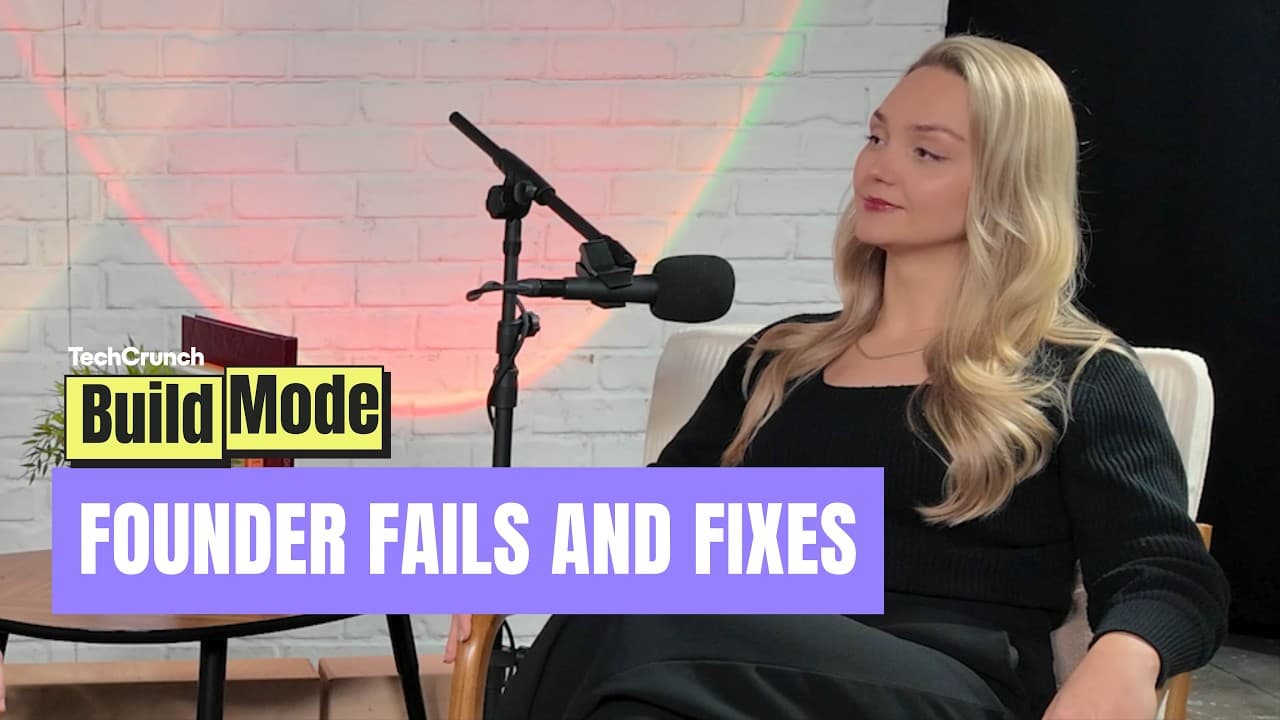
- The host, Isabelle Johansson, and the producer of Build Mode, Maggie Neill, are excited about the upcoming season, which will focus on fundraising, and in the meantime, they are releasing clip shows covering various topics, including tips and advice from previous guests 10s.
- The clip shows will feature stories of early mistakes made by founders and experts, which can serve as valuable learning experiences for others, and Maggie has compiled an episode on this topic after reviewing episodes and footage from the past two seasons 1m42s.
Dion Nicholas on Product Market Fit and Iteration
- The first clip is from the very first episode with Dion Nicholas, a Startup Battlefield winner and co-founder of Forethought AI, who shares his mantra for finding product market fit, which includes two rules: the first thing that happens when you launch a product is nobody uses it, and any product is within seven iterations of a successful product 4m6s.
- Dion's rules are meant to be freeing and help founders think differently about product development, moving away from the idea that if you build it, people will come, and instead focusing on building a product that has utility for the initial audience before scaling up 6m6s.
- Dion's approach emphasizes the importance of launching a product, talking to users, and iterating based on their feedback, rather than trying to build a product for a large user base from the start, and this approach can be applied to various industries 8m6s.
Founders' Mindset and Iterative Product Development
- Founders are often advised to consider that if they knew they were within seven iterations of the right product, their approach to product development would likely change, focusing on getting in front of users, listening, and iterating to achieve product market fit 10s.
- This approach can be freeing for founders, as it allows them to launch their product without feeling the need for it to be perfect, and instead, iterate and improve over time, which can help alleviate founder anxiety 2m6s.
Hiring Mistakes and Lessons from Jasper Carmichael Jack
- Hiring the right team is crucial for bringing a product idea to life, and founders like Jasper Carmichael Jack, the co-founder and CEO of Artisan, have learned valuable lessons from their hiring experiences 4m42s.
- Jasper Carmichael Jack has made hiring mistakes, including "logo shopping," where he hired people based on their impressive resumes, such as having worked at top companies or attended prestigious universities, rather than their actual skills and fit for the role 6m6s.
- He has found that hiring people fresh out of college can be less complicated, as their lack of experience means that judgment is based solely on their communication skills and performance in trial tasks, rather than being influenced by their resume or work history 8m6s.
- Jasper Carmichael Jack's team at Artisan is relatively young, and he has had positive experiences hiring people early in their careers, with most hires working out well, except in cases where he has had to readjust his hiring methods after a hire didn't work out 10m6s.
Common Hiring Pitfalls and Best Practices
- Hiring people who are either too senior or not senior enough is a common mistake, as those who are too senior may struggle with the small size of the company, while those who are too junior may not be ready for a leadership role, and it is essential to find the right balance 10s.
- Moving too quickly in the hiring process can lead to poor fits, as getting excited about a candidate and giving them a full-time offer immediately, without meeting them in person or working with them, can result in realizing a few weeks later that they are not a good fit for the role 2m6s.
- Failing to communicate expectations well during the hiring process can lead to misaligned expectations, where employees may be unaware of the required work hours, workload, or weekends, resulting in disgruntlement and potential departure 2m6s.
Founders' Risk-Taking and Investor Perceptions
- Some founders wait to leave their jobs until they raise their first round of funding or reach a specific milestone, but investors may view it as a green flag when founders take the risk and start their company without a safety net, demonstrating their passion and commitment to the idea 8m30s.
- Investors may consider it a red flag if a founder is hesitant to take risks, but it is also understood that circumstances, such as family or visa restrictions, may prevent founders from leaving their jobs immediately 10m30s.
- Non-vanilla formation documents can be a red flag for investors, as they may indicate potential issues or complexities that could be difficult to reverse later 14m40s.
- Yury Sagalov from General Catalyst discusses the importance of founders being passionate and committed to their ideas, and how investors look for green flags, such as a founder's willingness to take risks, when evaluating early-stage companies 4m40s.
Legal Structures and Founders' Red Flags for Investors
- Non-standard vesting structures and incorporation locations can be a red flag for businesses, as they may indicate unnecessary innovation in areas where standard practices are well-established and widely accepted by lawyers and venture capitalists in the Valley 10s.
- Founders often try to innovate in their company structures, which can be a result of bad advice, and it is generally recommended to keep legal structures vanilla and focus on building the business, product, and getting customers instead 1m42s.
Setting Up Legal and Compensation Infrastructure
- There are resources available for founders to set up legal structures and compensation infrastructure for early employees, and outsourcing these tasks early on can help avoid mistakes and ensure that employee equity grants are set up correctly 2m6s.
- Isaiah Grana, co-founder and CEO of Bland, shares his experience of making early mistakes in setting up employee equity grants and advises founders to take a couple of hours to sit down with a corporate lawyer to ensure everything is in order, especially for fast-growth companies 3m10s.
- Grana emphasizes the importance of taking care of early employees, not just financially but also emotionally, and considering their well-being and families, and notes that retroactively compensating for mistakes in this area can be time-consuming and require a lot of hours with lawyers 5m30s.
- Grana's approach to taking care of his employees is rooted in his philosophy of treating them like family and enabling them to enjoy their personal lives, and he believes that founders have a responsibility to look out for their employees' overall well-being 6m40s.
- Early stage founders should focus on covering their employees' basic needs and providing great upside, rather than trying to build a perfect system with complicated compensation plans or in-depth benefits, and they should pause to ask questions and make sure they are setting people up for success 10s.
Founder Responsibility and Employee Well-Being
- Bringing on HR consultants or expanding the HR team can be helpful, but founders should not outsource the culture, as it is their job to figure out what happens in the rooms they are not in and to set the culture by calling out what is and is not acceptable behavior 2m6s.
- Founders can outsource certain tasks such as payroll, and it is recommended to do so to avoid mistakes, and clear communication with employees is key to managing situations where mistakes are made, such as delayed payments 4m42s.
- The founder's job is to sell, recruit, and set the culture, and they should be aware of the impact of their actions on their employees, and be able to communicate clearly and make decisions that prioritize their employees' needs 6m15s.
Adapting to Market Changes and Managing Layoffs
- Managing a team through industry-wide changes requires making tough decisions, such as layoffs, but it is possible to make cuts in a compassionate way and still care for all team members, as seen in the example of El Yoga, the founder and CEO of Anjuna, who had to navigate a changing VC landscape in 2022 10m10s.
- The company experienced significant growth challenges in 2022, which led to a major reduction in staff, including customer success teams, due to the market stopping and the company not reaching its expected numbers 10s.
- To adapt to this change, the company implemented a new strategy of hiring staff only after signing a contract with a client, typically a large bank, payments company, or government service provider, to avoid over-hiring and reduce the need for cutbacks 2m6s.
- This strategy was a lesson learned after the 2022 experience, and it has helped the company to be more efficient with its hiring and resource allocation 2m6s.
Shift in Investor Priorities and Company Strategy
- In 2020 and 2021, the company, as a venture-backed company, focused on rapid growth, driven by the desire to double or triple its size every year, and investors valued growth over efficiency 4m42s.
- However, when the market changed in 2022, investors began to prioritize efficiency and customer acquisition costs over rapid growth, and companies that had built large teams in anticipation of growth were forced to cut back 4m42s.
- The company's experience in 2022 was marked by a financial crisis, which caused customers to stop or slow down their purchasing decisions, and the company had to quickly adapt to the new market reality to survive 6m15s.
- Companies had to readjust their priorities when metrics became the primary focus, leading to a shift in investor attitudes towards growth and spending, with many investors suddenly emphasizing the importance of careful spending 10s.
The Impact of Layoffs and Company Resilience
- The process of cutting back, also known as a riff, is a painful experience for everyone involved, and it can be necessary to do it twice if the initial cuts are not deep enough, which can erode trust with the team 1m20s.
Importance of Legal and Negotiation Support for Founders
- Sara Sutton, co-founder and CEO of Map, an AI company, advises early-stage founders to find a good lawyer when they have the means, as navigating term sheets and deals can be tricky and requires the right resources and tools to navigate effectively 4m30s.
- Having a good lawyer is essential for founders to navigate relationships and understand the interests of different stakeholders, and it can help them gain confidence and strength in negotiations, as emphasized by Sara Sutton and others 6m10s.
- The importance of having the right tools and resources, including a good lawyer, will be further discussed in a future episode with a lawyer and founder, highlighting the need for founders to be well-prepared and informed when navigating the startup landscape 8m40s.