
The Importance of Effective Partnerships in Startups
- Effective partnerships can come in various forms, such as with co-founders, business partners, investors, or employees, and are crucial for the success of a startup 10s.
- Jasper Carmichael Jack, the co-founder and CEO of Artisan, shared his experience of meeting his original co-founder online through a LinkedIn job listing, but the partnership ultimately did not last due to a lack of deep courting and realization that they were not a good fit 2m6s.
- Finding a co-founder can be challenging, especially when you're early in your career and don't have a track record, as you need someone who is really good, but may not be available or interested in working with you 2m6s.
- It's essential to be thorough when choosing a co-founder and ensure that you mesh well with them to create a successful partnership, as the co-founder relationship is one of the most important relationships in a founder's life 2m6s.
Interviews and Additional Perspectives on Partnerships
- The episode will also feature an interview with Ian Schmidt, a partner and consultant at Tri-Mergence, who provides advice on navigating conflict, building effective dialogue frameworks, and team structures, which can be found in a separate full episode 6m42s.
- Additionally, the episode will include stories from married co-founders, highlighting the different ways that effective partnerships can be formed and maintained 6m42s.
Building a Framework for Conflict Navigation and Team Dialogue
- Developing a framework for navigating conflict in a team involves starting before a challenge or tension point arises, and the first step is mapping one's personal individual operating system, including gifts, challenges, communication style, and triggers, and having deep, honest conversations with oneself 10s.
- The next step is to get in a room together as a team, not just for an offsite, and have a scaffolded conversation about what's working, what needs improvement, and latent potential, using a chosen framework or model that resonates with the team 2m6s.
- It's essential to document the conversations and have an ongoing cadence of checking in with each other, which could be quarterly or at least once every half year, and to build in a sense of internal 360 to raise consciousness and impact on other people 2m6s.
Cultivating a Culture of Feedback and Trust
- Building a culture of feedback is crucial, and 360s can be a great starting point, but it's essential to have ongoing honest conversations with each other along the way, rather than waiting, to cultivate trust and empowerment among team members 2m6s.
Case Studies of Successful Co-Founder Relationships
- Co-founders Hala Jawani and Alessio Chechanty of Revio, who are also a married couple, have developed a structure that allows them to work effectively together, and they emphasize the importance of trust, speed, and being able to brainstorm and discuss ideas without stepping on each other's toes 6m42s.
- Co-founders can maintain a strong working relationship by having their own areas of expertise and responsibility, allowing them to lead their respective departments while staying connected, as seen in the case of Alessio leading sales and the other co-founder leading product 10s.
- The presence of a third co-founder, such as Leo, who serves as the CTO, can bring sanity to conversations and help draw lines when necessary, making the three-co-founder relationship work effectively 2m6s.
- Having separate lanes is crucial for co-founders, whether they are married, siblings, friends, or met on the internet, as it allows them to focus on their areas of expertise and align with the company's overall goals 4m20s.
Challenges and Strategies for Solo Founders
- Solo founders, on the other hand, often have to be experts in every single lane, which can be challenging, as seen in the case of Leah Sullivan, who founded TaskRabbit in 2008 and had to learn to pitch, brand, and message her product 6m30s.
- As a technical founder, Leah Sullivan stepped into the CEO role, but eventually decided to bring in a business-type CEO to help grow and scale the company, highlighting the importance of recognizing one's limitations and seeking help when needed 8m40s.
- The decision to step down as CEO and bring in someone else, such as Stacy Brown-Philpot, can be made easier when there is trust and a strong partnership, allowing for a smooth transition and continued growth 12m10s.
The Role of Trust in Founder and Investor Relationships
- Trust is a crucial element in internal team dynamics, as well as in the VC-founder relationship, where investors like Ross Fubinni and Leslie Finezaik prioritize a human-first approach and building trust with the companies they work with 16m30s.
- Founders often make the mistake of either rushing to raise capital or stopping investor conversations altogether, but in reality, many VCs give a "not right now" response, indicating that they want to build a relationship with the founder over time, and it is advised to start cultivating these relationships early 10s.
- When considering different sources of capital, founders should evaluate three key things: the person, the firm, and the terms, with the person being the most important factor, as they will have a long-term relationship with the founder, and the terms often collapse into the person and firm 2m6s.
Evaluating and Choosing the Right Investors
- The firm matters, especially in cases where the initial person may drop off the board and hand off the board seat to someone else, and founders should diligence the person and consider that they get to build a team with the money they are raising, filling their bench with investors who bring different value-adds 4m42s.
- Founders have the privilege of choosing partners with different kinds of value-adds when building their cap table, and they should use this privilege intelligently, selecting investors who bring unique benefits, such as money, name brand, or a supportive ear 6m15s.
Compatibility and Team Building in Startups
- Compatibility is a crucial theme in building a successful team, including hires, advisors, and investors, and founders should look for compatible partners to create the best environment for growth, as seen in the conversation between Isabel and Sara Lucena, the founder and CEO of Mapa 8m10s.
- Sara Lucena used her own platform, Mapa, to evaluate her investors, but noted that the company does not have access to users' behavioral reports unless they are shared, and many users share their reports on social media 10m0s.
- Investors shared their behavioral reports and provided feedback to continue training models, which helped to focus on compatibility while raising funds, ultimately bringing more interesting people to the table 10s.
The Butterfly Effect of Compatibility and Fundraising
- There is a butterfly effect that occurs when people are rightly connected, attracting others who vibrate at the same energy level and share similar interests and views of the world, even if they disagree on certain things 42s.
- Optimizing for compatibility during fundraising accelerated the process, as the most compatible individuals were more likely to invest, and rejection was seen as redirection, helping to find the right people 2m6s.
- Surrounding oneself with the right people can have a multiplier effect, reducing rejections and creating a better path forward, which is an important lesson for builders and entrepreneurs 2m6s.
Production Credits and Closing Notes
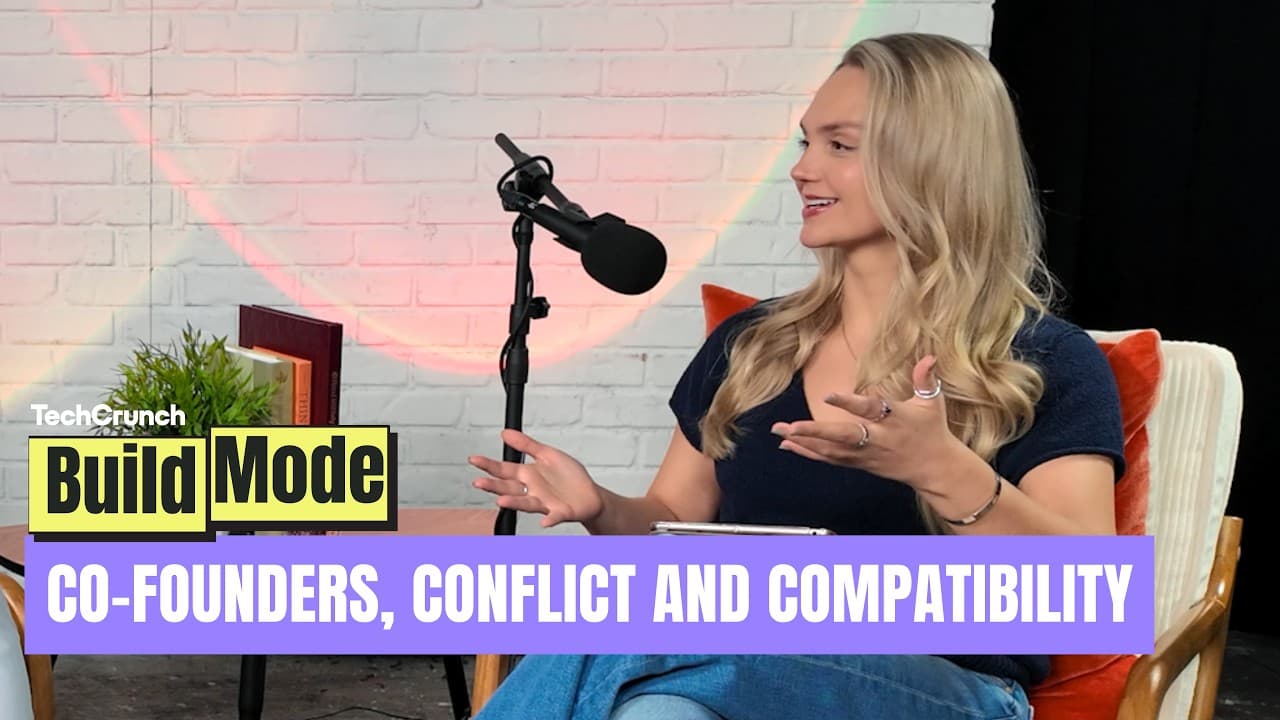
- The podcast, Build Mode, is hosted by Isabelle Rosenthal, produced and edited by Maggie Nighy, and features art and design also by Maggie Nighy, with support from Morgan Little and the wider startup community 10s.