
Intro 0s
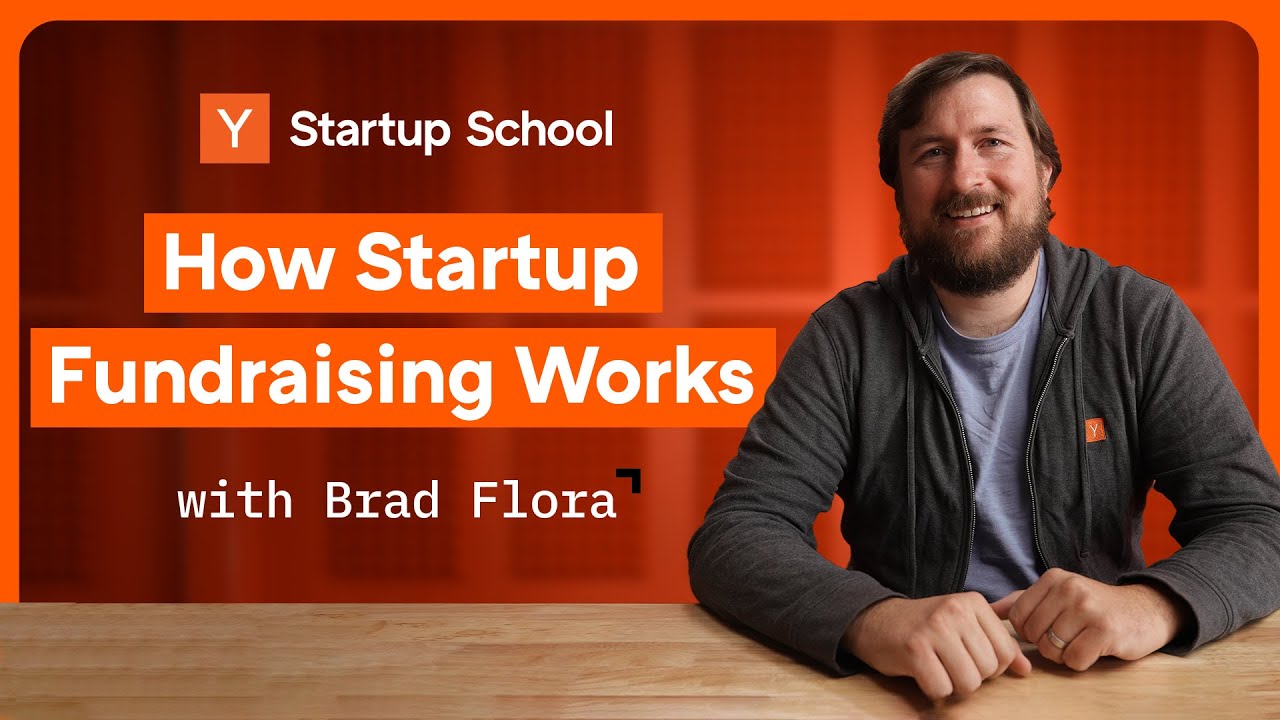
- Brad Flora, a group partner at YC, discusses startup fundraising.
Fundraising resources 27s
- Fundraising is a common topic at YC due to its difficulty.
- Paul Graham wrote essays such as the Fundraising Survival Guide.
- YC President Jeff Ralston posted a seed round fundraising guide.
- YC produced tactical fundraising guides such as building a seed deck and pitching.
7 fundraising myths 2m13s
- Brad Flora is a YC partner with experience as a founder and investor.
- His success includes an ad retargeting startup and investments in companies like OpenAI and Razorpay.
- The talk aims to debunk common misconceptions about fundraising.
Raising money is glamorous 4m6s
- Fundraising is perceived as glamorous due to TV shows like Shark Tank.
- Real fundraising is a grind, involving many one-on-one meetings and ranging investments.
- Fresh paint's blog post exemplifies the fundraising process.
The need to raise money before starting a startup 6m51s
- Founders often think money is needed before starting a startup.
- Successful founders build a basic product and gain initial users first.
- Startups with some traction are more attractive to investors.
- Solugen, a chemical manufacturing startup, began by building small reactors and securing early sales, raising $4 million initially and later $400 million.
My startup need to be impressive to raise money 10m10s
- Investors need to be convinced, not just impressed.
- Successful startups often appear unimpressive initially (e.g., Airbnb, DoorDash, OpenC).
- Convincing investors involves making a product users want and showing the potential for significant growth.
- Plain, simple language and demonstrating value to users are key to convincing investors.
- Example of Retool's fundraising approach, which led to a significant valuation without a fancy pitch or "magic words."
Raising money is complicated, slow, and expensive. 13m56s
- Press often highlights big funding rounds, but early rounds are simpler and do not generate headlines.
- Seed rounds can be modest in size, closed quickly, with minimum to no legal fees.
- The SAFE (Simple Agreement for Future Equity), introduced by Y Combinator, has made it easier to raise funds.
- SAFE is a 5-page document outlining investment terms, which often forgo discounts, thus further simplifying the process.
- Efficient fundraising through SAFE allows founders to retain leverage during investor negotiations.
- Example of Astra, a biotech startup, raising initial funding through safes, leading to more leverage in larger funding rounds.
I am going to lose control of my company 18m4s
- Seed funding can be raised without relinquishing control due to no board seats or shareholder rights involved with SAFE agreements.
- Founders typically retain 80-90% ownership after seed rounds.
- Examples include Zapier, which went fully remote with initial funding and opted not to raise additional funds, growing to significant revenue.
- Bootstrapping can be precarious and prolong financial challenges, whereas early fundraising allows for focus on customer satisfaction and growth.
- Raised funds give founders more stability and control compared to the constant financial worry inherent to bootstrapping.
I need a fancy network to raise money 21m58s
- Investors prioritize startups that create products people want over founder pedigree
- Success doesn't depend on having a network; Podium's co-founders lacked a Silicon Valley network but succeeded due to their sales skills and a profitable business
- Podium, started with customer review management software for tire shops, reached revenue of $100 million/year and raised over $200 million
- Founders should directly engage with investors instead of using intermediaries for fundraising
If investors reject my startup it's a bad startup 23m43s
- Rejection by investors doesn't equate to a startup's failure; numerous successful startups experienced initial rejections
- Envision, a cancer detection medical device startup, faced over 50 rejections before securing initial funding and was later acquired for $275 million
- Whatnot, a collectibles marketplace, struggled to raise seed funding but within 2.5 years was valued at $3.7 billion
- Persistence and believing in one's product are crucial as finding a few investors who believe in the startup is often enough for success
- There are many investors with funds looking for promising startups despite the likelihood of facing rejections