

Intro 0s
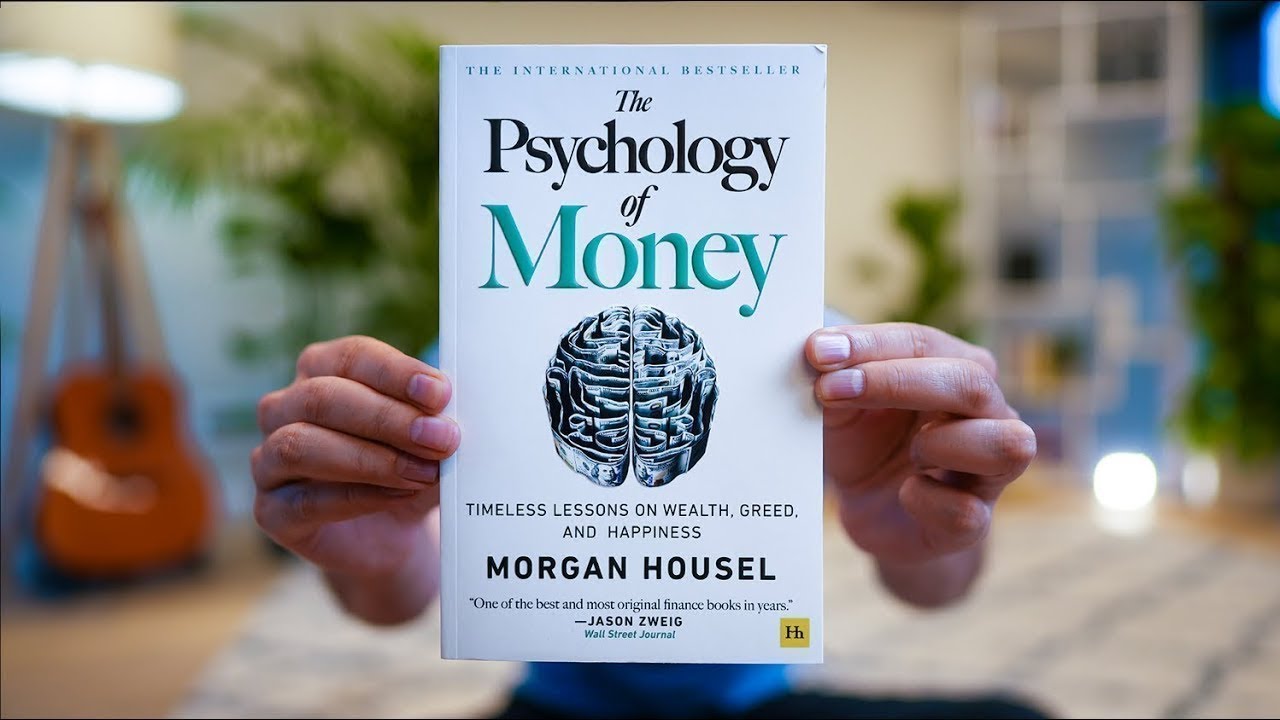
- Discussed the book "The Psychology of Money" by Morgan Housel.
- Episode of book club divided into four parts: attitudes towards money, getting money, spending money, and protecting money.
Lesson 1 - Everyone has different attitudes towards money 26s
- Attitudes towards money vary and shape financial decisions.
- Investment behavior influenced by experiences, such as different stock market performances across generations.
- Important not to judge others' financial choices based on one's own perspectives.
Lesson 2 - Don’t underestimate the importance of luck 1m18s & Lesson 3 - Learn to say “this is enough” 1m51s
- Luck plays a significant role in financial success alongside skill and unfair advantages.
- Recognizing when one has enough is crucial to prevent endless pursuit of more wealth, which can lead to risky decisions.
- Reflecting on personal values can deter unnecessary financial risks for additional gain.
Lesson 4 - Appreciate the magic of compounding 4m11s & Lesson 5 - Save as much as you can 5m30s
- Compounding can exponentially increase wealth over time when investments are made consistently starting at a young age.
- Saving rate is more important for building wealth than income or investment returns.
- Controlling one's savings rate by minimizing ego-related expenses provides more life autonomy.
Lesson 6 - Focus on not screwing up 6m59s & Lesson 7 - Use money to buy freedom 8m13s
- Avoiding financial mistakes is more beneficial than seeking large gains due to the long-term impact of compounding.
- Money should be used to gain control over one's time and freedom, rather than acquiring luxury items.
- Beyond a certain income level, more money does not equate to increased happiness.
Lesson 8 - Getting wealthy is different to staying wealthy 9m10s
- Getting wealth involves taking risks, optimism, and self-exposure.
- Keeping wealth requires humility and fear of losing it.
- Diversification across asset classes, such as stocks, real estate, and crypto, is important.
- The aim switches from making more money to maintaining and slowly growing what one has.
Lesson 9 - Don’t be a flashy twat 10m18s
- Possessions like expensive cars and houses don't bring lasting respect and admiration.
- People admire the items themselves, not the owner; admiration for an individual cannot be bought.
- True wealth is in the money not spent, and there's no value in being flashy about expenditures.
Lesson 10 - Leave room for error 11m17s
- Make financial plans that can withstand lower-than-expected returns.
- Consider the emotional aspects of financial decisions, such as the psychological impact of losing savings.
- It's important to accommodate the emotional responses in financial behaviors.
Lesson 11 - Avoid extreme financial commitments for your future self 12m35s
- Avoid making irreversible financial decisions based on current life assumptions.
- People are generally poor at predicting their future changes in preferences and circumstances, known as the "end of history illusion."
- It's unwise to adhere to extreme financial views, like spending all money now, as future interests and needs may be underestimated.