

The Philosophy of Subtraction in Identity
- The pursuit of multiple professional roles, including filmmaker, advertiser, brand strategist, creative consultant, and board member, led to a personal conflict regarding whether these diverse pursuits were moving toward or away from a singular desired identity 0s.
- Figures such as Christopher Nolan, Steve Jobs, and Sachin Tendulkar are perceived as extraordinary because they are synonymous with a single, focused area of expertise 42s.
- The concept of greatness may be achieved through subtraction rather than addition, a principle illustrated by Michelangelo’s approach to sculpting, which involved removing non-essential elements to reveal the final form 1m12s.
- Mahatma Gandhi serves as an example of this subtractive process, as he stripped away titles, possessions, and formal attire over time until he became inseparable from his message 1m35s.
- The idea of designing one's identity by carving away all roles except for filmmaking was initially considered as a potential path to clarity 2m6s.
Polymaths and the Breadth of Expertise
- Leonardo da Vinci challenged the theory of subtraction, as he was a polymath who excelled as a painter, engineer, anatomist, inventor, architect, theorist, scientist, and musician 2m35s.
- Reducing Leonardo da Vinci to only his work on the Mona Lisa is considered a misrepresentation of his broad accomplishments, as he was often admired as an engineer during his lifetime 3m5s.
- Benjamin Franklin is identified as another historical polymath whose mastery spanned multiple fields, including printing, science, invention, diplomacy, writing, and statesmanship 3m35s.
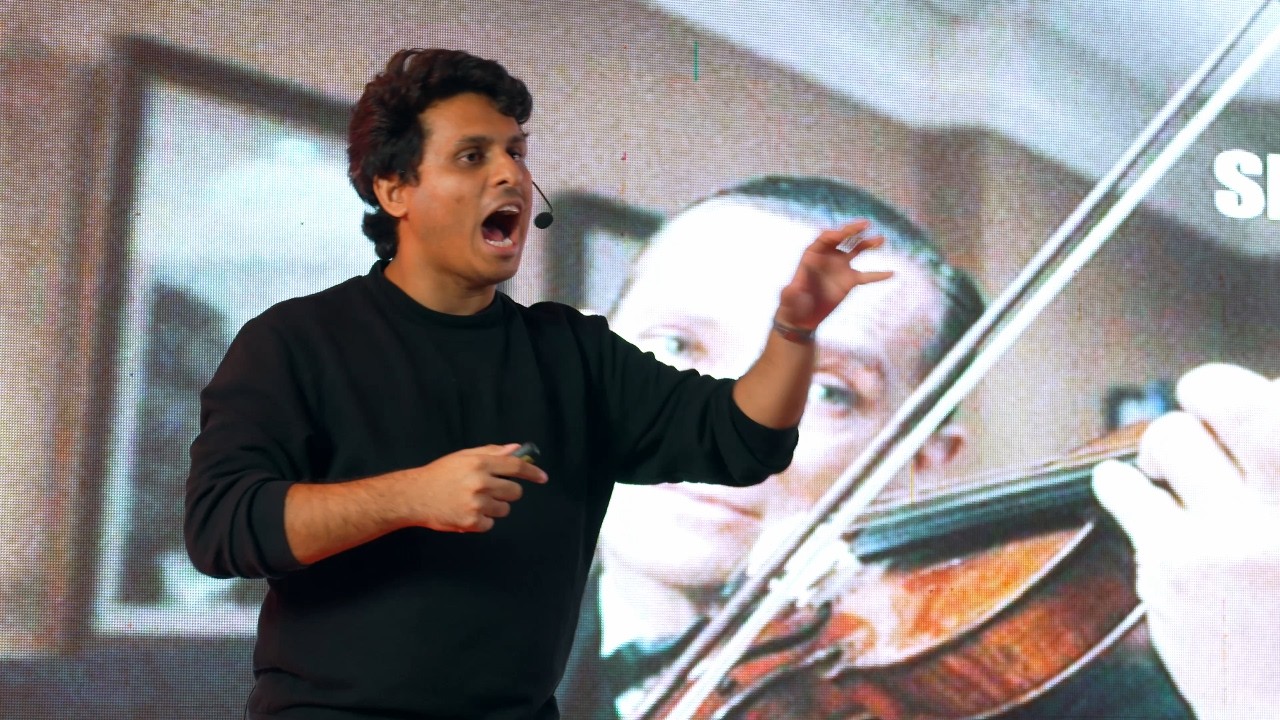
- The character of Sherlock Holmes is used to reconcile the tension between specialization and a wide breadth of knowledge, as he possessed expertise in diverse subjects such as chemistry, anatomy, botany, forensic science, geology, cryptography, music, and boxing 4m5s.
Consistency Across Diverse Roles
- Sherlock Holmes utilized a diverse range of skills—including anatomy, botany, geology, cryptography, violin playing, and boxing—to serve his singular obsession with observation. 0s
- Even after retiring from solving mysteries to become a beekeeper, Holmes continued his practice of observation, transitioning his focus from the chaos of crime to the order of beehives. 35s
- Leonardo da Vinci was driven by an insatiable curiosity and a desire to observe nature, which remained constant whether he was using a paintbrush, a scalpel, or a compass. 1m5s
- Sachin Tendulkar is still considered a sportsman despite retiring from international cricket, as his fundamental relationship with the sport remains unchanged even though his specific role has evolved. 1m20s
Defining Identity Beyond Professional Titles
- Human identity is often incorrectly defined by societal roles, such as software engineer or data scientist, which are temporary and subject to change. 1m35s
- Relying on professional titles for identity is problematic because these roles are transient, and true greatness is found in the underlying patterns of a person's life rather than their specific profession. 1m55s
- Christopher Nolan’s career demonstrates this consistency, as his focus on structure, design, and geometry persists across his work, reflecting an interest he noted would have applied to architecture had he not become a filmmaker. 2m15s
- A person’s responsibilities may evolve over time, but their core "signature" or underlying pattern remains consistent. 2m35s
- Storytelling serves as the consistent pattern across various professional roles, such as filmmaker, brand strategist, and creative consultant, regardless of the medium used. 2m45s
- Patterns are not exclusive to famous or extraordinary individuals; every human life contains an underlying pattern, such as an accountant whose true motivation might be the desire to bring order to chaos rather than the numbers themselves. 3m10s
Instinctive Behavioral Patterns in Work
- Individuals often possess instinctive traits that manifest in professional settings, such as the ability to create systems or organize operations, regardless of their specific job title 0s.
- The role of a homemaker may be misidentified as merely maintaining a house, when the core function is actually the nurturing of people 7s.
- When the domestic environment is replaced by an office setting, the same nurturing individual often becomes the heart of the workplace by supporting colleagues and maintaining community cohesion 15s.
- Career paths are frequently determined by factors outside of personal choice, such as inheriting family businesses, financial necessity, or fulfilling responsibilities 30s.
- Personal patterns of behavior persist even within careers that were not originally planned or chosen 43s.
- Examples of these persistent patterns include individuals who naturally mediate conflicts, engineers who focus on simplification, and entrepreneurs who consistently build communities 48s.
- Two individuals with identical job titles may exhibit entirely different behavioral patterns, while two people with different job titles may share the same underlying pattern 1m0s.
Self-Reflection and the Discovery of Core Identity
- Self-reflection should focus on identifying recurring patterns, the types of problems others naturally bring to an individual, and the roles one instinctively assumes without being prompted 1m8s.
- Identity is defined by the quiet consistency of choices and the patterns that emerge across various responsibilities, rather than by resumes or job titles 1m20s.
- When asked about their identity, individuals are encouraged to describe the one thing they cannot stop doing or the pattern that follows them across different environments 1m35s.
- Discovering one's underlying pattern provides a sense of self that remains constant even as professions end, titles change, and responsibilities evolve 1m45s.