
Introduction to the Equity Podcast and Robotaxi Experience
- The discussion begins with an introduction to the Equity podcast, a flagship podcast about the business of startups, and the hosts, Kirsten Cororus, Anthony Ha, and Shaun O' King, on Friday, May 29th 10s.
- Kirsten Cororus shares her experience of taking a trip in a rebranded robotaxi called Ohhigh, spelled OJ AI, which is a minivan-like vehicle with a pale bluish color and rounded features, giving it a friendly look 42s.
- The Ohhigh vehicle is a significant development for Whimo, as it is built on a stripped-down version made in China, aiming to drive costs down and potentially lead to profitability, with estimates suggesting it may be cheaper to build and maintain than the Jaguar IPACE 2m6s.
- The hosts compare the Ohhigh to the Firefly AV, a project started by Google around 10 or 15 years ago, and note that the Ohhigh has a more comfortable ride, with features like gondola doors, a flat floor, and bright blue seat belts 2m6s.
Ohhigh Vehicle Rollout and Whimo's Strategy
- The rollout plan for the Ohhigh is discussed, with the hosts inquiring about when listeners can expect to ride in the vehicle, and Kirsten Cororus providing information about the demo experience and the app-based unlocking system 4m30s.
- Whimo is introducing its sixth generation of vehicles to a select number of writers in cities like Phoenix, Los Angeles, and San Francisco, with plans to expand to other cities such as Denver, and this new generation may eventually replace the Jaguar IPACE 10s.
- The company is currently facing problems with flooding in some cities, which has led to a recall notice, and this issue may not be entirely resolved with the new sixth generation driver, making it a challenging time for Whimo 2m6s.
Stored: Amazon's E-Commerce Competitor and Its Challenges
- Stored, an Amazon fulfillment competitor, has raised $250 million at a $3 billion valuation, and aims to provide businesses with an alternative to Amazon's fulfillment services, allowing them to maintain control over their customer relationships 4m42s.
- Stored positions itself as the "anti-Amazon" and has been around for over a decade, with its biggest challenge being the difficulty in competing with Amazon's quick delivery times, which consumers have grown accustomed to 6m15s.
- The conversation also touches on the topic of AI and its impact on the workforce, as well as the idea of "slow tech" and the backlash against big tech companies, which may affect companies like Stored and Whimo in the future 8m30s.
- Small to medium-sized businesses are ultimately the customers of e-commerce services, and they expect a certain level of service, such as fast delivery, which can be challenging to match without a massive infrastructure, similar to what Amazon has, and this expectation is being pushed even more aggressively with the rollout of same-day or same-hour delivery options 10s.
Stored's Background and Market Positioning
- The company in question has a backstory that includes being founded in 2015 by two Georgia Tech alumni, and they have raised around $775 million to date, which has given them significant tailwinds, and they have managed to maintain momentum even after the pandemic era VC boom, which bodes well for their longevity 2m6s.
- When comparing this company to Amazon, it's worth noting that Amazon's strength lies not only in its fulfillment speed but also in its platform for reaching customers, and if a business is not using Amazon, it has to do more marketing on its own, which can be an advantage in terms of control, but also a challenge 4m30s.
- The importance of speed in delivery may vary depending on the product and the customer, and there may be a point where the difference in speed is not as significant, such as between same-day and next-day delivery, and some brands may be able to offer slower delivery without it being a major disadvantage 6m15s.
Customer Expectations and Delivery Speed in E-Commerce
- The expectation of fast delivery can depend on what is being offered in return, such as lower prices or other incentives, and some customers may be willing to trade off speed for other benefits, and there are also other companies and services, such as drone delivery, that are competing with Amazon in terms of ultra-fast delivery 8m40s.
- Amazon has a significant advantage in terms of brand recognition, and many customers may not be aware of alternative options, but there are companies that are trying to compete with Amazon by offering different types of services and incentives 11m20s.
Snowflake and AWS Partnership for CPU Access
- Snowflake has signed a $6 billion deal with Amazon Web Services (AWS) to use their Graviton CPU chips, which is a significant move for the company as it looks for access to processing power and chips, particularly with Nvidia in high demand 42s.
- The deal is seen as a big win for Snowflake, as it provides them with a potentially cheaper alternative to Nvidia, and also benefits Amazon as it expands their existing relationship with Snowflake and increases their market share in the CPU space 2m6s.
- The demand for CPUs is increasing due to their ability to handle AI agents and other complex workloads, making this deal a strategic move for both Snowflake and Amazon 2m6s.
- Snowflake is not exclusively tied to AWS, as they also work with other cloud providers, highlighting the complex and interconnected nature of the industry where many companies have relationships with multiple providers 4m30s.
Open Router and the AI Model Gateway Market
- Another company, Open Router, an AI gateway startup, has raised $113 million in a series B funding round led by Alphabet's Capital G, which is notable for its potential to allow customers to switch between different AI models and use cases 6m30s.
- The company in question is not locked into a specific AI model, such as Open AI or Anthropic, but instead provides access to a wide range of models, allowing customers to choose the most appropriate one for their needs 10s.
- The business model is compared to a "picks and shovels" company, which enables other companies to operate more efficiently, but may not be directly involved in the main product or service, and its success is dependent on the current demand for access to multiple AI models 42s.
- The company's future is uncertain, as the demand for its services may decrease if the number of available AI models decreases, but it could potentially pivot to offering consulting services or other forms of guidance to help customers navigate the remaining models 2m6s.
Open Router's Platform and Market Implications
- The average customer is likely not taking advantage of the majority of the 400+ models available, and it would be interesting to see customer data on how many models are actually being used 4m10s.
- The company's platform may be beneficial for smaller AI model providers, as it allows them to be part of the conversation without having to overcome a high barrier to entry, and it would be interesting to know how these providers feel about the company's services 5m30s.
- Larger companies may not like the idea that their models can be commoditized and used or not used depending on specific needs, and this discussion touches on the shifting sands of AI and its meaning 10s.
Public Perception and Polarization Around AI
- There is a divide in how people are reacting to AI, with some users rejecting it and companies struggling to adjust to the change in how AI delivers information, and this theme is also seen in real numbers and business 42s.
- The conversation about AI is incredibly polarizing, with some people using and loving it, while others are not using it and hate it, making it challenging to discuss 2m6s.
- Google's announcements about AI becoming a bigger part of search have been met with resistance from some users, with DuckDuckGo seeing a 30% increase in installs, indicating a significant audience that does not like the current AI direction 2m6s.
- Many leading AI labs and tech companies are collapsing towards an anthropic approach, trying to understand what people want and sticking to that, but some companies like OpenAI are trying to do too many things at once, while Google is still pushing in a different direction 2m6s.
Google's AI Search Strategy and User Backlash
- The lack of clarity from companies like Google about their AI direction and goals can make it difficult for them to gain favor with users and can contribute to the polarizing conversation around AI 2m6s.
- Google's approach to search is changing, with a focus on commercial transactions, which may damage its reputation as an information retrieval system, and the company struggles to communicate its vision outside of this commercial bubble 10s.
- The search engine's limitations are evident in its inability to provide accurate answers to simple questions, such as the number of P's in a name, and it even fails to spell its own name correctly, which undermines user trust 2m6s.
- This struggle may create opportunities for other startups or businesses to fill the gap, but it is challenging to create a product that caters to both AI-skeptical and AI-enthusiastic users, as opinions on AI are highly divided 4m42s.
Alternative Search Engines and Market Fragmentation
- Some alternative search engines, like Duck Duck Go, are now promoting themselves as anti-AI, which is a notable shift from their previous emphasis on AI features, and this change may indicate a growing demand for AI-free or AI-minimal search experiences 6m15s.
- The trend of users exploring alternative search engines is growing, with some individuals actively seeking out options that prioritize traditional search functionality over AI-driven features, which could lead to a fragmentation of the search engine market 8m10s.
Human-Authored Content and AI Skepticism
- Some startups are making a point to emphasize that their content is human-authored, as people are increasingly assuming that content is made with AI, and this is becoming a rare and valuable aspect of their products 10s.
AI Psychosis and Leadership Misalignment
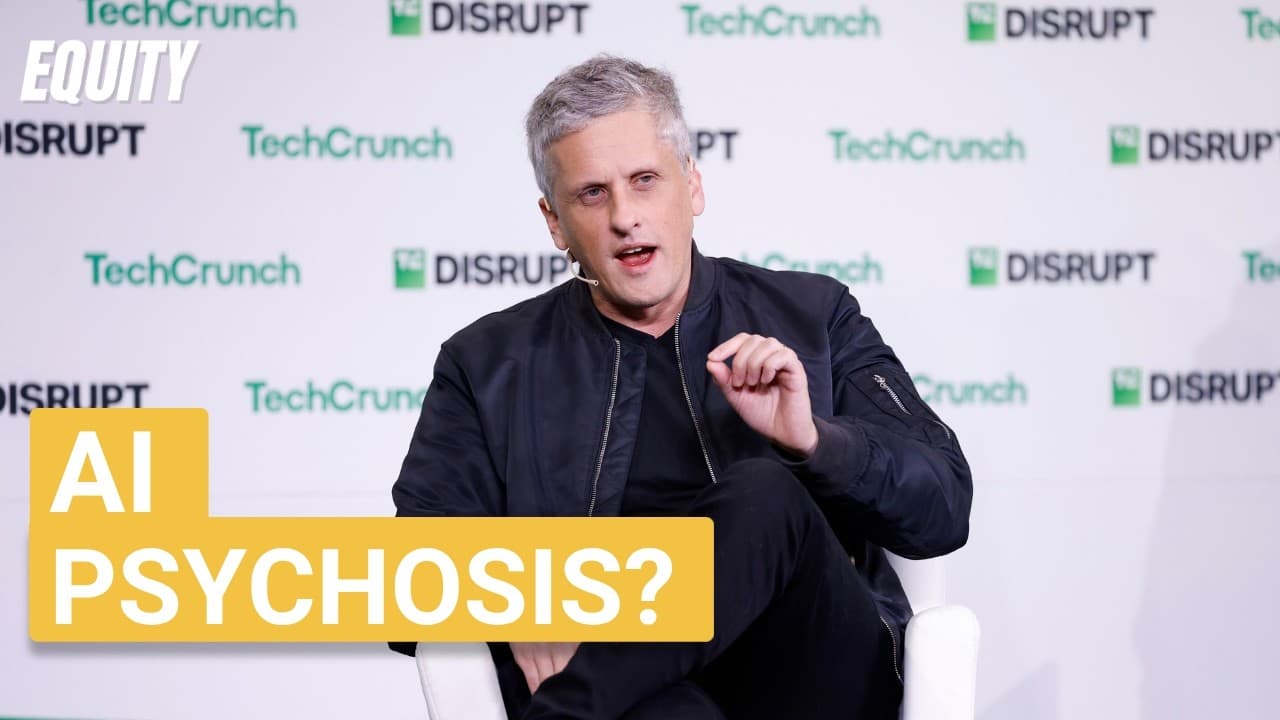
- There is a concern that tech CEOs may be prone to AI psychosis, as they are often distant from the actual work that needs to be done to generate value with AI, and this idea has been expressed by Box founder Aaron Levie 2m6s.
- The impact of AI on the workforce is a significant topic, with many layoffs being attributed to AI, but also changes in how people work, and it is not limited to the AI startup sector or big tech companies 4m30s.
AI Adoption in the Workforce and Layoffs
- The question of whether AI adoption and AI-driven layoffs are top-down or bottom-up is an important one, with some transformations in the workforce being driven by employees adopting new tools and then being accepted by executives and IT managers 8m20s.
- Companies that are working on physical infrastructure and manufacturing are starting to see some changes with the application of AI, but it is the software side where the most significant changes are happening, particularly for people whose jobs are directly tied to producing code 6m40s.
- Many executives and VCs have embraced the idea of AI productivity gains, which allows companies to be effective with a smaller team, but it is essential to understand how these tools work and their impact on workers 10s.
- The adoption of AI agents has led to significant changes in how work is being done, resulting in layoffs and a shift in the types of people companies are hiring, with some companies like GM getting rid of IT people but hiring those with AI skills 2m6s.
Impact of AI Agents on Workforce and Productivity
- Companies like ClickUp have laid off a significant portion of their workforce, with ClickUp laying off 22% of its workforce as part of its AI strategy, and have reportedly deployed around 3,000 internal agents, which has created a hundred times more work than their human workforce 4m30s.
- The use of AI agents has picked up speed since November of last year, and this shift is leading to layoffs and changes in the job market, with at least 150,000 tech industry layoffs this year alone 6m20s.
- While AI can increase productivity, it is also expensive, and companies may need to offset the costs by laying off employees, but some companies like Uber are making a choice to prioritize AI despite the cost and loss of workers 8m40s.
- There are trade-offs to using AI to empower workers and increase productivity, including the risk of burnout, as workers may have fewer people to collaborate with and commiserate with, which companies need to consider when implementing AI strategies 11m30s.
Sustainability and Cost of AI Technology
- The sustainability of current trends in AI technology is questionable, particularly in terms of affordability and the true cost of this technology, which has not yet been fully realized 10s.
- The shift to AI is expected to be chaotic for some workers, with potential job losses, but it also presents opportunities for new jobs and startups, especially in fields related to AI and robotics 1m15s.
- Companies are currently riding a wave of investment money, but this will eventually change, and the true cost of AI technology will become clearer, leading to a potential break point for the industry 42s.
Future of AI in the Workforce and Investment Landscape
- The use of AI tools and agents will require companies to make decisions about hiring, and the impact on workforces will be significant, with many questions still to be answered over the next year or two 2m6s.
- Despite the challenges, the transition to an AI-driven industry is also creating new opportunities, including high-paying jobs for people with AI skills, and startups are emerging to take advantage of these trends 2m45s.
- The future of work and investment is likely to be significantly impacted by AI, with examples such as AI agents trading stocks for individuals, and this will require people to adapt to new ways of interacting and investing 4m30s.