Spaced Repetition Techniques
- The spacing effect is a cognitive science phenomenon indicating that learning is more effective when material is recalled near the point of forgetting, making the act of forgetting a necessary component of the learning process 35s.
- Spaced repetition involves scheduling study sessions with progressively longer intervals between them to optimize retention 1m5s.
- For information suitable for flashcards, such as vocabulary or question-and-answer pairs, specific apps like Anki, Quizlet, and Duolingo's Tinycards can manage these time intervals 1m20s.
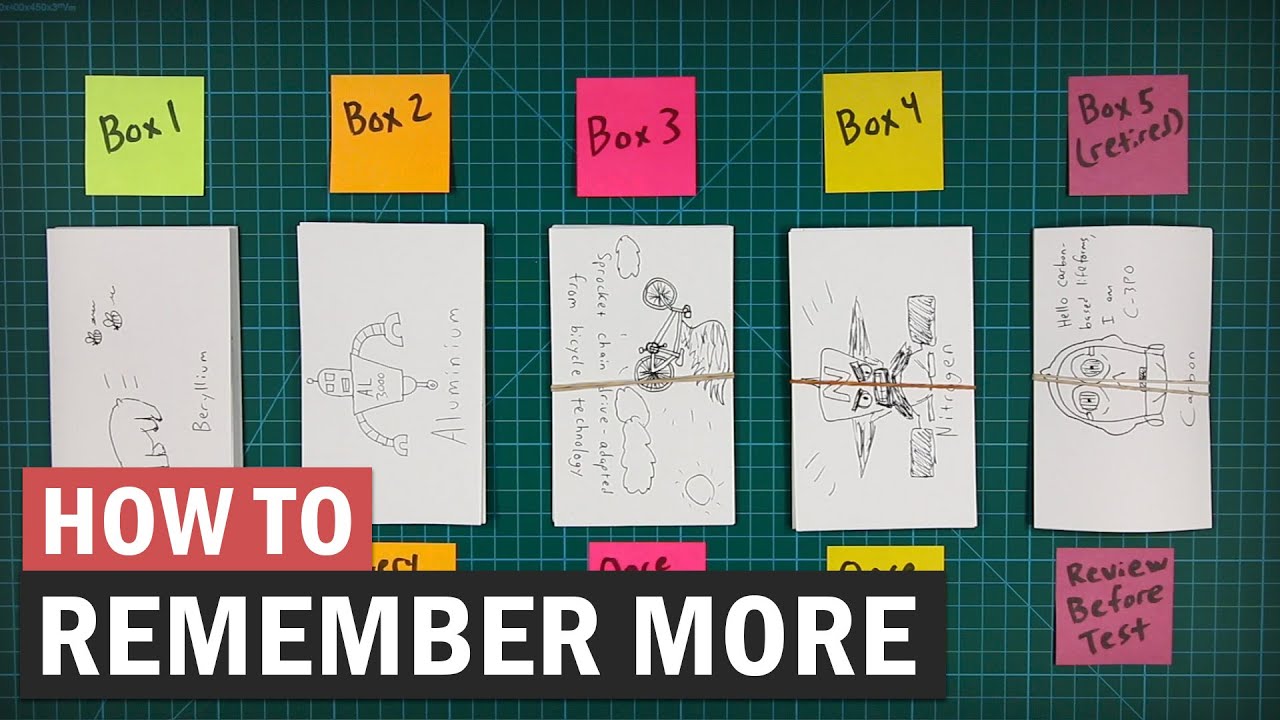
- The Leitner system is a method for implementing spaced repetition using physical paper flashcards 1m35s.
- For non-flashcard material or skill-based practice, study sessions should be spaced intelligently rather than performed in a single block or on a rigid schedule; for example, practicing a skill on Monday and returning to it on Wednesday or Thursday while focusing on related topics in between 1m45s.
The Pomodoro Technique
- The Pomodoro Technique utilizes short, hyper-focused bursts of study to prevent the decline in attention and productivity that occurs during long, drawn-out sessions 2m15s.
- To implement the Pomodoro Technique, one should set an external timer for 25 minutes and dedicate that time exclusively to a single task 2m45s.
- If a distraction arises during a Pomodoro session, it should be written down to be addressed later or prevented in the future, allowing the individual to return immediately to the task 3m5s.
- Once a 25-minute timer expires, an individual may continue working if they remain productive or take a five-minute break to walk or get water before starting a new session 3m25s.
- Digital tools such as TomatoTimer.com and the app Tide can serve as substitutes for physical timers when using the Pomodoro Technique 3m45s.
Active Recall and Problem Solving
- The quiz-and-recall method involves creating personal quizzes based on study materials and completing them at a later time to reinforce learning 4m0s.
- Create personalized quizzes by utilizing study materials such as notes, class slides, textbook subheadings, vocabulary terms, and end-of-chapter review questions to actively test knowledge rather than passively reviewing content 0s.
- Engage in frequent problem-solving to achieve mastery, noting that tackling more difficult problems strengthens the mind in a manner similar to how physical exercise strengthens muscles 33s.
- Address challenges with complex problems by breaking them down into simpler, individual concepts, mastering those smaller components, and then returning to the original, more difficult task 1m15s.
Memory Enhancement and Interleaving
- Utilize mnemonics—such as rhymes, acronyms, visual devices, or stories—to bind pieces of information together in ways that are easier for the brain to retain 1m45s.
- Enhance memory retention by turning information into songs or rhythmic patterns, as these structures can make specific facts easier to recall 2m15s.
- Increase interest in a subject through immersive experiences like documentaries, podcasts, museum visits, or relevant video games, as emotional attachment and personal interest significantly improve information retention 2m45s.
- Implement interleaving by regularly switching between different types of problems and concepts during study sessions 3m25s.
- Interleaving, which involves switching between different concepts or sections of a problem set at regular intervals, helps prevent overlearning and the inefficient use of time spent focusing on a single concept 0s.
- The WaniKani app serves as an example of effective interleaving by alternating between different types of questions, such as radical meanings, kanji meanings, vocabulary, and pronunciation 5s.
Study Environment and Neural Modes
- Studying in the actual classroom where a test will take place, or a similar environment, utilizes context-dependent memory to improve information recall 35s.
- Familiarity with the testing environment gained through studying in that location can help reduce test anxiety 55s.
- Effective learning requires switching between two primary neural networks: the focused mode, used when actively working on a problem, and the diffuse mode, which processes information in the background 1m5s.
- Taking a walk after a study session facilitates the transition into the diffuse mode of thinking and provides the benefits of physical exercise, which can enhance learning 1m25s.
Collaborative Learning and Study Sounds
- Conducting some review sessions in a group can expose students to new ideas and prevent them from becoming stuck on specific problems 1m45s.
- Group study should be balanced with individual work to avoid the risk of relying on others for answers, which can lead to confusing the recognition of a solution with actual mastery of the material 1m55s.
- Selecting the right study sounds—whether ambient noise, music, or silence—is a personal preference that can improve productivity 2m15s.
- Tools such as Noisely allow for the creation of custom ambient soundscapes, while resources like Rainy Mood or Coffitivity provide specific environmental sounds like rain or coffee shop ambience 2m30s.
- Curated music playlists, such as those found on Spotify or YouTube, can serve as starting points for individuals who prefer music while studying 2m45s.
- Finding music similar to preferred tracks can be achieved by using the radio function on Spotify or by listening to the full albums from which the songs originated 0s.
- Scientific research regarding the relationship between music and productivity remains inconclusive, suggesting that individuals should experiment personally to determine what works best for them 5s.
Sleep and Habit Formation
- Protecting sleep is essential for maintaining optimal brain function, particularly for the retention and recall of learned information 23s.
- Sleep deprivation negatively impacts focus, attention, and vigilance, and prevents overworked neurons from coordinating information effectively 42s.
- Maintaining a consistent sleep schedule is recommended, even when facing tight deadlines 55s.
- Rather than attempting to implement all study tips simultaneously, it is more effective to focus on improving one area at a time until it becomes a habit 1m3s.
Skillshare Educational Resources
- Brian Cervino offers a course on Skillshare focused on strategic priority setting for those who feel overwhelmed by large lists of options 1m20s.
- Skillshare provides access to over 27,000 classes covering topics such as graphic design, video production, digital animation, and marketing 1m32s.
- Classes on Skillshare utilize active learning principles, include projects with downloadable sample files, and feature discussion sections for student-teacher interaction 1m40s.
- Skillshare offers an annual subscription plan, which includes access to a productivity systems course 1m55s.
- The first 500 people to sign up for Skillshare through the provided link receive a two-month free trial 2m10s.