Cognitive Benefits of Flashcard Creation
- Flashcards are effective learning tools because they facilitate active recall, which is the process of retrieving memories from the brain 10s.
- Creating personal flashcards is more effective than using pre-made decks because the process of intaking, wrangling, and reformatting information builds unique and strong neural pathways 1m15s.
Visual Learning and Mnemonic Associations
- The picture superiority effect in cognitive psychology suggests that humans remember images better than words, likely because the brain is evolutionarily adapted to process visual information 2m6s.
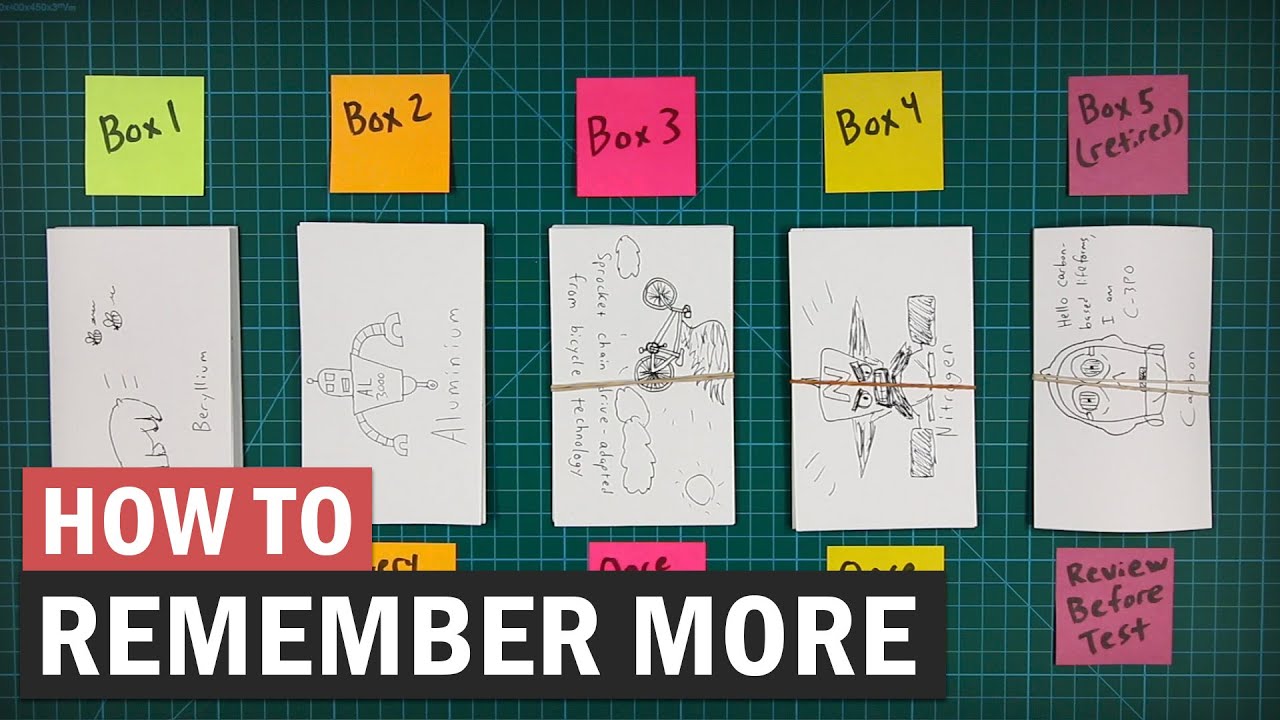
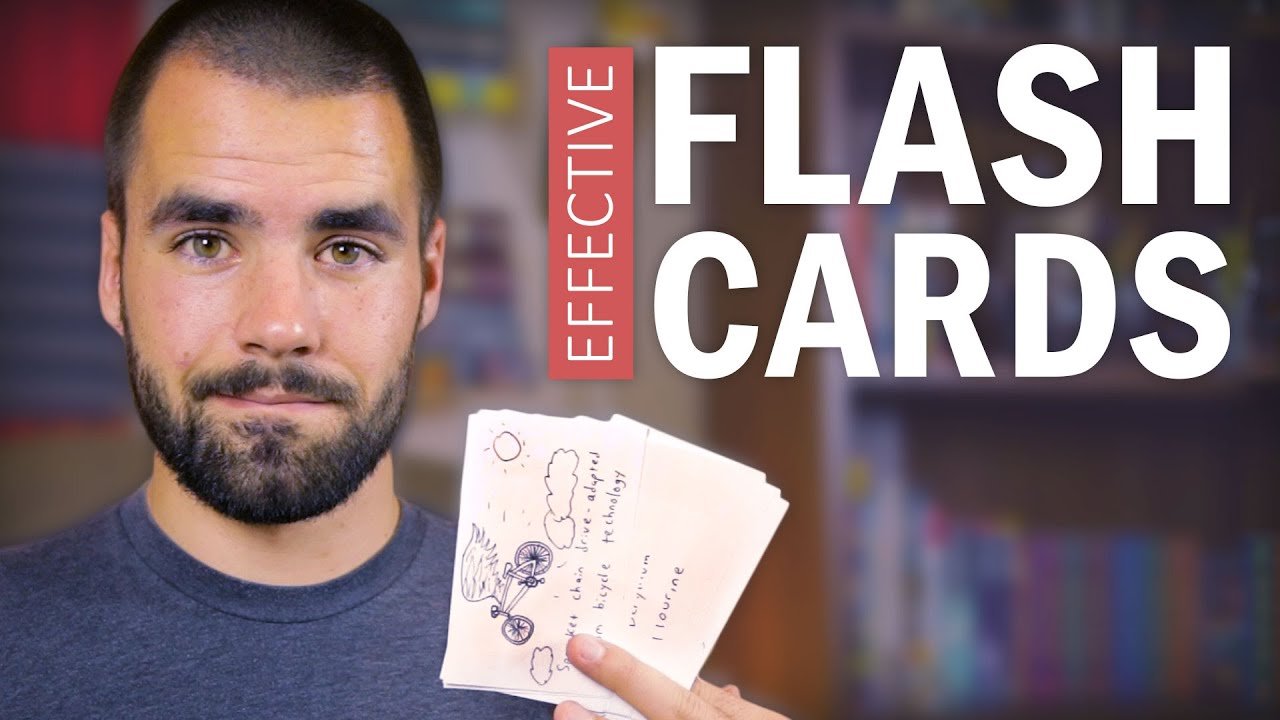
- Flashcards can be made more memorable by incorporating pictures, which can be done through hand-drawing, gluing printed images, or importing digital files into flashcard applications 2m35s.
- A 1985 study conducted in Canada demonstrated that pairing descriptive sentences with pictures significantly improves the ability to recall those images 3m5s.
- Mnemonic devices, which are tools used to create associations between pieces of information, should be utilized on flashcards to improve memory retention 3m15s.
- Associative imagery, such as using acronyms like ROYGBIV or creating vivid, personal mental pictures, can improve memory retention for flashcard content 0s.
- Creating "weird," "crazy," or "wacky" imagery is recommended because these unique associations are easier to remember 25s.
Optimizing Flashcard Content and Structure
- Flashcards should be personalized, as the effectiveness of an association depends solely on the individual user 35s.
- Each flashcard should contain only one question or fact to prevent "Illusions of Competence," a phenomenon where the brain confuses simple recognition of information with the ability to actively recall it 48s.
- Including multiple facts on a single card can lead to errors in self-assessment, as a user might remember some facts on the card and mistakenly believe they have mastered the entire set 1m15s.
- Breaking complex concepts down into simpler, individual questions ensures that each specific piece of information is tested accurately 1m55s.
Effective Study Techniques
- When studying, saying answers out loud before flipping the card helps force a commitment to an answer, further reducing the risk of mistaking recognition for recall 2m45s.
- Studying flashcards from both sides helps create neural pathways in both directions, ensuring the user can retrieve the information regardless of which side of the card is presented 3m15s.
- Studying flashcards in both directions is necessary to ensure that information can be recalled regardless of which side of the card is presented first, such as knowing both the chemical symbol for an element and the name of the element associated with that symbol 0s.
Limitations and Strategic Application
- Flashcards are not a universal solution and should be treated as a situational tool rather than a primary method for all types of learning 13s.
- Using flashcards can be detrimental when the material relies on a visual hierarchy or organizational structure, such as the periodic table, where understanding the relationships between elements is more effective than memorizing individual facts 35s.
- It is important to prioritize learning underlying concepts before using flashcards for review, as flashcards are often ineffective at teaching the foundational knowledge that makes memorizing facts more efficient 55s.
- Spaced repetition is a highly effective technique that complements flashcard use, though it requires a detailed explanation of its underlying science and practical application 1m12s.