

Intro 0s
- SpaceX launches rockets frequently, dominating the space industry.
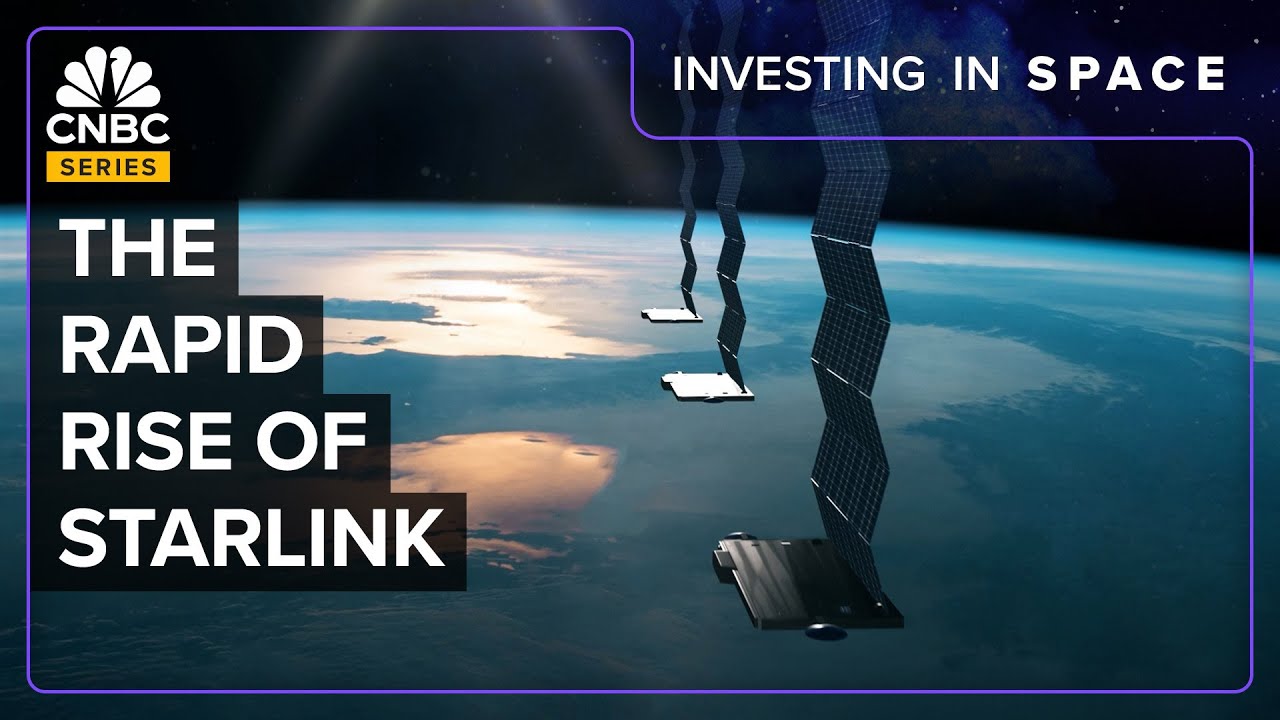
- Starlink, SpaceX's broadband megaconstellation, uses satellites in low Earth orbit to provide global, high-speed internet access.
- Located about 342 miles above Earth, Starlink is crucial for SpaceX's multi-planetary aspirations and revenue generation.
- In 2022, Starlink brought in $1.4 billion, potentially representing 40% of SpaceX's business by the end of 2023.
- Starlink has 2 million customers worldwide, proving useful in remote, disaster-affected, and conflict regions like Ukraine.
- There is criticism about SpaceX influencing geopolitics and concerns about the impact on astronomy from the satellites.
Behind Starlink’s growth 3m3s and Starlink and geopolitics 6m36s
- Starlink has grown to about 5,000 active satellites, leading the operational global satellite count.
- Its rapid customer acquisition contrasts with the decade-long growth of other providers.
- The global market value for satellite services was over $92 billion in 2022, with Starlink well-positioned to capture a significant share.
- Starlink’s flexibility and pace in adding capacity give it an edge over geostationary satellite networks.
- Services have extended beyond consumers to enterprises, maritime, aviation, and promise connectivity to unmodified smartphones.
- Starlink's equipment production costs have fallen from an estimated $3,000 per unit to under $600.
- In the Russia-Ukraine war, Starlink provides resilient communication and quickly adapted against jamming.
- SpaceX is cautious about the offensive use of Starlink; Shotwell emphasized it's not for weaponization.
- Musk's decisions can have geopolitical consequences, with a denied request to activate service in Crimea against Russian vessels.
- The Department of Defense contracted SpaceX for Starlink's use and a military-specific version, Starshield.
- The EU and China are investing in their own satellite networks, with EU pledging €2.4 billion and China rejecting Starlink services.
- Taiwan also seeks its own network for protection, motivated by concerns about Musk's ties to China.
Scientific concerns 10m33s
- SpaceX aims to launch up to 42,000 Starlink satellites, with other companies and nations also planning large satellite constellations.
- Astronomers are concerned about the impact of these satellites on night sky observation, as satellite numbers increase from 2,200 to potentially over 100,000.
- Satellite constellations create light trails and interfere with telescopic images and research, as demonstrated by an event where a telescope in Chile captured trails of 19 Starlink satellites.
- Starlink's presence affects observations from significant tools like the Hubble Space Telescope.
- SpaceX has made design changes to reduce satellite brightness, yet astronomers say more action is needed, such as precise satellite tracking for observation planning.
- Radio astronomy is also threatened due to satellite microwave transmissions, leading to negotiations for transmission shutoffs over certain observatories.
Concerns about space debris and environmental impact 10m33s
- The increase in satellites raises concerns about space debris, with fears of unusable Earth orbit regions.
- Risks to people from de-orbiting satellites include potential injuries from falling debris.
- SpaceX's Starlink satellites have a five-year lifespan, necessitating frequent replacements and adding to debris risks.
- An FAA and Aerospace Corporation report predicted Starlink would account for 85% of risk to aviation and ground safety from space debris by 2035, potentially causing harm every two years.
- SpaceX disputed the report, calling the analysis flawed and stating their satellites burn up completely upon reentry.
- While there may be low risk of injury from Starlink debris, unknown environmental effects of the chemical composition of burned-up satellites in the atmosphere warrant study before further populating low Earth orbit.