The Importance of Talent and Efficiency
- Brad Jacobs emphasizes the importance of working with the smartest and most talented people, stating that there's no substitute for smarts, and that a small team of A+ players can run circles around a giant team of B and C players 8s.
- Steve Jobs also shared a similar sentiment, saying that in most things in life, the dynamic range between average quality and the best quality is at most 2:1, but in his field of interest, the dynamic range was 50 or 100 to one, highlighting the importance of finding extraordinary people 26s.
- Ramp has the most talented technical team in their industry, with a hiring rate of only 0.23% of applicants, providing top-tier technical talent and some of the best AI engineers to automate and improve financial operations 1m2s.
- Using Ramp allows businesses to run more efficiently, as stated by Sam Walton, who said that running an efficient operation is crucial for success, and that a company can make mistakes and still recover if they're efficient, but can go out of business if they're too inefficient 1m39s.
- A team of A+ players, like those at Ramp, can provide exceptional service, as seen in a customer review that described Ramp as having a teammate who always has things handled 2m7s.
Meeting with Brad Jacobs
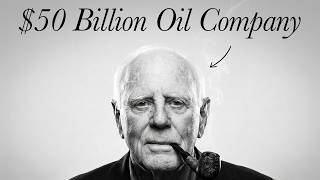
- Brad Jacobs is a highly successful entrepreneur who has started eight billion-dollar businesses, made over 500 acquisitions, and raised over $30 billion, and his book "How to Make a Few Billion Dollars" shares his life story and insights 2m37s.
- Brad Jacobs is known for his high energy and has no plans to retire or slow down, continuing to build companies and make deals 3m0s.
- A meeting was held at Brad's home, where he invited the host and Patrick Oesi from the "Invest Like the Best" podcast, along with Brad's head of communications, Joe Checker, to discuss various topics 3m41s.
- On the flight to meet Brad, the host had an encounter with a stranger who noticed him reading Brad's book, "How to Make a Few Billion Dollars," and assumed it was an instruction manual for becoming a billionaire 4m11s.
- The host found the encounter amusing, as the book can be seen as an account of how Brad Jacobs made a few billion dollars, rather than a step-by-step guide 4m57s.
Key Lessons from Brad Jacobs
- After meeting with Brad, the host organized his notes into seven key lessons, which he wanted to remember and share with others 5m8s.
- The first lesson is to "go to school on everybody," meaning to be a lifelong learner and absorb knowledge from various sources, a trait shared by many of history's greatest founders, including Amancio Ortega 5m16s.
- The host notes that Brad also embodies this trait, as seen when he printed out the host's personal website, which contains concise notes and highlights from various books 5m59s.
- Brad's dedication to lifelong learning is evident in his actions, and the host believes that this trait is essential for success, as it allows individuals to continually learn and grow 6m36s.
Learning from Others
- Jeff Bezos is known for learning from others, as mentioned in his biography "The Everything Store", where someone who knew him well said he would "go to school" on everybody he met, taking away lessons from each interaction 6m52s.
- This idea is also applied by other successful individuals, such as Brad Jacobs, who always carries a notebook and pen to jot down notes when he hears something interesting or valuable 8m36s.
- Mitch Kapor, co-founder of Lotus, also "goes to school" on everybody, as seen when he was taking pages of notes at a small conference, demonstrating his focus on continuous learning 7m37s.
- A key point is that champions behave like champions before they are champions, as stated by Bill Walsh in his book "The Score Takes Care of Itself", implying that successful people like Mitch Kapor were taking notes and learning from others long before they achieved success 8m7s.
Obsessive Research and Industry Knowledge
- Brad Jacobs is also known for his obsessive research when learning about an industry, reading everything he can get his hands on, looking at websites and social media, watching interviews with CEOs, and using paid services to gather information 9m1s.
- Jacobs also attends industry conferences, meets with management teams, and interviews experts to gain a deeper understanding of the industry he is considering 9m36s.
- He seeks out people who are knowledgeable about the industry, including CEOs, investment bankers, venture capital firms, and successful fund managers, to gain valuable insights 10m4s.
- Industry vendors are also a good source of information, as they have a sense of the trends that could drive changes in the market environment 10m21s.
- Shareholder activists often have important insights, and reaching out to journalists who know the industry can provide valuable perspectives due to their naturally skeptical nature 10m26s.
- Collecting more information and putting forth more effort is a competitive advantage that is not dependent on intelligence or talent, but rather on the amount of effort put in 11m37s.
- David Ogilvy's advice is to become the best-informed person in the agency on the account to which one is assigned, which can be achieved by reading books, trade journals, and spending time with clients and in relevant environments 11m5s.
Clarity of Vision and Communication
- Clear thinking and being easy to understand and interface with are essential, as described in the book "Insanely Simple" by an advertising executive who worked with Steve Jobs 11m50s.
- Clarity is crucial in propelling an organization forward and is something that people crave and respond positively to, as described in the book "Insanely Simple" 12m20s.
- Brad's approach to company building involves setting a clear vision as the founder and leader, which is essential for success 13m45s.
- Visualization is an important part of setting a clear vision, and it involves visualizing the desired outcome in one's mind 13m47s.
- The concept of a leader having a clear vision, hiring the best people, incentivizing them with money tied to specific checkpoints, and investing in technology is a recurring theme in various books, including those by St. Lauder, and is also mentioned by Brad Jacobs, the founder of Jacobs Engineering 13m53s.
- Brad Jacobs emphasizes the importance of a leader having a clear vision, hiring the best people, and incentivizing them with money tied to specific checkpoints, as well as investing in technology, in order to achieve success 14m8s.
- The idea of having a clear vision and message is also related to the concept of "Clarity of thought," which involves taking time to refine one's message so that it is easy to understand and spread 14m35s.
- Brad Jacobs' quote, "Narrow your focus to your most important dreams and tune out everything else," emphasizes the importance of prioritizing one's goals and avoiding distractions 14m52s.
- Steve Jobs is also mentioned as an example of someone who was able to clearly communicate his vision and goals, making it easy for others to understand and work towards them 15m1s.
- Brad Jacobs is described as having a clear and easy-to-understand communication style, which is evident in his interviews, book, and conversations with others, including the author and their friends Rick Gerson and Jared Kushner 15m10s.
- The importance of clarifying one's thinking and making oneself easy to understand and interface with others is emphasized as a key takeaway from the conversation with Brad Jacobs 15m47s.
The Power Law and Hiring
- The concept of the "power law" is mentioned, which refers to the idea that a small number of exceptional individuals can have a disproportionate impact, and that hiring the best people is crucial for success 16m3s.
- Brad Jacobs emphasizes the importance of recruiting "superlative people" and making hiring choices as perfect as possible, as hiring the wrong person can be costly 16m9s.
- The idea that an empty seat is less damaging than a poor fit is also mentioned, highlighting the importance of taking the time to find the right person for a role 16m25s.
- The importance of not over-hiring and maintaining a slightly understaffed team is also discussed, as this can help to focus efforts and avoid redundant work 16m44s.
Paying for Top Talent
- Paying top talent a lot of money is crucial, as it ensures having the best people in place, and it's nearly impossible to overpay for talent 17m4s.
- Overpaying for talent can lead to significant long-term benefits, as seen in Apple's acquisition of NeXT, which essentially rehired Steve Jobs, resulting in a highly successful deal 17m37s.
- Skimping on salary and incentives to save money can be costly in the long run, as hiring a second-best candidate may result in millions of dollars in lost profit 17m47s.
- Surrounding oneself with the most talented people is essential, as they can make a significant difference in the success of a project or company 18m13s.
- The dynamic range of humans is crucial, and giving a good idea to a mediocre team can lead to failure, while a brilliant team can fix or improve a mediocre idea 18m28s.
- Getting the team right is a necessary precursor to getting the ideas right, and it's essential to find the smartest and most talented people to work with 18m45s.
- Having an empty seat is preferable to having a B-player, as they can hinder the team's progress 18m48s.
The Importance of Market Trends and Technology
- Getting the big trend right and investing in technology is crucial, as it can make or break a business, and understanding major trends can help a company thrive 19m7s.
- According to Mark Andreessen, market is the most important factor in a startup's success, even more so than team or product 20m12s.
- A great market with lots of potential can pull a product out of a startup, and the market will be fulfilled by the first viable product that comes along, regardless of the team or product quality 20m13s.
- Conversely, a terrible market can lead to failure, even with the best product and team, as seen in the example of Billy Durant, who was a successful manufacturer of horse-drawn carriages but failed to adapt to the new automobile technology 20m55s.
- Mark Andreessen's post suggests that a great market will tend to equal success, and a poor market will tend to equal failure, assuming the team is competent and the product is fundamentally acceptable 21m44s.
- Markets matter most, and markets that don't exist don't care how smart you are, emphasizing the importance of understanding market trends and needs 21m51s.
- Brad Jacobs' advice is to get the big trend right and invest in technology, as every company is a technology company, and investing in technology can lead to significant success, as seen in the example of Amasi, who built a $130 billion fortune by applying technology to an ancient industry 22m1s.
- Peter Thiel's statement that "properly understood, any new and better way of doing things is technology" is seen as accurate, and companies that resist innovation and have closed minds will be left behind 22m11s.
- Andrew Carnegie's biography also emphasizes the importance of investing in technology, as he built his steel company by adopting new technologies and innovations, despite resistance from the "old heads" in the industry 23m6s.
- The advice from Brad Jacobs and others is to plan to heavily invest in technology if you want to make a lot of money in almost any industry 22m53s.
- Invest heavily in technology as it provides a competitive advantage and can be the difference between profit and loss, allowing savings to compound over time 23m33s.
- Get the big trend right and invest in technology to stay ahead of slower-moving competitors 23m49s.
Paying it Forward and Mentorship
- Pay it forward by helping the next generation, as seen in the example of Mr. Jlon mentoring a young Brad Jacobs and teaching him valuable business lessons 23m51s.
- Problems are an asset in business, not something to be avoided, but rather an opportunity to remove obstacles and get closer to success 24m45s.
- Big ambitions often beget bigger problems, and instead of being frustrated, one should be excited to solve these problems and create value 25m11s.
- Many successful entrepreneurs, such as Mr. Jlon and Andrew Preston, seek out and mentor younger versions of themselves, recognizing their potential and investing time in them 26m17s.
- The story of Andrew Preston, the president of United Fruit, meeting and mentoring Sam Z Murray, a young Russian entrepreneur, is an example of this phenomenon 26m33s.
- Preston, a risk-taker and thinker, invested in Zamur's company, buying around 25% of it, due to his admiration for the young entrepreneur's talent, which is similar to his own spirit 27m9s.
- After Preston's death, the new executives at United Fruit underestimated Zamur and tried to compete against him instead of partnering with him, despite Preston's respect for Zamur 27m32s.
- The importance of paying it forward and helping the next generation is highlighted, as seen in Brad's actions, who takes an interest in younger talented people and helps them, just like Mr. J did for him 27m49s.
- Brad has a unique tradition at his house, where he asks guests to dance, which is a way of embracing his eccentricities and being authentic 28m3s.
- The takeaway is to pay it forward and help the next generation as much as possible, as seen in Brad's actions and Preston's respect for Zamur 28m25s.
Embracing Eccentricities and Authenticity
- Embracing eccentricities and being authentic is crucial, as people love authenticity more than perfection, and it's a mistake to pretend to be perfect 28m32s.
- Brad's book emphasizes the importance of building a strong and healthy mind, with the first chapter focusing on rearranging one's brain, and he practices what he preaches, even leading a guided meditation at breakfast 28m43s.
- Authenticity is key in all settings, even professional ones, and being a human being is more important than presenting a certain image to the world 29m24s.
- The conversation with Brad was not just about business, but also about personal topics, such as childhood, marriage, and parenting, showcasing the importance of being authentic and vulnerable 29m30s.
- Takeaway number six is to not hide one's eccentricities, but to instead, embrace them, as seen in the examples of Charlie Munger and Sam Zell, who had a cult-like following due to their authenticity 30m12s.
- The importance of being true to oneself is emphasized, even if that means being imperfect, as a reminder to just be who one really is 30m51s.
Relationships and Reputation
- Relationships and reputation are crucial, as stated by Warren Buffett, who values reputation over financial losses, and believes it takes 20 years to build a reputation but only 5 minutes to ruin it 31m1s.
- This idea is tied to the concept of the "David file," a collection of stories about David Ogilvy, where almost everyone who interacted with him had a memorable story to share 31m45s.
- Similarly, there is a "Brad file," a collection of stories about Brad, the entrepreneur, where every single story heard was positive, and many were hilarious, despite his four-decade-long track record 32m11s.
- The story of David Ogilvy writing a letter to a client, listing eight reasons why some ads would not be effective, and delivering a humorous yet effective argument, is an example of the kind of stories found in the "David file" 32m24s.
- The concept of the "Brad file" is introduced, where people who have interacted with Brad have shared unique and memorable stories, similar to those found in the "David file" 33m8s.
- Opportunity handled well leads to more opportunities due to track record, reputation, and the compounding of relationships, as seen in Brad's career, allowing him to pursue opportunities that would have been impossible when he started out as a 23-year-old entrepreneur 33m40s.
- The long-term view is the right view, and one must never jeopardize their reputation or harm their long-term relationships for short-term gains, as stated by Buffett 34m4s.
- Relationships run the world, and one's reputation is everything, making it essential to prioritize these aspects in personal and professional life 34m11s.
Brad Jacobs' Book and Entrepreneurial Journey
- Brad's book is highly recommended, and a link to purchase it will be provided, with a review of the book also available 34m31s.
- As a serial entrepreneur, Brad has made every possible mistake in business, including overpaying for acquisitions, botching integrations, and hiring the wrong people, but has still managed to create tens of billions of dollars of value for shareholders 34m45s.
- Brad has started five companies from scratch, completed approximately 500 acquisitions, and created hundreds of thousands of jobs, raising about $30 billion in outside capital 35m32s.
- Brad's career began in 1979 with a privately owned oil brokerage company called Amrex Oil Associates, which he sold in 1983, and then moved to London to start an oil trading company called Hamilton Resources 35m46s.
- In 1989, Brad entered the solid waste management sector and founded United Waste Systems, taking it public in 1992 and selling it in 1997 for $2.5 billion 36m43s.
- In 1997, Brad started United Rentals, renting construction equipment for job sites, taking the company public later that year and building the largest equipment rental company in the US within 13 months 37m12s.
- Brad Jacobs has built multiple successful companies, including United Rentals, which became the largest equipment rental company in the world, with its stock price increasing over 100 times from its inception price of $33.50. 37m39s
- Jacobs also founded XPO Logistics, which became the seventh best-performing stock in the Fortune 500 of the last decade, and later divided it into three separate publicly traded companies, including GXO and RXO. 37m51s
Thinking Differently and Unconventional Wisdom
- Jacobs' experiences have allowed him to share thought experiments that can help others learn to think differently, which is essential for accomplishing big things. 38m38s
- Jacobs' book, "How to Make a Few Billion Dollars," is a guide for those who want to make enormous amounts of money in business or turbocharge their chances of success in various fields. 38m48s
- Jacobs has started seven separate billion-dollar companies and has come to know many extremely successful people who all think differently than most people and have rearranged their brains to prevail at achieving big goals. 39m38s
- According to Peter Teal, successful people find value in unexpected places by thinking about business from first principles instead of formulas, which is a key idea in Jacobs' book. 40m27s
- Jacobs' book emphasizes the importance of intense focus and a willingness to transform how one uses their mind in order to achieve big goals and make a few billion dollars. 40m18s
- Jacobs' story includes an instance where he made about $4 billion buying back his stock, despite bankers and advisers advising against it, showcasing his unconventional thinking. 40m52s
- Brad's approach to decision-making is highlighted, where he emphasizes the importance of thinking differently and not adhering to conventional thinking, citing an example where his unconventional approach led to a phenomenal outcome 41m6s.
Managing Mindset and Emotions
- The book discusses the importance of managing one's mind and attitude in entrepreneurship, emphasizing that success in business comes from keeping one's head in a good place 41m52s.
- Expecting positive outcomes is crucial, and it's essential to stop beating oneself up mentally and understand that catastrophizing is a genetic survival trait inherited from hunter-gatherer ancestors 42m17s.
- The author shares a personal experience of feeling lost after stepping down from United Rentals in 2007, which led to depression, and how they overcame it by reading psychology books and learning to reframe negative thoughts 42m37s.
- The author mentions a quote from Mark Andreessen, stating that entrepreneurs only experience two emotions: euphoria and terror, and nothing in between, highlighting the importance of controlling one's mindset and emotions 42m48s.
- The author learned to turn internal chatter to their advantage by reframing negative thoughts as useful data rather than objective reality 43m23s.
- A quote from Henry Kaiser is mentioned, stating that problems are just opportunities in work clothes, emphasizing the importance of reframing problems as opportunities 44m11s.
- Reframing negative thoughts as useful data rather than objective reality can help individuals manage their internal chatter and make better decisions 44m18s.
- When feeling anxious, asking oneself "what's the worst that can happen" and "how would I cope with it" can help put things into perspective 44m39s.
- Stepping outside of oneself and pretending the problem belongs to someone else can help individuals think more objectively about positive outcomes 44m52s.
- Putting distance between oneself and the source of anxiety can help think more objectively about positive outcomes 45m7s.
- Managing one's mind and attitude is crucial for success, as emphasized by Brad, who has started seven separate billion-dollar companies 45m16s.
- Not beating oneself up and stopping the expectation of unrealistic levels of perfection can lead to greater happiness 45m30s.
- Maintaining a positive mental attitude, staying calm, and not beating oneself up can help individuals pursue big goals while maintaining their mental equilibrium 46m11s.
Thought Experiments and Meditation
- Thought experiments, such as those used by Brad, can be a valuable tool for maintaining a positive mental attitude and staying calm 46m25s.
- Albert Einstein's habit of daydreaming is cited as an example of the importance of thought experiments and allowing oneself to think freely 47m10s.
- Thought experiments are used by various individuals, including scientists, artists, composers, and mathematicians, for creative work and problem-solving, and spending time on thought experiments can produce a profound sense of calmness and lead to better decision-making 47m22s.
- Brad has a great personal vibe and energy, which is also reflected in the work environment he has created, and he emphasizes the importance of meditating, having practiced it for over 50 years 48m1s.
- Meditating has been a huge benefit to Brad's career, as he feels that many of his best decisions materialize during meditation, and this can be learned from his interview on the "Invest Like the Best" podcast, episode 352 48m32s.
Problems as Opportunities
- Great companies are effective problem-solving machines, and this idea was first introduced by reading Danny Meyer's autobiography, where he shares his experiences and lessons learned from his business mentors 48m51s.
- Ludwig Jesselson, Brad's most important business mentor, taught him that business is about finding, embracing, and enjoying problems, as each problem is an opportunity to remove obstacles and get closer to success 49m14s.
- Danny Meyer had a similar experience with Stanley Marcus, an older and more successful entrepreneur, who shared similar lessons about the importance of problem-solving in business 50m30s.
- Brad Jacobs had a conversation with Mr. Jesselson in his 20s, where he expressed his concerns about opening a new restaurant, which he thought might be the worst mistake he ever made, and Mr. Jesselson replied that the road to success is paved with mistakes well handled 50m41s.
- This conversation led to a turning point in the way Brad Jacobs approached business, and it reminded him of his grandfather Irving Harris's philosophy that the definition of business is problems 51m20s.
- Irving Harris believed that success lies not in the elimination of problems but in the art of creative, profitable problem-solving, and the best companies are those that distinguish themselves by solving problems most effectively 51m35s.
- Brad Jacobs distilled this philosophy down to the idea that business is problems, and great companies are just effective problem-solving machines 52m3s.
- Brad Jacobs learned that problems are an asset, not something to avoid, but something to run towards, and this idea is also shared by entrepreneurs like Henry Kaiser, who said that problems are just opportunities 52m23s.
- Jeff Bezos also shares this idea, as evidenced by his reaction to bad news about his business, where he got excited and saw it as an opportunity for improvement, and he also finds waste exciting, seeing it as potential for productivity gains and more efficient capital expenditures 52m42s.
- The book being discussed contains valuable insights and ideas from the author's experiences, with the author mentioning that they have referred to it multiple times and it's similar to what Jeff Bezos has discussed in his shareholder letters and speeches 54m15s.
- Big ambitions can often lead to bigger problems, but instead of getting frustrated, one should view setbacks as opportunities to create value and solve problems 54m30s.
Learning from Mistakes and Embracing Challenges
- The author has dealt with numerous challenges in their career, including acquisitions, people, tech, and branding, and is not surprised when things don't go perfectly, as that's the nature of the universe 55m1s.
- The author recalls a conversation with Charlie Munger, who said that problems should be expected, and one should toughen up and try to prevent future problems 55m47s.
- The book being discussed is valuable because it contains almost half a century of wisdom distilled down, with the author mentioning that it's selling for $27, which is an absurd amount of value 56m19s.
- The author notes that the ideas discussed in the book are similar to those of other successful individuals, including Danny Meyer, the founder of Neiman Marcus, Jeff Bezos, Henry Kaiser, and Charlie Munger 56m39s.
Radical Acceptance and Dealing with Setbacks
- The book contains great stories, including one titled "How to Lose $500 Million," which the author wants to discuss further 56m58s.
- Brad's acknowledgement section in his book is unusual as it is placed at the front and consists of a list of maxims he learned from other people, including "small amounts of capital can generate gigantic returns" from Michael Moritz and "get the major trend right" from Ludwick Jon 57m14s.
- One of the maxims is "see the world for what it is, not what you wish it to be," which is relevant to Brad's story about losing $500 million due to a mistake in investing in road rental companies in anticipation of government funding for infrastructure projects 57m48s.
- Brad's decision to sell the road rental companies at a loss is an example of "radical acceptance," which quiets the noise created by yesterday's decisions and today's wishful thinking 58m4s.
- In another story, Brad's company XO was hit with a short report in 2018, which led to a 20-26% drop in stock price, but Brad's response was to concentrate on the situation at hand without judging what had happened and to identify the errors in the short report 59m39s.
- Brad's approach to problems is to concentrate on the situation, identify opportunities, and take action, as seen in his response to the short report and his decision to sell the road rental companies 1h0m26s.
- A crisis led to a company's stock becoming extremely cheap, but instead of viewing it as a negative, it was seen as an opportunity to achieve a good outcome, and the company decided to buy back $2 billion worth of stock, which was considered a high percentage of their market cap 1h0m37s.
- Bankers advised against the buyback, citing it as too high a percentage, but the company's leadership, including Brad, decided to proceed, thinking outside conventional wisdom and finding value in unexpected places 1h0m42s.
- The buyback ultimately proved to be a successful decision, with the $2 billion worth of stock increasing in value to $6 billion, resulting in a profit of $4 billion 1h1m29s.
Understanding Major Trends and Investing in Technology
- Brad emphasizes the importance of understanding major trends that could impact a business, and he is obsessive about learning about an industry before making a move 1h2m0s.
- He received valuable advice from his mentor, Mr. Jesson, that as long as you get the big trend right, you can mess up other things in business and still do well 1h1m59s.
- The idea that successful people do more research, read more, and talk to more people is highlighted, and it is noted that technology is a dominant mega trend in the universe, and investing heavily in tech can be key to success in many industries 1h2m34s.
- This idea is not new, and even Andrew Carnegie emphasized the importance of investing in technology in his autobiography, noting that it can give a business an advantage over competitors and be the difference between profit and loss 1h2m59s.
- Brad's approach to starting a new company involves reading everything he can about the industry and doing extensive research before making a move 1h3m34s.
- Research involves gathering information from various sources, including journals, periodicals, newspapers, trade publications, employee reviews, and web-based recruiting sites, as well as analyzing data from paid services like Bloomberg, Alphasense, and Thomas Rutters 1h3m36s.
- Analysis also includes reviewing information from sell-side and buy-side analysts, searching the SEC database for information on publicly traded US companies, and examining IPO documents, financial reports, and proxies 1h3m55s.
- Industry conferences are attended to meet management teams face-to-face and hear questions from investors, while trade associations provide valuable industry data 1h4m10s.
- Experts are interviewed, including CEOs, investment bankers, and venture capital firms, to gain a deeper understanding of the industry 1h4m24s.
- Additional sources of information include industry vendors, shareholder activists, and journalists who cover the industry 1h5m4s.
Identifying Valuable Data and Market Opportunities
- A key idea is to identify markets with valuable but hard-to-get data, as seen in various industries, including the oil industry and the art market 1h5m50s.
- The example of AMX and Hamilton Resources in the oil industry illustrates the importance of capturing and sharing information quickly, which was a trend that transformed the industry in the late 1980s 1h6m23s.
- The story of Larry Gagosian, a billionaire art dealer, is also mentioned as an example of identifying a market with valuable but hard-to-get data and creating a personal treasure map for business success 1h6m1s.
- The main source of information about the price of oil was a newsletter that came in the mail, and oil brokers made verbal handshakes with clients over the phone with nothing on paper for days, highlighting the lack of timely information as a big problem 1h6m52s.
- The lack of timely information was a significant issue for oil brokers, who made their money by matching buyers and sellers and taking a commission, and isolated pockets of valuable oil pricing data were trapped all over the globe 1h7m12s.
- A solution was built to share information more quickly, allowing employees to enter useful information into a database, which could then be shared with brokers around the globe, reducing the process from days to hours 1h7m42s.
- This solution enabled the creation of a way to obtain objective insights into global oil supply and demand and pricing trends, revolutionizing the industry 1h8m5s.
- The founder of United Waste Systems identified an opportunity in the waste industry after reading a research report, which stated that the two largest companies in the industry were making about half a billion dollars a year in profit 1h9m0s.
- The two big trends in the waste industry at the time were landfill capacity becoming precious due to regulations and the integration of hauling and disposal, creating an opportunity for end-to-end consolidation 1h9m41s.
- The founder looked for a way to capitalize on both trends and found it in tech-based truck routing, which allowed for more efficient operations 1h9m56s.
- The founder's idea was inspired by reading research reports, including one written by the top-ranked analyst for Environmental Services, which highlighted the potential for growth in the waste industry 1h9m4s.
- A waste management business was optimized by streamlining truck routes, reducing the number of trucks needed from 50 to 20 and the time required from 5 days to 3 days, resulting in lower costs and higher profit margins, ultimately leading to the company being sold for $2.5 billion 1h10m31s.
- The idea for United Rentals was conceived after meeting with bankers and analysts, including one who suggested the construction equipment rental industry, which had the same problem of inefficient operations as the waste management business 1h11m11s.
- The construction equipment rental industry had larger regional players using software developed by a company called Win Systems by 1997, which provided a high level of computerization 1h11m33s.
- The concept of "God mode" is introduced, referring to having omnipresent data and view of the entire industry, similar to cheat codes in video games, which was achieved by acquiring Win Systems 1h11m39s.
- Acquiring Win Systems provided access to aggregated anonymized data on macro trends across the industry, allowing for proactive adjustments to pricing and asset management, while competitors were being reactive 1h12m44s.
- The acquisition of Win Systems gave United Rentals an industry-best platform to develop internally and access to data on emerging market trends, such as equipment gluts or shortages 1h12m49s.
Opportunities from Loss and Feedback Loops
- Opportunity can appear after a loss, and what seems like a terrible thing can actually be a blessing in disguise, as seen in the example of the sale of United Rentals to Cerberus in 2007, which initially fell through due to the private equity firm defaulting on the agreement, but ultimately led to the company's market cap increasing to $38 billion 1h13m29s.
- The deal that was avoided contributed more to the success of the company than the deals that were done, highlighting the importance of being cautious and prepared for unexpected events 1h14m48s.
- Setting up feedback loops is crucial, as it allows for data collection from frontline employees who interact with customers, providing valuable insights that can improve the company 1h15m10s.
- Many successful business leaders, including Les Schwab, Sam Walton, and Jim Casey, prioritize feedback loops and make it a point to collect data from frontline employees, as they believe that this information is essential for making informed decisions 1h15m14s.
- These leaders would often go out of their way to collect data, such as Jim Casey pulling over to talk to UPS drivers, or Sam Walton talking to cashiers and people unloading trucks, to get a firsthand understanding of what's happening in the company 1h15m53s.
- Executives and people around leaders can sometimes filter information, providing an overly optimistic view of the company, and feedback loops can help penetrate this and provide a more accurate understanding of the company's situation 1h16m17s.
- Leaders like Oh Basos would also work in customer service, answering calls directly from customers, to get a better understanding of the company's strengths and weaknesses 1h16m20s.
- Two questions were posed that can be applied to a company or an existing business: "What's your single best idea to improve our company?" and "What's the stupidest thing we're doing as a company?" These questions can be sent out company-wide via email to gather interesting data and ideas from employees 1h17m18s.
- These questions can also be applied to a family setting, such as asking children for feedback on their parenting, with questions like "What's your single best idea to improve our family?" and "What's the stupidest thing that we're doing as a family?" 1h17m49s.
- Soliciting feedback from family members, especially children, can provide valuable insights and help identify areas for improvement, and can be done through simple and direct questions 1h18m15s.
- The idea of sending out individual questions, rather than including them in a survey, can help cut through complexity and gather more focused and meaningful feedback 1h19m7s.
The Importance of Speed and Breaking the Rules
- The importance of speed and moving quickly is a recurring theme, with the example of Brad's competitor, the CEO of Herz, highlighting the need to stay ahead of the competition 1h19m39s.
- A CEO of a company, after being outperformed by a competitor, United Rentals, in just 13 months, invited the CEO of United Rentals to lunch and asked him to slow down, which is considered a losing strategy 1h20m7s.
- The CEO's company had previously been the largest car rental and equipment rental company, but after United Rentals' rapid growth, it became the largest car rental company and the second-largest equipment rental company 1h20m31s.
- United Rentals eventually made six times the amount of money as the CEO's company, demonstrating the failure of the strategy to ask a competitor to slow down 1h20m48s.
Hiring and Building a Strong Team
- It's essential to know when to break the rules, and one domain where perfectionism should not be lost is in hiring, as the most important thing a CEO does is recruit great people 1h21m12s.
- Aiming for perfection can be counterproductive, but when it comes to hiring, it's crucial to make choices as perfect as possible, as few mistakes are costlier than hiring the wrong person 1h21m28s.
- An empty seat is less damaging than a poor fit, and it's essential to prioritize hiring the right people, as they can bring significant value to a company 1h21m46s.
- Steve Jobs emphasized the importance of surrounding oneself with extraordinary people, as the dynamic range between average and best quality in most fields is at most 2 to 1, but in the field he was interested in, it was 50 or 100 to 1 1h22m27s.
- Jobs believed in going after the "cream of the cream" and building a team of A+ players, as a small team of A players can outperform a large team of B and C players 1h22m53s.
- Brad emphasizes the importance of screening for superior people and building outrageously talented teams, as Steve Jobs did by figuring out who the really smart people were and hiring them 1h23m24s.
- Intelligence is a crucial trait to look for in candidates, as it eliminates 90% of all candidates, and there's no substitute for smarts or brains, with high IQ being the COO trait most closely correlated with organizational success 1h23m29s.
- When interviewing people, it's essential to assess their ability to think dialectically, which is the ability to view issues from multiple perspectives and arrive at the most economical and reasonable reconciliation of seemingly contradictory information 1h23m47s.
- It's also important to identify whether a person is capable of changing their opinion, as rigid thinkers are less valuable, regardless of their intelligence level 1h24m27s.
- Ambitious people who want to accomplish big things and make a lot of money are ideal to hire, and it's better to be slightly understaffed, as this leads to a more focused team that spends less time on redundant busy work 1h24m41s.
- The importance of team dynamics and "vibes" is emphasized, with the idea that an organization is like a party, and only people who bring the vibe up should be invited 1h24m57s.
- To differentiate between A, B, and C players on a team, it's essential to be careful with B players, as they may hire C players, and C players can be detrimental to the organization 1h25m20s.
- A method to differentiate between A, B, and C players is to imagine the person quitting without warning and assessing the internal response to this scenario, with A players inducing panic, B players being manageable, and C players being no big deal 1h26m5s.
- A players should be overpaid, as they are invaluable to the organization, and their loss would be severely felt 1h26m42s.
- Steve Jobs once said that in some fields, the best person is not twice as good, but a hundred times as good, illustrating the immense value of top talent 1h27m1s.
- It is nearly impossible to overpay for talent, as seen in Apple's decision to pay half a billion dollars to rehire Steve Jobs, which turned out to be the deal of the century 1h27m15s.
- Compensation is a key motivator for people, and it is essential to pay top talent "oodles and oodles of money" to ensure they are motivated and satisfied 1h27m36s.
- Brad Jacobs, who chairs three companies, notes that not a single employee shows up to work solely to make money for the company, but rather to make money for themselves and their families 1h27m43s.
- Money is a universal motivator that "animates people everywhere," and Jacobs has "overpaid" almost every direct report he has ever had to ensure he has top talent in place 1h27m57s.
- It makes no financial sense to skimp on salary incentives to save $100,000 a year when hiring a second-best candidate may cost millions of dollars in lost profit 1h28m15s.
- The dynamic range of humans is a crucial factor to remember, and it is essential to overpay for talent to avoid losing millions of dollars in potential profit 1h28m11s.
- The two biggest themes in the history of entrepreneurship are focus and watching costs, but watching costs does not apply when it comes to talent acquisition 1h28m34s.
- Hiring a top talent, even if it means paying more, can be the difference between success and failure, as seen in Steve Jobs' case, where not hiring him could have meant the end of Apple 1h28m56s.
The Entrepreneurial Spirit and Creating Value
- Building products and services that make people's lives better, creating jobs, and generating wealth for shareholders is an incredible honor and a testament to the entrepreneurial spirit 1h29m29s.
- The majority of the tens of billions of dollars of value created by the teams have flowed outside of the companies, and this is possible because they operate in free markets where creating prosperity is a virtue 1h30m14s.
- A personal experience with a small business owner named Steve, who handles the HVAC system at home, is shared as an example of the entrepreneurial spirit and the importance of hard work, customer focus, and profit-seeking 1h30m34s.
- Steve's self-esteem is tied to his customer satisfaction scores, and he measures his worth by how much money he's making to support his family, showing that he is comfortable with the pursuit of profit 1h31m8s.
- The entrepreneurial spirit is embodied by people like Steve, who want to work hard, outsmart the competition, put their customers first, and make a good living for their families 1h31m39s.
Taking Advantage of Opportunities and Going All In
- The importance of taking advantage of opportunities and going all in is highlighted through a speech given at the Rhode Island Governor's school for the gifted in art and music, which had a profound impact on the speaker 1h32m6s.
- The idea that it's up to individuals to decide whether to waste time or go all in and create something meaningful is emphasized, and the connection between intensity of focus and the end result is highlighted 1h32m25s.
- The speaker hopes to inspire others to run hard and achieve their big dreams, whether it's making a few billion dollars or something else, and to experience the exhilaration of seeing it through to success 1h32m59s.
Book Recommendation and Conclusion
- The book being discussed is highly recommended, with the appendix being particularly valuable for its thought experiments, history of technology timeline, interview questions, recommended books, and advice on conducting meetings 1h33m13s.
- A link is provided in the show notes, which supports the podcast when used 1h33m45s.
- The current progress is at 300-335 books, with a goal of 1,000 more to reach a milestone 1h33m48s.
- Once the goal is achieved, there will be another update 1h33m54s.