

How lasers work 1m52s
- Lasers, short for Light Amplification by Stimulated Emission of Radiation, come in different types including chemical and solid-state lasers.
- The US military tested chemical lasers, which use hazardous chemicals, like the 1990s airborne laser program on a 747, but it was canceled after costing $5 billion over 16 years.
- Solid-state lasers are less complex and don't need chemicals, operating more like ion beams with an "unlimited magazine depth" due to reliance on power.
- Directed energy weapons have to maintain focus on targets for damage, facing legal restrictions against use on personnel, but permissible against equipment and weapons.
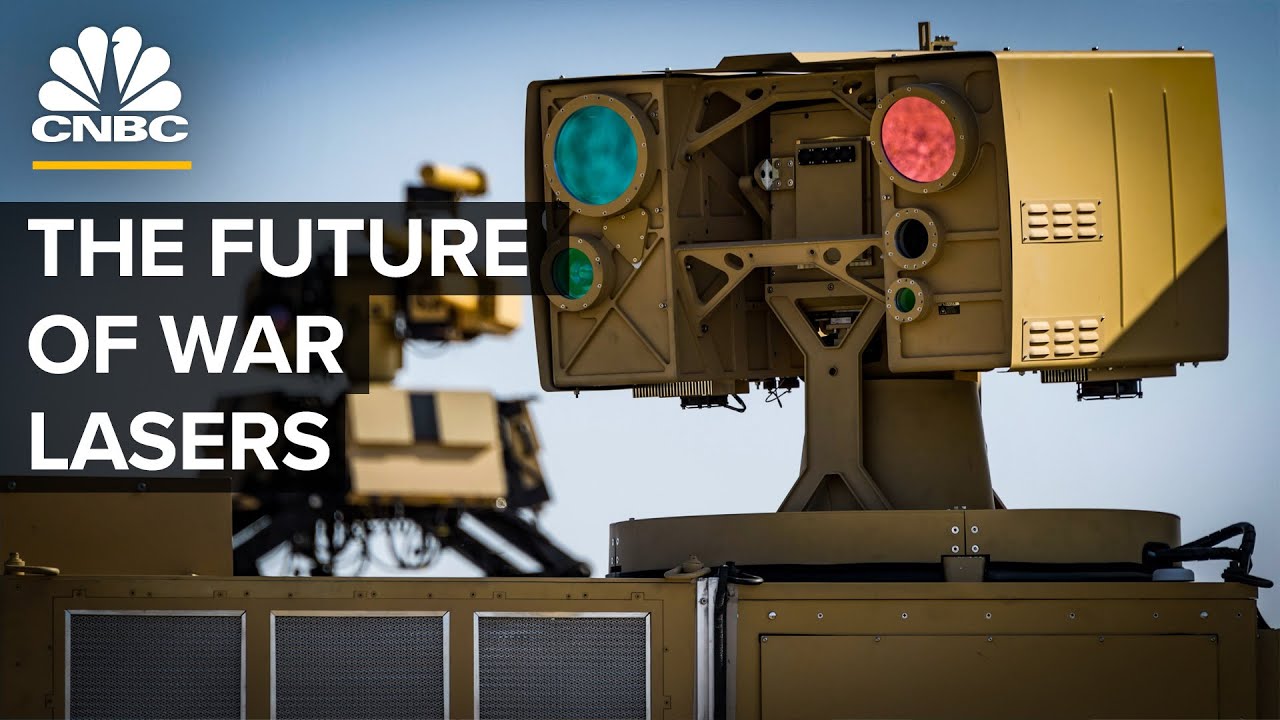
- The US military branches are moving towards lasers starting at 100 kilowatt class for tasks like countering drones, missiles, and possibly hypersonic weapons, finding new operational uses as technology advances.
The Iron Beam 4m9s and Military lasers 6m0s
- Israel developed Iron Dome to intercept rockets and mortars using costly missiles, using algorithms and AI to predict and choose targets.
- Iron Dome interceptions cost around $50,000 each; Israel is advancing the Iron Beam system with multiple laser beams for better efficiency, costing only $2 per interception.
- The Iron Beam is designed for short-range threats, functions best with Iron Dome for a complete system, and is set to be operational in the near future.
- The US military uses the C-Ram system against rockets and mortars and explores lasers like Helios for the Navy to save on ammunition costs, costing $100 million to integrate.
- Helios will be on current and future destroyers, equipped for 150-300 kilowatt lasers, while the Air Force and Army are testing mobile and vehicle-based laser systems for cost-effective defense.
- Laser weapons are being actively tested and deployed by the US military, marking a new era of battlefield technology.