

Personal Anecdotes and Medical History
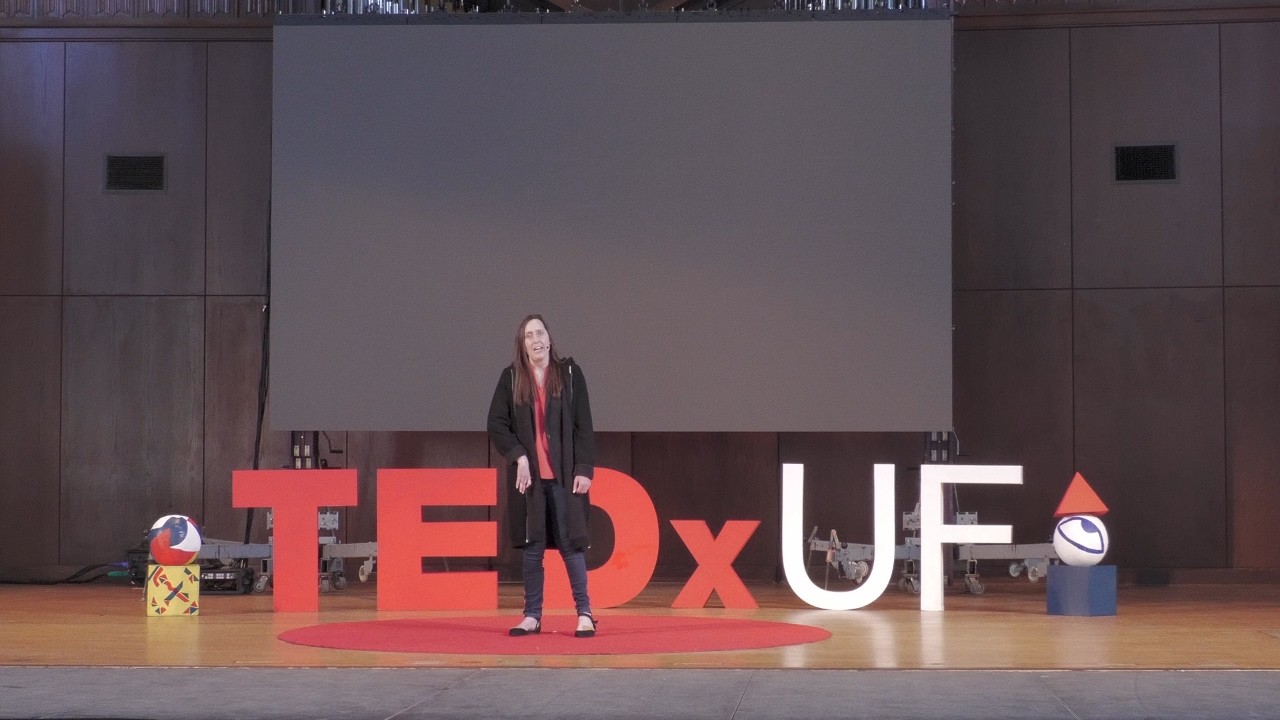
- At age 21, Kelsey Tainsh visited a canine unit of police officers to share her personal story 0s.
- While approaching an officer who appeared to have a limp similar to her own, Tainsh expressed that seeing him perform a brave job gave her courage 15s.
- The officer clarified that his limp was caused by stepping in dog feces, which Tainsh uses as an anecdote to illustrate her perspective on life 42s.
- Tainsh describes her physical condition, which includes a limp she refers to as "swagger," speech that she jokingly calls "talking in cursive," and paralysis on her right side 1m5s.
- At age 15, Tainsh was a world-ranked wakeboarder and varsity rower who felt invincible, having previously survived a brain tumor at age five 1m25s.
- After experiencing recurring episodes of facial redness and an inability to speak, Tainsh’s sister witnessed an incident, leading her parents to seek medical attention 1m48s.
- An MRI revealed that Tainsh’s brain tumor had returned after being gone for 10 years 2m10s.
- Tainsh underwent surgery on June 14, 2006, exactly 10 years after her first surgery on June 14, 1996, performed by the same medical team in the same hospital 2m25s.
- Following the second surgery, Tainsh woke up paralyzed on the right side of her body and unable to speak, learning that she had suffered a stroke 2m40s.
The Healing Power of Compassionate Care
- During her recovery in the hospital, Tainsh experienced moments of human connection from medical staff, such as doctors holding her hand, technicians making her laugh, and nurses providing compassionate care during vulnerable moments 3m15s.
- These non-medical interactions provided healing that medicine alone could not offer, and Tainsh recently wrote a poem reflecting on the patient experience and the importance of truly caring for patients 3m55s.
- The experience of receiving compassionate care from healthcare workers during recovery from a stroke, specifically while hospitalized and unable to move one's legs, served as a foundational source of healing for both the body and the heart 0s.
- Healthcare professionals are encouraged to recognize the significance of their work, as they often serve as a vital source of support for patients during difficult times 42s.
Social Challenges and Self-Perception
- While physical rehabilitation following a stroke presented challenges, the subsequent mental and emotional transition back into the social environment of school proved to be significantly more difficult 1m15s.
- The transition from being a popular athlete to being perceived as a person with a disability led to social isolation and the loss of friendships 1m35s.
- Achieving the physical milestone of walking without a cane was initially viewed as a major victory, yet it did not result in the expected social acceptance or change in how others perceived the individual 1m55s.
- For a decade, the individual attempted to hide physical differences, such as a crooked arm and a limp, by wearing specific clothing like hoodies with deep pockets to conceal these traits from the world 2m18s.
- The act of hiding one's true self to conform to perceived expectations is described as emotionally exhausting and rooted in the fear of being labeled a "freak" or being rejected by others 2m45s.
- Emotional paralysis, characterized by the internal stories one tells oneself, can be as restrictive as physical paralysis 3m5s.
- A turning point occurred when an individual was told that their physical differences were merely a "footnote" to their character, which included traits like humor, grit, strength, and wisdom 3m25s.
- The realization that one must practice self-love before being able to attract the love of others prompted a shift in perspective, leading to the question of whether one's negative self-perception might be incorrect 4m5s.
Finding Freedom Through Adaptive Sports
- Wakeboarding was a primary source of joy and freedom prior to the stroke, but the medical event made continuing that specific sport impossible 4m35s.
- Despite attempting various other sports like running, swimming, and tennis during recovery, none provided the same sense of fulfillment until the suggestion of trying an adaptive snowboarding program was introduced 5m5s.
- During the first day of snowboarding, a fall resulted in a dislocated kneecap and a bruised tailbone 0s.
- Despite experiencing significant physical pain on the second day, the experience of snowboarding eventually provided a sense of freedom and weightlessness 5s.
- On the mountain, the physical differences that caused the individual to feel uneven in daily life became irrelevant, allowing for a sense of liberation and the ability to stop hiding a hand 18s.
- Successfully navigating the mountain led to a shift in perspective, fostering feelings of boldness and strength 33s.
- The experience prompted a decision to stop hiding, shrinking, or apologizing for physical differences, such as an arm condition or a limp 42s.
Overcoming Adversity and Reclaiming Confidence
- If given the chance to speak to a younger self in a hospital bed, the message would be that the adversity faced would eventually become a source of invincibility 1m3s.
- Adversity should be viewed as a competitive advantage, and individuals are encouraged to focus on what challenges provide rather than what they take away 1m20s.
- Life continues to include painful moments, self-doubt, and the occasional urge to hide, but returning to one's "mountain" makes navigating these challenges easier over time 1m33s.
- The primary obstacle between an individual and their desired life is often mental, rooted in the narrative one tells oneself, rather than physical 1m55s.
- Individuals are encouraged to stop hiding, change their personal stories, and reclaim their confidence 2m6s.